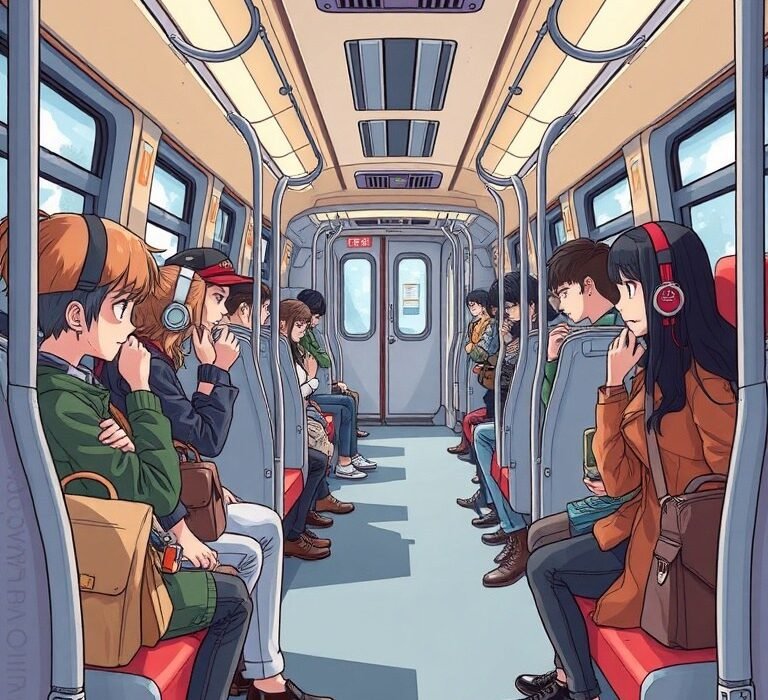
Asking how can I make my commute more enjoyable matters because the average American spends nearly an hour daily commuting. That’s 250 hours a year, six full work weeks, spent in transit. I used to white-knuckle through mine with talk radio and road rage. Then I reframed it as found time, and my commute became one of my favorite parts of the day. Not kidding.
Commuting doesn’t have to be dead time. With the right content, comfort, and mindset, it becomes learning time, decompression time, or entertainment time. Here’s how.
Reframe: your commute more enjoyable starts with mindset
The research is surprising: commute satisfaction depends more on mindset than duration. People who view commuting as a buffer between work and home, a transition ritual, report far less stress than those who see it as stolen time. Try the reframe: this is my decompression chamber, my university on wheels, my daily podcast concert. The same 40 minutes feels different when it’s yours versus stolen.
Build transition rituals for each direction. Morning: energizing content that prepares you for the day. Evening: calming content that sheds work stress before home. This bookending transforms commuting from limbo into a functional part of your day. The commute isn’t the obstacle to your life; it’s a room in it. Furnish it well.
Audio: turn transit into your personal university
Audiobooks are the commuter’s superpower. A 40-minute daily commute finishes a book every week or two; that’s 25+ books yearly from time you’d otherwise lose. Library apps like Libby provide thousands free. Start with gripping nonfiction or novels; dense material suits shorter attention. Audiobooks count fully toward reading goals, no asterisks.
Podcasts offer infinite variety: true crime for thrill, interview shows for insight, comedy for mood, educational series for growth. Curate ruthlessly; unsubscribe from anything that feels like obligation. Language learning apps with audio modes turn commutes into fluency builders. Call friends and family: the commute is perfect for the long catch-up calls that never otherwise happen.
- Audiobooks via Libby: free with a library card, 25+ books a year from commuting.
- Podcasts: curate 5-10 favorites across moods and interests.
- Language audio courses: 30 minutes daily builds real fluency in a year.
- Call loved ones: turn drive time into relationship time.
Comfort upgrades for drivers
Small comforts compound over 250 yearly hours. A quality seat cushion or lumbar support transforms long drives; back pain ruins commutes silently. Keep the car clean and pleasant: a tidy car with a nice scent feels fundamentally different from a rolling trash bin. Good sunglasses, a reliable travel mug, and a phone mount for navigation remove daily frictions.
Optimize the route for enjoyment, not just speed. A slightly longer scenic route with less stop-and-go often feels shorter than a congested shortcut. Try leaving 15 minutes earlier to beat the worst traffic; the time cost is offset by dramatically lower stress. And maintain the car: breakdowns during rush hour are commute trauma. NHTSA’s vehicle maintenance guidance covers the safety basics worth handling.
Transit commuters: maximize the advantage
Transit commuters have the real edge: hands-free time. Read actual books, work on laptops, learn with courses, or simply rest. Noise-canceling headphones are the single best transit investment; they convert chaos into a private cabin. A consistent seat or spot builds routine comfort. Use the time intentionally: it’s the only part of the day that’s truly yours.
Make transit social occasionally: commute with a colleague or friend when schedules align. Or use it for journaling, planning, or creative thinking; the rhythmic motion stimulates ideas. The key is treating transit as chosen time rather than endured time. Same train, different experience.
Active commuting: the ultimate upgrade
If distance allows, biking or walking to work transforms commuting from cost to benefit. Cyclists consistently report the highest commute satisfaction of any group: exercise, fresh air, no traffic, and arrival energized. Start with one or two days weekly; even partial active commuting changes the week’s feel. E-bikes extend the range enormously for hilly or longer routes.
Logistics: panniers or a backpack for gear, workplace shower or freshening supplies, safe route planning via bike maps. The time is often comparable to driving in congested cities. And the health benefits compound: active commuters show better cardiovascular health and lower stress. It’s the only commute upgrade that pays you back in years of life.
When the commute is truly unbearable
Sometimes optimization isn’t enough. A 90-minute each-way soul-crusher might warrant bigger changes: negotiating remote days, shifting hours to avoid peak, relocating closer, or changing jobs. Calculate the true cost: 3 hours daily is 750 hours yearly, nearly a month of waking life. That’s not a minor inconvenience; it’s a life-design issue.
Hybrid schedules are the modern compromise: two commute days feel entirely different from five. If remote isn’t possible, compressed workweeks (four 10-hour days) eliminate one commute weekly. And use the unbearable commute as data: what would need to change for this to work? The answer often clarifies bigger life decisions. Reclaiming phone time during commutes is good, but fixing a broken commute is better.
Negotiate commute flexibility as a skill, not a perk to beg for. Come with data: your productivity on remote days, coverage plans, trial proposals. Many managers approve hybrid schedules when the ask is specific and low-risk: two remote days weekly for a one-month trial, then review. Frame it around output, not comfort, even though comfort is a legitimate reason. The best commute is often the one you don’t take, and the pandemic proved most knowledge work survives remote days fine. Ask strategically and you might halve your commuting life.
The bottom line
Making your commute more enjoyable is about reframing it as your time, filling it with great audio, upgrading comfort, and considering active options. Start tomorrow: download one audiobook and leave 10 minutes early. Two hundred fifty hours a year is too much life to waste being miserable. Begin with the smallest possible step today, because small starts compound into lasting change faster than grand plans that never launch.