
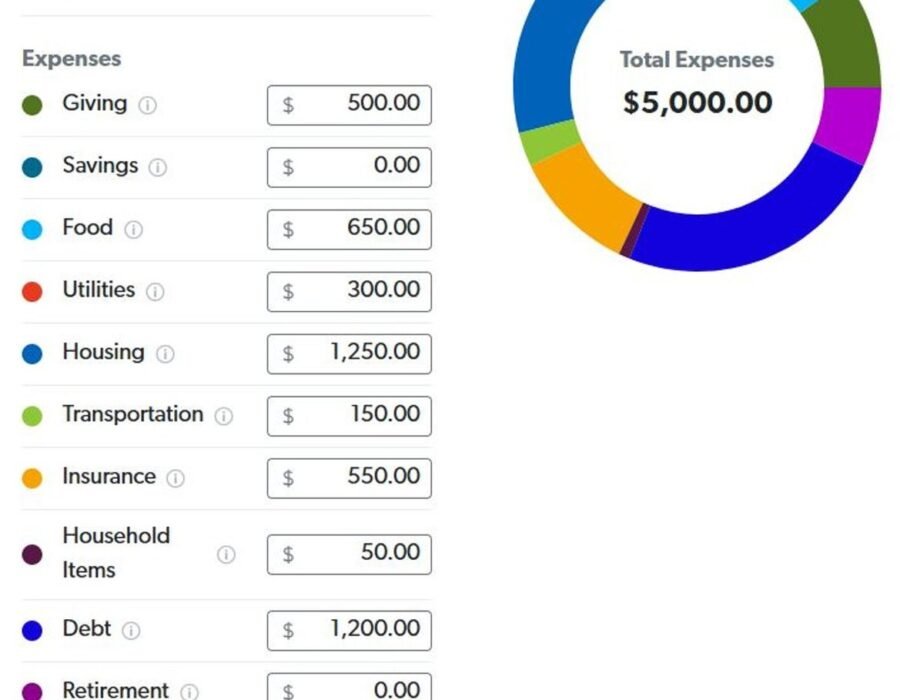
It’s the 28th of the month. Rent is due in three days, your checking account looks thinner than it should, and you have no idea where the money went. Again. If budgeting feels like a monthly mystery novel where you’re both the detective and the prime suspect, AI might be the assistant you need. Here’s how AI can help you budget your monthly expenses — not with generic advice, but with practical systems that actually stick.
Let me address the skepticism first: I’ve seen every budgeting method fail, including fancy ones. Spreadsheets abandoned by February. Apps that nag you into deleting them. The envelope system defeated by online shopping. What makes AI different isn’t magic — it’s that it removes the two friction points that kill every budget: the tedious work of tracking, and the emotional difficulty of facing your numbers honestly. Let’s build a system around both.
How AI Helps You Budget Monthly Expenses: The Practical Toolkit
Automatic expense categorization and analysis. Connect AI-powered budgeting apps (Rocket Money, YNAB with AI features, Monarch, or even ChatGPT analyzing your exported bank statements) and get instant clarity: where every dollar went, categorized automatically, with trends you wouldn’t spot manually. “You spent $347 on food delivery last month, up 40% from your average” — that single insight, delivered without judgment, changes behavior more than any lecture.
Subscription and waste detection. AI tools excel at finding money you’re bleeding silently: forgotten subscriptions, duplicate services, price increases on bills you could renegotiate, bank fees you shouldn’t be paying. The average American has 3-4 subscriptions they’ve forgotten about. Finding them takes AI seconds and saves hundreds annually. Rocket Money and similar tools will even negotiate bills or cancel subscriptions on your behalf.
Personalized budget creation. Instead of generic 50/30/20 rules, describe your situation to AI: income, fixed costs, debts, goals. Get a budget fitted to YOUR life — “here’s a realistic plan for $4,200/month with $800 in student loans and a goal of saving $500/month.” Then iterate: “that’s too tight on groceries, adjust.” The plan improves through conversation, which is exactly how human financial advisors work — except this one’s free and available at midnight.
Scenario planning. “What if I cut food delivery in half and put the savings toward my credit card?” AI models the outcome instantly — debt payoff timelines, interest saved, months accelerated. Seeing the concrete payoff of a specific change is far more motivating than abstract advice to “spend less.” Run scenarios for every financial decision: job changes, moves, big purchases, debt strategies.
Bill negotiation and optimization. AI services analyze your bills against market rates and either coach you through negotiation scripts or negotiate directly. Cable, internet, phone, insurance — these are negotiable, and most people never try. A 15-minute AI-assisted negotiation call routinely saves $300-$600 annually.
Building Your AI-Assisted Monthly Budget System
Here’s the complete system, start to finish:
- Week 1: Get the full picture. Export 3 months of bank and credit card statements. Ask AI to categorize everything and show you: total monthly spending by category, trends, subscriptions, and the top 5 “mystery” expenses you should investigate. This baseline is eye-opening — almost everyone underestimates food, subscriptions, and impulse spending by 30-50%.
- Set targets with AI help. Share your income, fixed obligations, and goals. Get a realistic monthly budget with specific category targets. Make sure it includes the categories people forget: annual bills divided by 12 (insurance, subscriptions, car registration), irregular expenses (gifts, car maintenance), and — critically — fun money. Budgets without fun money fail; budgets with guilt-free spending categories succeed.
- Automate the structure. Set up automatic transfers on payday: bills to checking, savings to savings, debt payments scheduled. The budget works when the structure enforces it, not when willpower sustains it. AI can’t automate your bank transfers, but it can design the allocation.
- Weekly 10-minute check-ins. Ask AI: “Here’s this week’s spending — am I on track? What’s trending wrong?” Weekly beats monthly because you can course-correct while there’s still month left. This is the habit that separates successful budgeters from everyone else.
- Monthly review and adjust. Life changes; budgets must too. Review with AI monthly: what worked, what didn’t, what needs recalibrating. A budget is a living plan, not a prison sentence.
For the broader financial organization these habits support, our expense tracking guide covers the business side with the same systematic approach.
Beyond Budgeting: What AI Can’t Do For You
Honest limitations. AI can’t fix income that’s simply too low for your area’s cost of living — that’s a structural problem requiring bigger changes (career moves, relocation, assistance programs). It can’t manufacture discipline; if you ignore every alert and override every limit, no system helps. And it can’t replace professional advice for complex situations — significant debt, tax planning, investment strategy deserve human experts.
What AI does brilliantly is remove every excuse related to complexity and tedium. The tracking is automatic. The analysis is instant. The scenarios are clear. What’s left is the human part: deciding what matters to you and acting on it. That’s as it should be — budgeting was never really about math. It’s about aligning your money with your values, and AI just clears away the fog so you can see the alignment (or lack of it) clearly.
For unbiased, commercial-free financial education to complement your AI tools, the Consumer Financial Protection Bureau offers excellent guides on budgeting, debt management, and financial planning — no products to sell, just solid information.
If you’re budgeting around variable self-employment income, the business side needs its own system — our expense tracking guide for small businesses covers separating and managing business finances with the same systematic approach. Personal budgeting and business bookkeeping reinforce each other.
The Bottom Line
AI helps you budget monthly expenses through automatic categorization, subscription detection, personalized budget creation, scenario modeling, and bill negotiation — removing the tedium that kills most budgets. Build the system: baseline your spending, set realistic targets (including fun money), automate the structure, check in weekly, adjust monthly. And don’t overlook the annual review: once a year, do a full financial checkup — every subscription, every bill, your savings rate, your credit report. That single session routinely surfaces $500-$2,000 in annual savings. AI makes budgeting nearly effortless; the remaining ingredient is your honest engagement with what the numbers show. Start this week: export your statements, ask AI for the analysis, and face your numbers. It’s less scary than you think — and more empowering than you’d expect.




7 Comments