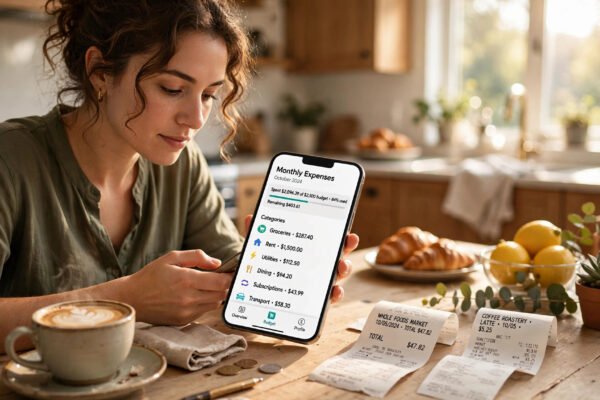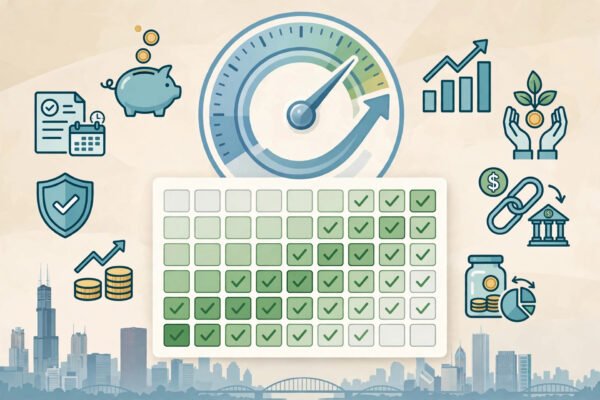
January: the spreadsheet is beautiful, every dollar assigned, color-coded categories, total confidence. March: the spreadsheet is a crime scene — three takeout orders unaccounted for, a “miscellaneous” category holding 40% of spending, and a quiet decision to “restart next month.” If you’ve ever wondered what you should know before creating a monthly budget that actually sticks, here’s the uncomfortable truth: the budget didn’t fail because of math. It failed because it was designed for a robot, not a Texan with a life.
Budgets that stick share specific design principles — and none of them involve more willpower. Here’s the complete guide.
Principle 1: Budget for the Life You Have, Not the One You Wish For
The #1 budget killer is aspirational budgeting: allocating $200 for dining out when you consistently spend $450, then “failing” monthly. A budget that sticks starts with forensic honesty — pull 90 days of actual bank and card statements, categorize every transaction, and build the budget from reality, not wishes. Yes, the numbers will be uglier than expected. That’s the point: you’re designing from truth.
Texas-specific reality checks: property taxes (among the nation’s highest — renters pay them indirectly through rent), summer electricity bills that double with AC, and car dependence (most Texas metros require driving, so transportation budgets must reflect real gas, insurance, and maintenance). A Houston budget with a Portland transportation line is fiction. The Consumer Financial Protection Bureau’s budgeting worksheets at Ask CFPB help you categorize honestly before you optimize.
Principle 2: Choose a System That Matches Your Brain
There’s no universally best budgeting method — only the one you’ll maintain. Zero-based budgeting (every dollar assigned a job): powerful, high-maintenance, best for detail lovers. 50/30/20 (needs/wants/savings): simple, flexible, best for beginners — though in high-cost Texas metros, housing alone can break the 50%. Pay-yourself-first: automate savings and bills, spend the rest freely — minimal tracking, best for the budget-averse. Envelope/cash system: physical or digital envelopes per category — best for overspenders who need hard stops.
The meta-principle: complexity is the enemy of adherence. A simple system you follow beats a perfect system you abandon. Start with the simplest method that addresses your biggest leak, and add sophistication only when the basics are automatic. Most failed budgets were too ambitious, not too simple.
Principle 3: Automate the Important Parts
Willpower is a depleting resource; automation isn’t. The non-negotiable automations: savings transfers on payday (before you see the money), bill autopay for fixed expenses (eliminates late fees — pure savings), and investment contributions (401(k), IRA). What’s left in checking is your real spending money — no tracking required for the automated portions.
This is why “pay yourself first” outperforms detailed tracking for most people: it converts the budget’s hardest part (saving) from a daily decision into a background process. The spending side then needs only loose monitoring, not forensic accounting. Set calendar reminders to review quarterly — automation needs occasional maintenance, not daily attention.
Principle 4: Build in Guilt-Free Spending
Budgets without fun money fail like diets without cheat meals — through rebellion. Every sustainable budget includes explicit, no-guilt personal spending: an amount each person spends with zero justification required. The amount matters less than the existence — $50 of guilt-free money prevents $300 of guilt-driven rebellion spending.
For couples, this is relationship-critical: separate “fun money” allowances eliminate 90% of spending fights, because the conflict was never about the coffee — it was about autonomy. Agree on the amount together, then grant each other total amnesty within it. Financial harmony isn’t about agreeing on every purchase; it’s about agreeing on the system.
Principle 5: Plan for the Irregular (Sinking Funds)
Annual insurance premiums, holiday spending, car registration, back-to-school, home maintenance — these “surprises” are entirely predictable, yet they wreck more budgets than any other factor. The fix: sinking funds — divide each irregular expense by 12 and save that monthly amount in a labeled sub-account.
$1,200 annual car insurance becomes $100/month, automatically. Holiday spending becomes $75/month year-round instead of a December crisis. This single technique converts the budget from a monthly tightrope into a system with shock absorbers. Most budget apps support sub-accounts or categories for this; even a simple spreadsheet with labeled rows works.
Principle 6: Review Monthly, Adjust Quarterly, Forgive Always
A budget is a living document, not a moral contract. Monthly: 15-minute review — what worked, what surprised you, any category needing adjustment. Quarterly: deeper tune — raise categories that are consistently over (the budget was wrong, not you), redirect freed money to goals. Always: forgive blown months without abandoning the system — one bad month is data, not failure.
The review habit matters more than the initial budget’s perfection. Every long-term budgeter started with a flawed first version; the ones who stuck with it are the ones who treated months 2–12 as calibration, not judgment. Pair the habit with weekly planning rhythms like our guide to planning a weekly schedule you’ll follow — the same consistency muscle, applied to time and money together.
Texas Money Traps to Budget Around
Specific line items Texans underestimate: summer electricity (budget the August bill, not the April one — levelized billing plans from Texas utilities smooth this), property tax pass-through (rent increases often follow tax assessments), car costs (long commutes mean real gas, toll, and maintenance budgets — Texas toll roads add up fast), and no state income tax (a genuine advantage — but it means sales and property taxes carry the load, so budget those instead). Our guides to saving on everyday expenses and trimming subscriptions help find the slack to fund what matters.
One more Texas factor: the state’s deregulated electricity market means your rate — and therefore your summer bill — depends heavily on the plan you chose. Budgeting $250 for electricity while on an expensive variable-rate plan is planning to fail; shopping for a fixed-rate plan during mild months is a budgeting action with year-round payoff. Review your plan every renewal, the same way you’d review any major budget category.
Conclusion
A monthly budget that actually sticks in Texas (or anywhere) isn’t built on willpower — it’s built on six principles: honest numbers from real statements, a system matched to your brain’s tolerance for complexity, automation of savings and bills, guilt-free spending money, sinking funds for predictable surprises, and a review rhythm with built-in forgiveness. Start with 90 days of truth, pick the simplest system that fits, automate payday transfers, and calibrate monthly. The budget that sticks isn’t the perfect one. It’s the one you’ll still be using in December — a little worn, much adjusted, and quietly working.
Frequently Asked Questions
How long does it take for a budget to start working?
Expect 2–3 months of calibration before it feels natural — the first month reveals reality, the second adjusts categories, the third starts feeling automatic. Quitting in month one means quitting during data collection.
Should couples combine finances completely?
There’s no universal answer, but every successful system needs: shared visibility of the big picture, agreed goals, and individual guilt-free spending money. Fully joint, fully separate, or hybrid all work — secrecy doesn’t.
What budgeting app is best?
The one you’ll actually open. Popular options (YNAB, EveryDollar, Mint alternatives, plain spreadsheets) differ in philosophy more than effectiveness. Try one for a month; the best app is the one that survives contact with your habits.
How do I budget with irregular income?
Budget from your lowest typical month, not the average — base expenses on the floor, and treat above-floor months as bonus savings. Freelancers should also check Investor.gov’s resources on variable-income planning and the FDIC’s money-management guides.