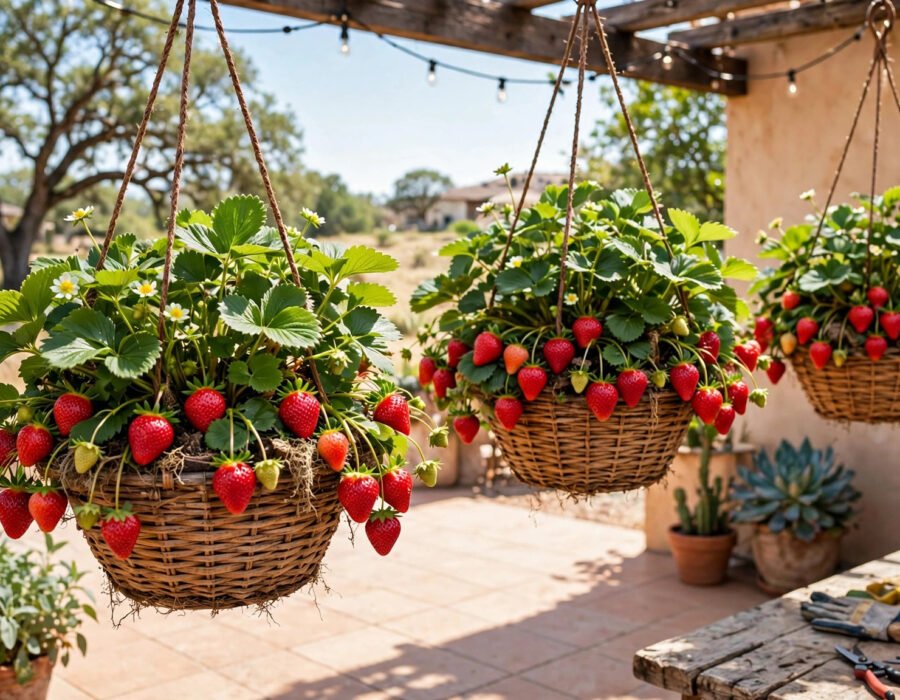
Texas soil can be brutal — alkaline, clay-heavy, and baked by summers that laugh at your garden plans. But hanging baskets sidestep all of that. Growing strawberries in hanging baskets lets you control the soil, dodge soil-borne diseases, keep fruit off the ground away from pests, and harvest sweet berries at standing height. In Texas, where in-ground strawberry growing is an uphill fight, baskets aren’t just cute — they’re the smart play. Here’s how to do it right in 2026.
Why Hanging Baskets Beat In-Ground Growing in Texas
Strawberries want slightly acidic soil (pH 5.8–6.2), consistent moisture, and good drainage. Much of Texas offers the opposite: alkaline clay that compacts, drains poorly, and cooks roots in summer. A hanging basket gives you:
- Perfect soil on demand. Fill with a quality potting mix amended for acidity — problem solved, no soil test required.
- Disease avoidance. Soil-borne killers like verticillium wilt and crown rot live in Texas ground soil. Baskets start clean.
- Pest reduction. Slugs, pillbugs, and soil-dwelling insects have a much harder time reaching suspended fruit.
- Cleaner, easier harvests. Berries hang in the air instead of rotting on mulch. Kids and bad backs both approve.
If you’re new to container growing generally, the best plants for beginner gardeners covers the fundamentals that transfer directly to strawberry baskets.
Choosing the Right Variety for Texas Heat
Variety selection makes or breaks Texas strawberry baskets. You need heat tolerance plus the right fruiting habit:
Everbearing varieties (best for baskets)
Everbearing types fruit in flushes through the season rather than one big June crop — ideal for baskets, where you want ongoing harvests. Top Texas performers include Seascape (excellent heat tolerance, consistently rated a top home-garden berry), Albion (firm, sweet, disease-resistant), and Ozark Beauty (an old reliable that handles southern heat). Avoid June-bearing varieties in baskets — one harvest doesn’t justify the real estate.
Day-neutral varieties
Day-neutrals like Mara des Bois (intensely fragrant, gourmet flavor) fruit whenever temperatures are moderate. In Texas, that means spectacular spring and fall crops with a summer pause — which is fine, because summer is when you want the plants resting anyway.
Setting Up Baskets That Actually Thrive
Basket size and type
Go big: 14–16 inch baskets minimum. Small baskets dry out in hours under Texas sun, and strawberries are thirsty. Wire baskets lined with coco fiber look classic and drain beautifully; solid plastic or resin baskets retain moisture longer, which is an advantage in August. Hang them where they get morning sun and afternoon shade — east-facing patios, under patio covers, or spots shaded after 2 PM. Full Texas afternoon sun cooks basket roots.
Soil mix
Use a high-quality potting mix (not garden soil, never garden soil) amended with compost and a handful of perlite for drainage. Strawberries are hungry: mix slow-release balanced fertilizer into the soil at planting, then feed with liquid fertilizer every 2–3 weeks during fruiting. The USDA’s gardening resources confirm what Texas growers learn fast — container plants exhaust nutrients quickly and need regular feeding.
Planting
Plant 3–4 crowns per 14-inch basket, spacing them evenly. The crown — the thick nub where leaves meet roots — must sit exactly at soil level: buried crowns rot, exposed roots dry out. Water deeply after planting, and mulch the surface with straw or pine needles to keep soil cool and berries clean.
The Texas Calendar: When to Plant and Pick
Timing is everything in Texas. Unlike northern states that plant in spring:
- Plant in fall (October–November) in most of Texas. Fall-planted strawberries establish roots through winter and explode in spring. This single timing shift is the difference between a great harvest and a sad one.
- Spring harvest: March–May. Your main crop. Pick berries every 1–2 days at full red — they don’t ripen further off the plant.
- Summer survival mode: June–August. Move baskets to deeper shade, water daily (twice daily in heat waves), and don’t expect much fruit. Keeping plants alive through August is the victory.
- Fall bonus crop: September–November. Everbearing varieties often give a second flush as temperatures drop. In South Texas, this can be your best harvest.
- Winter protection: North Texas freezes can damage crowns. Move baskets into a garage or against a sheltered wall during hard freezes.
For gardeners working with tricky spots elsewhere in the yard, growing grass in shady spots uses the same observe-your-microclimate thinking that makes basket placement successful.
Watering: The Make-or-Break Skill
Baskets dry fast, and Texas wind accelerates it. Check moisture daily by sticking a finger an inch into the soil — water when it’s dry at that depth. Water until it flows from the drainage holes, preferably in the morning. Mulch the surface to slow evaporation. In peak summer, a drip irrigation line on a timer is the difference between thriving plants and a daily chore you resent. The EPA’s WaterSense program offers smart irrigation tips that apply perfectly to container watering discipline.
Signs you’re underwatering: wilting in the afternoon that doesn’t recover by evening, small hard berries, brown leaf edges. Signs you’re overwatering: yellowing leaves, mushy crowns, gray mold on fruit. Adjust, don’t panic.
Conclusion
Growing strawberries in hanging baskets in Texas in 2026 is absolutely a good idea — it’s arguably the best way to grow strawberries in the state. Choose heat-tolerant everbearing varieties like Seascape or Albion, plant in fall, give them morning sun and afternoon shade, water religiously, and feed them well. Do that, and you’ll be picking sweet berries at standing height while your neighbors fight clay soil and slugs. The basket isn’t a compromise; in Texas, it’s the advantage.
Frequently Asked Questions
When should I plant strawberries in hanging baskets in Texas?
Plant in fall, typically October through November. Fall planting lets roots establish over winter for a strong spring harvest — spring planting in Texas gives plants too little time before summer heat arrives.
How many strawberry plants go in one hanging basket?
Three to four crowns per 14–16 inch basket. Overcrowding reduces airflow and berry size, while too few plants wastes the space. Space crowns evenly with each crown at soil level.
Can strawberries survive Texas summers in baskets?
Yes, with care: move baskets to afternoon shade, water daily (sometimes twice), and mulch heavily. Expect little fruiting in peak heat — summer is about keeping the crowns alive for the fall crop, not harvesting.
What soil should I use for hanging basket strawberries?
High-quality potting mix amended with compost and perlite — never garden soil. Strawberries prefer slightly acidic conditions (pH 5.8–6.2), and a good potting mix plus regular feeding keeps container plants productive.
How often should I fertilize basket strawberries?
Mix slow-release fertilizer into the soil at planting, then apply liquid fertilizer every 2–3 weeks during the fruiting season. Container plants exhaust nutrients fast, so consistent feeding directly affects berry size and sweetness.
How long do hanging basket strawberries keep producing?
Everbearing varieties in baskets typically produce for 2–3 years before declining, with the first year being the most productive. In Texas, expect the main harvest each spring (March–May), a possible fall flush (September–November), and a summer rest period where the goal is simply keeping crowns alive through the heat. Replace plants after the third season — or sooner if yields drop noticeably — since older crowns produce fewer, smaller berries. Many Texas growers treat baskets as biennials: plant in fall, harvest big the first spring, enjoy the second year, then refresh with new crowns.