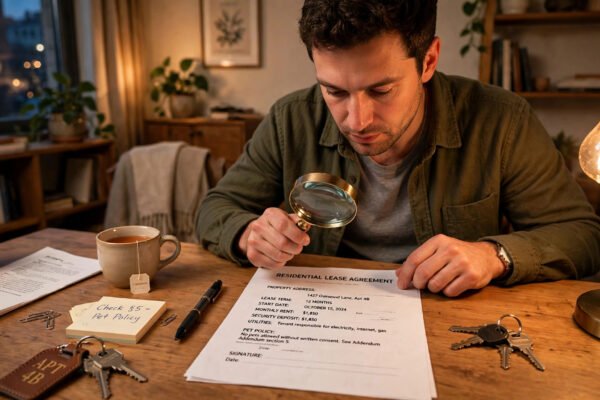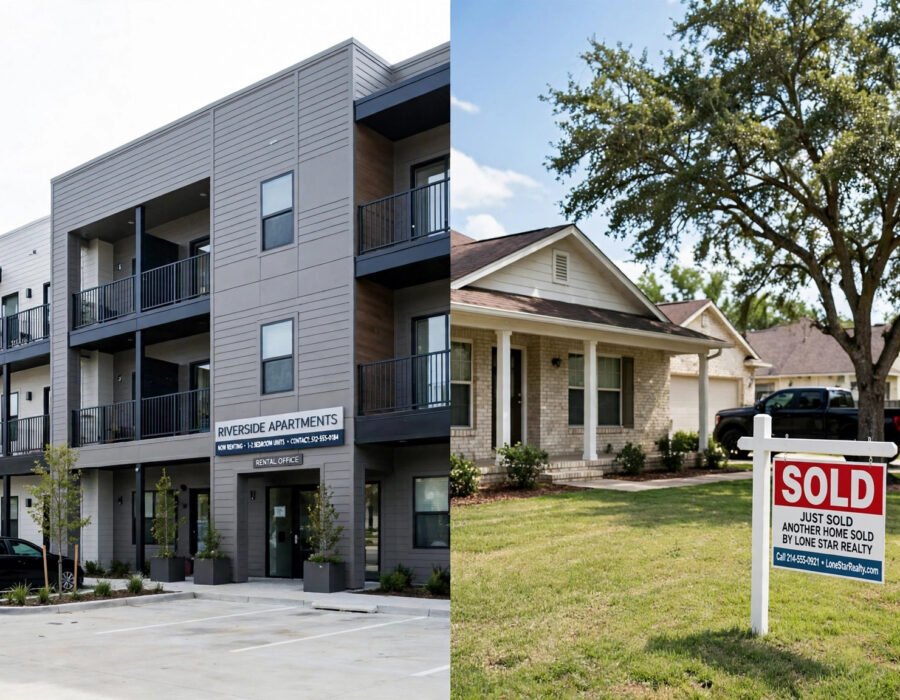
Your Austin landlord just raised the rent 12%. Your friend in Dallas bought a house last year and won’t shut up about “building equity.” Meanwhile, your coworker in Houston bought in 2022 and is quietly underwater on weekends. So: do you actually need a professional to decide between renting and buying in Texas in 2026, or can you figure this out yourself? The answer is refreshingly practical — you can do the core math alone in an afternoon, but there are three specific moments when professional help pays for itself many times over.
The Part You Can Absolutely Do Yourself
The renting-vs-buying decision is, at its core, a math problem with a lifestyle wrapper. Here’s the DIY version that gets you 80% of the answer:
Step 1: Calculate your true monthly cost of buying
Most people compare rent to the mortgage payment. That’s wrong. Your true cost of owning in Texas is PITI plus extras: principal + interest + property taxes + homeowner’s insurance + HOA + maintenance reserve (budget 1–2% of home value per year). Texas has no state income tax, which is great — but it funds itself with property taxes that run 1.6–2.2% of value. On a $400,000 Texas home, taxes alone add $550–$730 a month.
Step 2: Calculate your true cost of renting
Rent + renter’s insurance + the rent increases you’ll face. Texas rents in Austin and Dallas have been volatile — model 3–5% annual increases, not today’s number. Over five years, that $1,800 rent becomes $2,080–$2,300.
Step 3: Apply the 5-year rule
If you’ll stay less than five years, renting almost always wins once you factor in Texas closing costs (2–5% to buy, ~8–10% to sell with commissions). Buying’s wealth-building magic needs time — the first years of mortgage payments are mostly interest, not equity.
The CFPB’s rent-vs-buy framework walks through this comparison with worksheets, and it’s free. HUD’s homeownership resources cover assistance programs many Texas buyers miss. If the math isn’t close, you have your answer without spending a dime on advice.
Texas Factors That Change the Standard Advice
- No state income tax, high property taxes. The federal SALT deduction cap ($10,000) means many Texas homeowners can’t fully deduct those hefty property taxes. Run your actual tax situation, not the generic advice.
- Insurance is getting expensive. Texas homeowner’s insurance has surged — hail, hurricanes on the Gulf Coast, and wildfire risk in Central Texas have pushed premiums up 20–40% in some areas since 2022. Get real quotes before you buy; the $150/month estimate from 2020 is fiction now.
- HOAs are everywhere. Texas master-planned communities mean HOA fees of $100–$400+ a month are normal, with special assessments possible. Read the HOA budget, not just the fee.
- Market timing matters by city. Austin’s pandemic boom cooled; Dallas-Fort Worth stayed steadier; Houston tracks energy. “Texas” isn’t one market — your city’s trajectory matters more than the state’s.
- Foundation issues are a Texas specialty. Expansive clay soils mean foundation repair is common and costs $5,000–$30,000. A structural engineer’s opinion on any suspect property is non-negotiable.
The 3 Moments When a Professional Earns Their Fee
1. When the math is close (within 15%)
If buying costs $2,400/month all-in and renting costs $2,200, the spreadsheet can’t decide — the tiebreakers are tax nuances, appreciation assumptions, and your risk tolerance. This is where a fee-only financial planner (not a commission-based advisor, not a realtor) earns their $200–$400 hourly fee. They have no incentive to push you toward a purchase.
2. When your situation is complicated
Self-employment income, variable bonuses, a recent divorce, relocation with a tight timeline, or buying with a partner you’re not married to — complexity is where DIY analysis breaks. A mortgage broker (for loan structure) and a real estate attorney (for ownership agreements) are worth it here. Texas is a community property state, which has real implications for unmarried buyers and married couples alike.
3. When you’re buying, not just deciding
Once you decide to buy, a good buyer’s agent is essential in Texas’s disclosure-light environment. Texas sellers disclose less than in many states, so your agent’s knowledge of neighborhoods, builders, and inspection strategy is your protection. Interview three agents; the best ones talk you out of bad deals.
Who You Don’t Need
You don’t need a professional to tell you the obvious cases: if buying costs 40% more than renting and you might move in two years, rent. If you’ve rented the same apartment for eight years, your rent has doubled, and you plan to stay a decade, the math probably favors buying and no advisor will tell you something the calculator didn’t. Save the professional fees for the genuinely ambiguous cases.
And beware the conflicted advisor: anyone who earns a commission when you buy (most realtors, many “financial advisors”) is not a neutral party in the rent-vs-buy question. That’s not an insult — it’s incentives. Get your decision advice from someone paid by the hour, then use commission-based pros for execution. Understanding what drives home value also helps you evaluate whether a potential purchase is likely to appreciate or just consume cash.
The Lifestyle Questions No Professional Can Answer
Math gets you to the threshold, but these are yours alone:
- How much do you value mobility? Texas job markets reward people who can move to the opportunity.
- Do you actually want to maintain a house? Texas summers mean AC systems, pools, and lawns that never sleep.
- How’s your tolerance for neighbors? Apartment living means shared walls; Texas suburbs mean HOAs with opinions about your fence. Pick your constraint — handling difficult neighbors politely is a skill renters and owners both need.
- What’s your sleep-at-night number? Some people can’t relax with a mortgage; others can’t relax throwing money at rent. Neither is wrong.
Conclusion
Do you need a professional to decide between renting and buying in Texas in 2026? For the core math — no. An afternoon with real numbers, Texas-sized property tax estimates, and honest insurance quotes gets you most of the way there. Hire a fee-only planner when the math is close or your situation is complex, and hire the right execution team once you’ve decided to buy. The most expensive mistake isn’t skipping professional advice — it’s skipping the math entirely and deciding based on vibes, FOMO, or your landlord’s rent increase.
Frequently Asked Questions
Is it cheaper to rent or buy in Texas in 2026?
It depends on the city and your timeline. With Texas property taxes at 1.6–2.2% and rising insurance costs, buying’s monthly cost often exceeds rent in the short term. Buying typically wins financially only if you stay 5+ years and the property appreciates modestly.
How much are property taxes on a Texas home?
Expect 1.6–2.2% of the home’s assessed value annually, varying by county and taxing district. On a $400,000 home, that’s roughly $6,400–$8,800 per year, or $530–$730 per month — a major factor in the rent-vs-buy calculation.
Should I use a financial advisor for this decision?
A fee-only financial planner (paid hourly, no commissions) is worthwhile when the rent-vs-buy math is close or your finances are complex. Avoid asking commission-based advisors or realtors for the decision itself — their incentives favor buying.
Does Texas’s lack of income tax make buying better?
Not directly — it makes Texas attractive overall, but high property taxes partially offset the benefit for homeowners. Plus, the $10,000 federal SALT deduction cap limits how much of those property taxes you can deduct.
What’s the biggest hidden cost of buying in Texas?
For most buyers, it’s the combination of property taxes and homeowner’s insurance, which together can add $800–$1,200+ per month beyond the mortgage payment. Foundation issues from expansive clay soils are the biggest surprise repair cost.