Need a second number for dating, freelancing, selling stuff online, or just separating work from life? The cheapest good option: Google Voice (free) or a $5–$10/month VoIP app. Here’s every method ranked by cost and quality.
What Is the Cheapest Way to Get a Second Phone Number?
Free tier: Google Voice — a free US number for calls, texts, and voicemail via app or web. Genuinely free, Google-reliable. Limitations: some banks/2FA systems reject VoIP numbers, and porting your number out later is clunky. Best paid: VoIP apps like Hushed ($4.99/month), Burner ($4.99/month), or Line2 ($9.99/month) — better call quality, disposable numbers, and business features. Carrier option: eSIM second line ($10–$15/month add-on from T-Mobile/Verizon/AT&T) — a real mobile number that works with every 2FA system.
Which Method for Which Need
- Online dating / marketplace sales: Google Voice or Burner — free/disposable, keeps your real number private. Burner’s auto-expiring numbers are perfect for Craigslist.
- Freelance business line: Line2 or Google Voice — professional voicemail, business hours, separate identity. See our freelancer guide for the bigger picture.
- 2FA and banking: You need a real carrier number (eSIM add-on or prepaid SIM) — banks increasingly block VoIP numbers for verification codes.
- International travel: Airalo eSIMs ($5–$20 for local data/numbers) — cheaper than roaming, instant activation.
- Maximum privacy: Prepaid SIM bought with cash + a cheap carrier-free phone — no account linkage at all.
The Porting Trap
Before committing to a free VoIP number as your “permanent” second number, understand porting limitations: moving a Google Voice number to a carrier (or vice versa) involves fees ($3–$20), takes 1–7 days, and occasionally fails outright — leaving you in limbo. Rule: if the number might become important (business line, long-term use), start with a carrier eSIM or a paid VoIP service with clean porting. Use free/disposable numbers only for genuinely temporary needs. Also: never use a disposable number for account recovery — when the number expires, you’re locked out permanently. Tie important accounts to a number you’ll keep for years.
Setup Tips
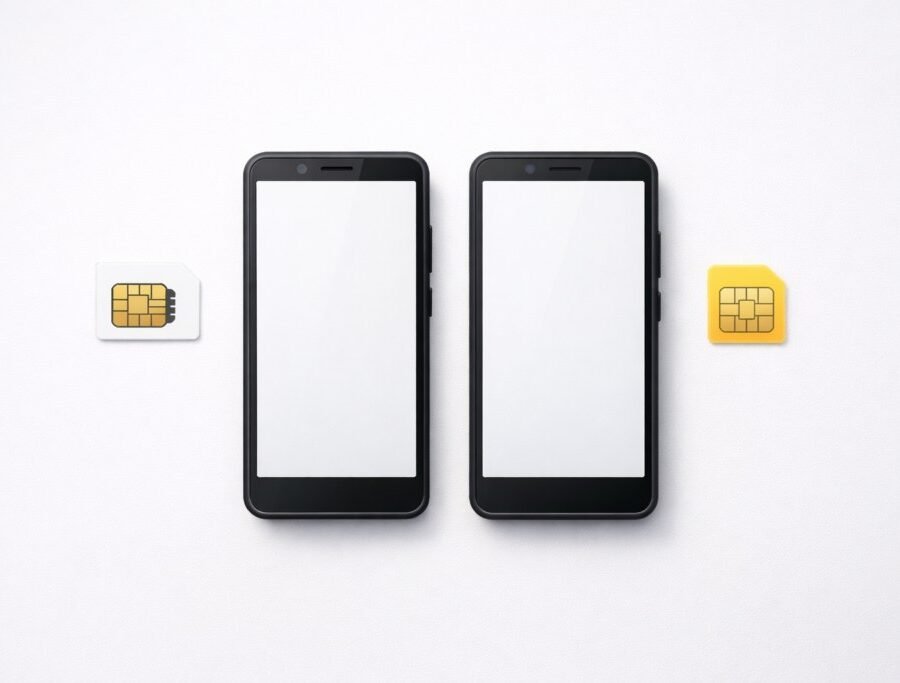
- Dual SIM / eSIM: Most phones since 2018 support a physical SIM + eSIM simultaneously — your second number lives natively in the phone app, no extra app needed.
- Do Not Disturb per-line: Both iPhone and Android let you silence the second line on schedules — work number quiet after 6 PM.
- Label clearly: Name the line “Business” or “Dating” so you answer appropriately. Nothing worse than answering a client call with “heyyy.”
The FCC’s number-porting guide covers your rights when moving numbers between providers.
Burner Numbers for Online Safety (The Full Playbook)
Your real number is a skeleton key — it exposes password resets, receives 2FA codes, and identifies you to data brokers. Protect it with compartmentalization: Real number: family, close friends, banks, 2FA — never posted publicly, never given to strangers. Second number (Google Voice/Hushed): online dating, marketplace sales, job hunting, newsletters, any web form. Third (Burner/disposable): one-time verifications, Craigslist, sketchy signups. The rule: the more public the context, the more disposable the number. What this prevents: SIM-swap attacks (attackers can’t find your real number), spam (burners absorb it), doxxing (your real number stays private), and the “I gave my number to a stranger in 2019 and still get texts” problem. Setup time: 30 minutes for all three. The peace of mind: permanent.
Business Line Etiquette (Sounding Professional)
A second number for business needs professional handling: 1) Separate voicemail greeting — “You’ve reached [Business Name]…” not “Yo, leave a message.” 2) Business hours: Do Not Disturb schedule on the second line (see our freelancer guide). 3) Answer appropriately — know which line is ringing (label it). 4) Text signature: “— [Name], [Business]” on first texts. 5) Response time: business line gets 4-hour response; personal gets whenever. What clients notice: consistency — the same professional greeting, prompt callbacks, clear boundaries. What to avoid: answering the business line at 11 PM (trains clients to expect it), personal voicemail on the business number, and texting clients from your personal number “just this once.” The $5/month second number is the cheapest professionalism upgrade there is.
International Second Numbers (Travel and Business)
Need a number in another country? eSIM travel apps (Airalo, Holafly) — local numbers + data, $5–$20, instant activation — perfect for 1–4 week trips. VoIP international numbers (Hushed, Skype Number — $6/month) — a permanent UK/EU number that rings on your US phone — ideal for international clients. Dual SIM phones: physical SIM (home) + eSIM (local) — the traveler’s standard setup. WhatsApp note: your WhatsApp stays on your original number regardless of SIM — no need to change it abroad. Cost comparison: carrier international roaming ($10–$15/day) vs. eSIM ($10–$20/trip) — the eSIM wins by 10x. Setup before departure: buy and install the eSIM on Wi-Fi at home — airport Wi-Fi eSIM setup is its own circle of hell.
Number Porting: The Complete Guide
Moving numbers between providers — the details: What ports: carrier numbers (easy), Google Voice (possible, $3 fee, 1–7 days), most VoIP (varies — check before committing). What doesn’t: some prepaid/MVNO numbers (carrier restrictions), disconnected numbers (port within 30–90 days of disconnection or lose it). How: get your account number + port-out PIN from the old provider, give them to the new provider — they handle it. Don’t cancel the old service first — cancellation kills the number. Timeline: 1–7 days (mobile), during which texts may go to either — warn important contacts. 2FA warning: update 2FA before porting if the number receives codes — porting gaps can lock you out. Test: after porting, verify calls and texts both work. Your number is portable by law (FCC rules) — any carrier resistance is a complaint away from resolution.
Second Numbers for Kids (The Parental Playbook)
Kids’ first phones need guardrails: The setup: a second number (Google Voice, free) for the kid — your real number stays private, and you monitor the second line. Why: kids share numbers freely (games, school, social media) — a burner absorbs the exposure. Rules: the second number is for friends; family uses the real one (you’ll know which is which). When they outgrow it: port the second number to their own carrier account (see the porting guide) — it becomes their permanent number. Also: enable Google Family Link / Apple Screen Time — number hygiene plus content controls. The lesson: teach number compartmentalization early — it’s a lifelong skill. Their first number should be disposable; their permanent one comes later.
Using a Second Number for Business: Best Practices
A second number for business is only professional if you treat it professionally. That means: a proper voicemail greeting with your business name (not the default robot voice), business-hours boundaries (let after-hours calls go to voicemail — burnout helps no one), and consistent use (give clients the business number, never your personal one, so the separation holds).
Set up the operational details: distinct ringtone so you know it’s business before answering, professional text signatures for business SMS, and a system for logging business calls (your VoIP app’s history, or a simple spreadsheet). If you take payments or handle sensitive client data over this line, the number becomes part of your business’s security surface — protect the account with 2FA.
As the business grows, the second number becomes the foundation for a real phone system — many VoIP providers (Sideline, Grasshopper, OpenPhone) let you add team members, auto-attendants, and business-hour routing to the same number. Starting with a proper business number avoids the painful renumbering later.
Frequently Asked Questions
Can I use Google Voice for my business permanently?
Yes, many small businesses do — it’s free and reliable. Limitations: no true 911 address registration issues (actually GV does support 911), occasional verification problems with banks, and Google could change terms. For a serious growing business, a paid VoIP service ($10–$30/month) offers more professional features.
What is the difference between VoIP and a real phone number?
VoIP numbers route over the internet; ‘real’ (carrier) numbers use cellular networks. Call quality is comparable on good internet. The practical differences: carrier numbers work with all verification systems and 911; VoIP numbers can be blocked by some banks/2FA and depend on data connectivity.
How do I port my second number to a carrier later?
Most VoIP providers allow porting out (Google Voice charges $3). Get your account number and PIN from the current provider, then initiate the port with the new carrier. Don’t cancel the old service until the port completes — canceling can lose the number.
Should my business number be local or toll-free?
Local numbers feel personal and trustworthy for local businesses; toll-free (800/888) signals established/national. For most small/local businesses, a local area-code number converts better. Toll-free makes sense for e-commerce or national services.
Can I text from my business number?
Yes — VoIP apps (Google Voice, Sideline) include business texting. Professional tip: keep texts concise and during business hours, and never use personal texting slang with clients. Some industries (legal, medical) have compliance rules about texting — check yours.
How do I keep business calls from interrupting personal time?
Use business-hours settings (most VoIP apps route after-hours calls to voicemail automatically), a separate device or profile if needed, and the discipline to not answer. The technology enables boundaries; you have to enforce them.
The bottom line
Google Voice for free, Hushed/Burner for $5/month disposable, carrier eSIM for $10–$15/month permanent. Match the method to the need — free for temporary, carrier-grade for anything tied to banking or business. And never build an important account on a number you might throw away.