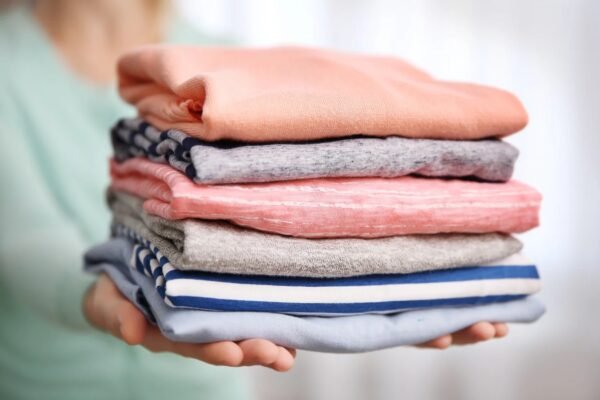
Your favorite sweater has developed a bad case of the fuzzies — those little balls of fiber (pills) covering the surface, making a $80 sweater look like a $8 one. If you’re asking why your sweaters get those little balls on them, here’s the science: pilling is what happens when short or loose fibers work their way to the surface, tangle together, and form balls. It’s normal, it’s predictable, and it’s largely preventable.
Why It Happens
- Friction: the #1 cause — underarms, sides (bag straps, seatbelts), anywhere fabric rubs. Movement + contact = pills.
- Short fibers: cheaper yarns use shorter staple fibers that escape the weave easily. Long-staple fibers (quality merino, long-staple cotton) pill far less.
- Loose knits: open, airy knits pill more than tight weaves — more room for fibers to migrate.
- Synthetic blends: polyester and acrylic pill notoriously — and their pills are stronger than the fabric, so they don’t fall off naturally like wool pills do. A wool sweater self-cleans its pills; a polyester one accumulates them.
- Washing agitation: machine washing accelerates pilling dramatically — the tumbling is friction on overdrive.
Prevention
- Buy better fibers: 100% merino wool, cashmere, or long-staple cotton pill least. Check quality markers — tight knit, substantial feel.
- Wash inside out, cold, gentle cycle — or hand wash. Always.
- Use a mesh laundry bag — reduces friction against other garments enormously.
- Skip the dryer — hang or lay flat. Dryer tumbling is a pilling machine.
- Rest between wears: 24–48 hours lets fibers recover — daily wear pills fastest.
- De-fuzz proactively: a quick pass with a sweater comb every few wears prevents buildup.
Removal (Save the Sweater)
- Sweater comb / cashmere comb: the best tool — gently combs pills off without damaging knit. $10, lasts forever.
- Electric fabric shaver: fast and effective for large areas — use light pressure, keep the fabric taut.
- Sweater stone (pumice): natural pumice block — gentle, effective, no batteries.
- What NOT to use: razors (cut fibers, create holes), sticky lint rollers (don’t remove pills, just lint), pulling by hand (damages the knit, creates more pills).
When Pilling Signals Quality Issues
Some pilling on a new wool sweater is normal (loose surface fibers working out in the first few wears — it stops). But heavy pilling from day one on a “premium” sweater signals short-staple fibers or heavy synthetic content — the garment won’t improve. That’s a return-or-regret situation, and a lesson for next time’s budget shopping. For the fiber science, textile pilling mechanics details why synthetics pill worst.
Fabric Guide: Pilling Tendency by Material
Not all fibers pill equally. Here’s the ranking from least to most pilling-prone.
Least pilling: long-staple cotton (Egyptian, Pima), linen, silk, and tightly-woven merino wool. Long fibers stay put; tight weaves lock them in. These are the “buy it for life” knit fabrics.
Moderate: regular merino wool, cashmere (pills initially, then stops — the loose surface fibers work out), and quality cotton. Initial pilling is normal; persistent pilling signals short staples.
Most pilling: acrylic, polyester, and cheap wool blends. Short synthetic fibers migrate constantly, and — the killer detail — synthetic pills are stronger than the fabric, so they never shed naturally. A polyester sweater accumulates pills forever; a wool one sheds them.
The blend trap: “wool blend” often means 20% wool, 80% acrylic — you get wool’s price with acrylic’s pilling. Check the percentages: under 50% natural fiber, expect synthetic behavior. The label tells the truth if you read it.
Shopping rule: for knits you’ll wear often, prioritize 100% natural fibers or high-natural blends. The price premium pays back in appearance-years. For trendy or occasional knits, synthetics are fine — just know they’re disposable by nature.
De-Pilling Tools Ranked: What Actually Works
Once pills form, removal is the fix. Here’s every tool ranked by effectiveness.
1. Electric fabric shaver ($12–$20): the winner by a mile. Rotating blades under a perforated guard shave pills off without cutting fabric. Conair, Philips, and Beautural all make good ones. Use on a flat surface, gentle pressure, empty the lint chamber often. One $15 shaver restores dozens of sweaters — the highest-ROI clothing tool you can own.
2. Sweater comb ($8–$12): manual, precise, excellent for cashmere and delicate knits where electric shavers feel aggressive. Slower but safer — the connoisseur’s choice for precious fibers.
3. Sweater stone (pumice, $8): natural pumice that grabs pills. Effective on sturdy knits; too aggressive for fine cashmere. A classic that still works.
4. Disposable lint razors ($5): the travel option — cheap, portable, mediocre. Fine for emergencies; the blades dull fast and can nick fabric.
Avoid: regular razors (cut fabric, not just pills), scissors (uneven, dangerous), and sticky lint rollers for pills (they remove lint, not pills — different problem).
Technique matters: lay the sweater flat, pull the fabric taut, work in one direction, and go gently — aggressive de-pilling thins the knit. De-pill before washing (loose pills wash out; embedded ones don’t), and after de-pilling, the sweater often looks better than new — the loose surface fibers were dulling it all along.
Storing Knits: Preventing Pills in the Off-Season
Storage causes pilling too — friction in drawers and boxes rubs fibers loose. The protocol: wash before storing (moths eat food stains, not just wool — and body oils attract pests), fold, never hang (hanging stretches knits into permanent shoulder points over months), use breathable storage (canvas boxes or cotton bags — plastic traps moisture and mildew), add cedar or lavender (moth deterrents, replaced yearly), and don’t overstuff (compression friction pills the bottom sweaters). Store clean, folded, breathing, and protected — September-you will thank May-you.
Key Takeaways
- Pilling = loose fibers + friction; synthetics pill worst (and their pills don’t shed naturally).
- Prevent: quality long-staple fibers, wash inside-out cold in mesh bags, air dry, rest between wears.
- Remove: sweater comb or electric shaver — never razors or pulling.
- Initial pilling on new wool is normal and stops; day-one heavy pilling signals poor quality.
The Bottom Line
Why sweaters get those little balls: friction liberates loose fibers, which tangle into pills — worst with cheap synthetics. Buy better fibers, wash gently, and keep a $10 sweater comb handy. Your sweaters will look new for years instead of weeks.