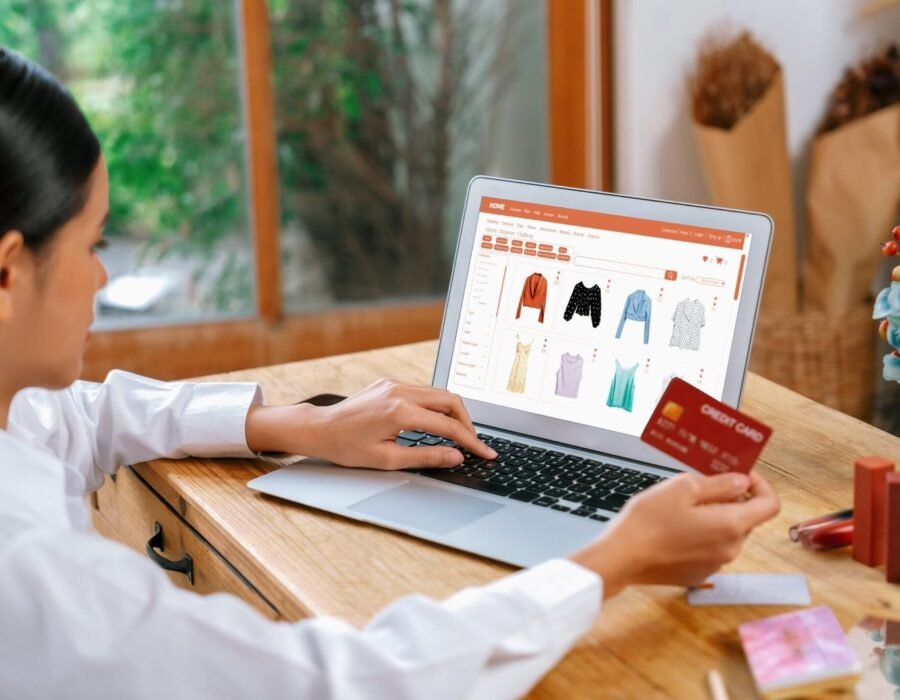
You order a medium. It arrives sized like a tent — or a wetsuit. Online sizing is chaos: a “medium” varies by inches across brands, and vanity sizing means the number on the tag is marketing, not measurement. If you’re asking how to choose the right size when shopping online, here’s the system that cuts return rates dramatically: ignore the size label, shop your measurements, and read the data other buyers left behind.
Know Your Numbers (The Foundation)
Measure yourself once, save it in your phone:
- Chest/bust: fullest part, tape level
- Natural waist: narrowest point (not where pants sit)
- Hips: fullest point
- Inseam: crotch to ankle bone
- Shoulder width and arm length for jackets/shirts
- Neck for dress shirts
Re-measure yearly — bodies change. These numbers are the truth; size labels are opinions.
The Size Chart Method (Actually Use It)
- Find the brand’s specific size chart — not generic S/M/L, but the inch-based chart. It’s usually linked near the size selector.
- Match your measurements to the chart, prioritizing the most important dimension for the garment (chest for jackets, waist for pants, hips for skirts).
- Between sizes? Size up for woven fabrics (no stretch), down for knits/stretch. For jackets: shoulders first — everything else alters easily (see tailoring costs).
- Check the model’s stats — “model is 6’1″, wears size M” tells you how it fits a known quantity.
- Read “fit” notes: “runs small,” “oversized fit,” “size down” — the product page often confesses.
Mine the Reviews (The Secret Weapon)
- Filter for your body type: many sites let you filter reviews by height/weight/size purchased — find your twin and see what they ordered.
- Look for fit patterns: ten reviews saying “runs small” is data; one is an opinion.
- Check review photos on real bodies — infinitely more informative than model shots.
- “True to size” percentage: sites like Amazon aggregate this — under 70% “true to size” means size carefully.
Reduce the Risk
- Order two sizes when unsure (if free returns) — keep the winner, return the loser. Faster than ordering twice.
- Check return policy before buying: free returns? Time window? Final sale = gamble only on known brands.
- Stick to known brands for tricky categories (suits, jeans, bras) — you know their quirks. Experiment with cheap categories (tees, scarves).
- Read fabric content: 100% cotton shrinks; elastane stretches; “one size” fits no one well. (See fabric quality signals.)
- Virtual try-on and AI sizers: improving yearly — worth trying where offered, not yet reliable alone.
For the sizing chaos context, why sizes are meaningless documents vanity sizing’s history — and the FTC’s labeling rules cover what brands must disclose.
Fit Hacks: When It’s Almost Right
Between sizes or slightly off? These fixes save borderline purchases.
Too big in the waist (pants): the hair-tie trick (loop through the buttonhole for 1-inch take-up), a belt (obvious but effective), or a $25 tailor visit for a permanent fix. Don’t size down for the waist if the hips/thighs fit — alter the waist instead.
Slightly long (pants, sleeves): the cuff/roll (casual), or $15 hemming (permanent, perfect). Rolling works for casual; hemming for everything else.
Too tight in one spot: stretch it — denim with wear, shoes with a stretcher ($20) or a cobbler ($10), waistbands with a targeted stretch. Or exchange — tight rarely improves enough.
Gaping (blouses, wrap dresses): fashion tape ($8 — the red-carpet secret), a small safety pin inside, or a $15 tailor fix. Don’t tolerate the gap; it’s a 5-minute solve.
Shoulders slightly off (jackets): this one’s the dealbreaker — shoulders can’t be fixed cheaply. If the shoulders don’t work, return it. Everything else is negotiable; shoulders aren’t.
The tailor threshold: if the item is 80% right and the fix is under $30, tailor it. If it needs $50+ of work on a $40 item, return it. Match the fix to the garment’s value — and remember that “almost right + tailor” beats “perfect” that doesn’t exist.
International Size Conversions: The Cheat Sheet
US, UK, EU, and Asian sizing are four different languages. Here’s the translation guide.
The rough conversions (women’s): US 4 ≈ UK 8 ≈ EU 36 ≈ Asian L. US 8 ≈ UK 12 ≈ EU 40 ≈ Asian XL. But “rough” is doing heavy lifting — vanity sizing and brand variation mean these are starting points, not answers.
The rough conversions (men’s): shirts — US M ≈ UK M ≈ EU 48–50 ≈ Asian L–XL. Suit jackets: US 40 ≈ UK 40 ≈ EU 50. Men’s conversions are more standardized than women’s, but Asian sizing still runs 1–2 sizes smaller than the label suggests.
What actually matters: ignore the letter/number entirely and use the garment measurements in centimeters or inches. A 100cm chest is a 100cm chest in every country. Measurements are the universal language; sizes are dialects.
EU vs. US shoes: US 9 men’s ≈ EU 42 ≈ UK 8.5. Women’s US 8 ≈ EU 38.5 ≈ UK 6. Shoe conversions are more reliable than clothing — but width varies (European lasts run narrower; American wider).
The Asian-brand rule: size up 1–2 from your US size as a starting point, then check measurements. Uniqlo’s US site uses US sizing (adjusted for the market); the same brand’s Japanese site doesn’t. Always check which market the size chart serves.
Print this, bookmark it, and never trust a converted size without the underlying measurements. The number lies in every language; centimeters don’t.
Key Takeaways
- Measure yourself; shop the inch-based size chart, not the S/M/L label.
- Between sizes: up for wovens, down for stretch; shoulders first on jackets.
- Mine reviews filtered by your body type — patterns beat opinions.
- Order two sizes with free returns; check return policy before buying.
- Know each brand’s quirks; experiment cheap, commit on known fits.
The Bottom Line
Choosing the right size online means ignoring the label and trusting three things: your measurements, the brand’s inch chart, and reviewers shaped like you. Do this and your return rate plummets — along with the fitting-room despair of the tent-sized medium. Measure once, shop confidently forever.