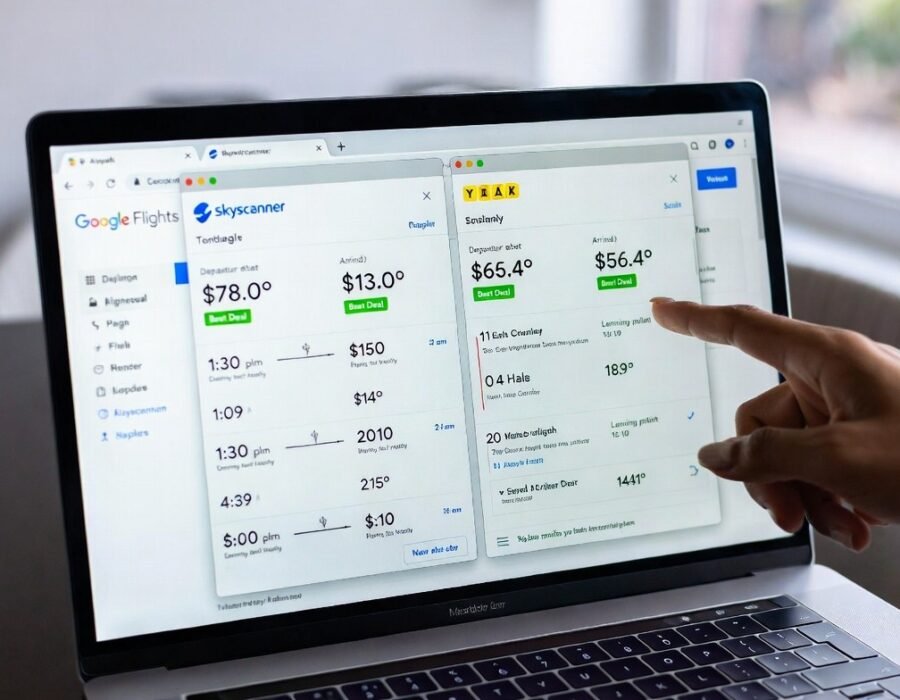
Asking is it cheaper to book flights directly or through a booking site gets different answers depending on who’s profiting. Booking sites claim savings; airlines claim best prices direct. I’ve booked both ways for years, and the honest answer is: prices are usually identical, but everything else favors direct booking. The real differences hide in fees, flexibility, and what happens when plans change.
Here’s the complete comparison so you can choose intelligently for each trip.
Price comparison: book flights directly or through a booking site
For major airlines, prices are typically identical between direct and reputable booking sites. Airlines enforce fare parity; Expedia shows the same $349 as United.com for the same flight. The exceptions: booking sites sometimes bundle opaque fares (Priceline Express Deals, Hotwire) at genuine discounts, and they occasionally run site-wide promos. But for standard published fares, expect parity.
Where booking sites cost more: service fees ($5-$25 per ticket), marked-up baggage and seat fees, and currency conversion margins on international bookings. These stealth charges make the headline price misleading. Always compare the final checkout total, not the search result price. When totals are equal, direct wins on every other dimension.
Understanding why weekend flights cost more also helps you interpret the fares you’re comparing.
Changes and cancellations: where direct dominates
This is the decisive factor. When you book direct, the airline handles changes, cancellations, and disruptions seamlessly through their app and agents. When you book third-party, you’re the booking site’s customer, not the airline’s; changes must go through the intermediary, adding layers of delay, fees, and frustration. During mass disruptions, third-party bookers wait longest for help.
I learned this during a cancelled flight: direct bookers rebooked in the app within minutes while third-party customers waited on hold with intermediaries for hours. The DOT’s consumer protections apply regardless, but enforcing them through a middleman is miserable. For any trip where plans might change, and that’s most trips, book direct.
For international multi-city trips, compare the aggregator-built itinerary against booking each leg separately direct. Sometimes two one-ways on different airlines beat the combined fare, and booking direct per leg keeps every segment under your control. This takes more effort but often saves money and always improves flexibility. The savings on complex itineraries can reach hundreds of dollars, well worth the extra booking time.
- Prices usually identical for major airlines. Compare final totals, not headlines.
- Direct wins on changes, cancellations, and disruption handling. Decisively.
- Booking sites add service fees and complicate customer service.
- Use aggregators to search, then book direct. Best of both worlds.
When booking sites actually win
Booking sites earn their place in specific scenarios. Package deals: flight+hotel bundles on Expedia or Costco Travel sometimes price below separate bookings, with the hotel effectively discounted. Opaque fares: naming your price or express deals offer real savings for flexible travelers. Complex multi-airline itineraries: aggregators sometimes assemble combinations airlines won’t sell directly.
Budget airlines in foreign markets: local booking sites occasionally access fares the airline’s English site doesn’t show. And loyalty: some travelers maximize credit card portal bonuses that offset the downsides. These are exceptions proving the rule; for standard round-trips on major airlines, direct remains the smart default.
The search-direct-book workflow
Use booking sites and aggregators for what they do best: searching. Google Flights, Kayak, and Skyscanner compare hundreds of options instantly with flexible date views no airline site matches. Find your ideal flight, note the exact flight numbers and times, then open the airline’s site and book the identical itinerary direct. This takes two extra minutes and gives you the best price discovery plus the best booking terms.
This workflow also helps with finding cheap flights generally; the search tools are unmatched for deal hunting. Just complete the purchase where you’ll be treated as the customer. Search everywhere, buy direct: that’s the modern traveler’s mantra.
Avoiding the shady operators
Not all booking sites are equal. Stick to established names: Expedia, Booking.com, Kayak, Priceline. Avoid unfamiliar sites with prices significantly below everyone else; they’re often bait-and-switch operations that ticket invalid itineraries or vanish when problems arise. Check reviews before using any unfamiliar booker, and never wire money or pay by unprotected methods.
Red flags: prices 30%+ below all competitors, pressure tactics, no clear customer service number, and terms that disclaim all responsibility. If a deal seems too good to be true, it usually is. The FTC warns about travel scams regularly; a few minutes of verification protects your entire trip investment.
Keep records of booking confirmations in a dedicated trip folder, digital and printed backup of the critical ones. When disruptions hit, having every confirmation instantly accessible speeds rebooking and claims enormously. This two-minute organization habit pays off precisely when stress is highest and clarity matters most.
Special cases: groups, business, and awards
Group bookings (10+ travelers) sometimes get better rates through travel agents or group desks than online; call the airline directly. Business travel with corporate policies may require specific booking channels; follow policy but understand the trade-offs. Award bookings: always book direct with the airline or alliance; third-party award booking is a minefield of restrictions.
For complex international itineraries with multiple airlines, consider a traditional travel agent; their expertise and advocacy during disruptions can justify fees. But for the vast majority of leisure trips, the answer is settled: search on aggregators, book direct with the airline, and enjoy the combination of best price and best protection.
Document your booking experiences to refine future choices. Note which airlines’ direct sites were easiest, which booking sites caused problems, and what the true price differences were. Over time, this personal data reveals your optimal booking patterns better than any generic advice. Share the knowledge with travel companions; group trips go smoother when everyone books smart. The booking decision seems small, but multiplied across a lifetime of travel, it determines thousands of dollars and countless headaches.
The bottom line
It’s rarely cheaper to book through a booking site versus direct; prices are usually identical, but direct booking wins on changes, cancellations, and customer service. Use aggregators to search, then book on the airline’s site. The two-minute extra step buys you dramatically better protection when plans change. Small, consistent improvements compound into dramatically better trips over time.