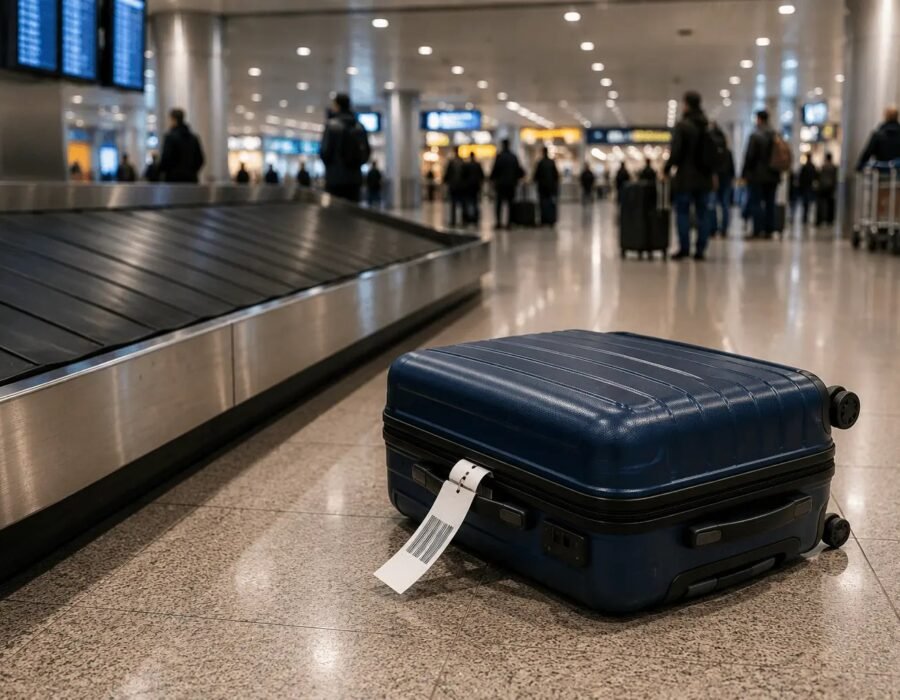
Knowing how do I deal with lost luggage at the airport before it happens turns a trip-ruining disaster into a manageable hassle. I’ve had bags delayed three times, once for four days in Italy. The first time I panicked; the third time I executed a calm routine and barely missed a beat. The difference was knowing the system.
Most lost luggage isn’t lost; it’s delayed, and 95 percent reunites with owners within days. Here’s exactly what to do from the moment you realize your bag isn’t coming.
At the airport: file immediately when facing lost luggage at the airport
Don’t leave the airport without filing a Property Irregularity Report (PIR) at the airline’s baggage desk. This is non-negotiable; no report means no tracking, no compensation, no accountability. Get the reference number, the desk’s direct phone number, and the agent’s name. Photograph the report. Ask specifically: what’s the delivery process, and what’s my compensation for essentials?
Describe your bag precisely: brand, color, size, distinctive features, and contents overview. The more specific, the faster matching works. Confirm your delivery address and phone number; bags often arrive while you’re out sightseeing. Get everything in writing or photographed. This 15-minute process determines everything that follows.
Your rights and compensation
Airlines must compensate for reasonable expenses caused by delayed bags: toiletries, clothing, essentials. Keep every receipt; reimbursement typically covers $50-$150 daily for the first few days, varying by airline and fare class. For domestic US flights, liability caps at $4,700 per passenger; international flights under the Montreal Convention cap around $1,700. These are maximums, not guarantees; reasonable documented expenses get paid.
If the bag is declared lost (usually after 21 days internationally, 5-14 domestically), file a full claim with itemized contents and values. The DOT’s baggage rules detail your protections. Credit card baggage benefits and travel insurance provide additional coverage; file those claims too. Documentation wins claims; keep everything.
- File the PIR before leaving the airport. No report, no compensation.
- Keep all receipts for essentials. Airlines reimburse reasonable expenses.
- Know the liability caps: $4,700 domestic, ~$1,700 international.
- File credit card and insurance claims too. Stack your protections.
Tracking your bag: be proactively persistent
Use the airline’s online baggage tracking with your PIR reference number, but don’t rely on it passively; updates lag and stall. Call the baggage line daily for status; polite persistence moves cases. Check if your bag has a tracking tag from the airline’s app; some carriers show real-time bag scans. If you packed an Apple AirTag or Tile, check its location yourself; travelers regularly locate bags faster than airlines do with personal trackers.
Escalate if stalled beyond 48 hours: ask for a supervisor, request the bag be expedited, and mention your rights firmly. Social media teams sometimes resolve faster than phone lines; a polite public message gets attention. Stay organized: one notes file with reference numbers, names, dates, and promises made. Organized travelers get better outcomes.
For connecting flights specifically, build in longer layovers when checking bags; 45-minute connections are where bags get left behind. Two hours is the safe minimum for international connections with checked luggage. If your itinerary has a tight connection, consider carrying on instead, or at minimum keep essentials in your personal item. The connection is the danger zone for luggage; plan around it and most delay risk evaporates.
Surviving without your stuff
This is why the personal item matters: medications, valuables, one change of clothes, and essentials should never be checked. Buy immediate necessities and keep receipts: underwear, basic toiletries, a change of clothes. Many airlines provide amenity kits on request; ask. For business travelers, buy a presentable outfit; looking professional matters and it’s reimbursable.
Minimize the disruption: do laundry if an extra day passes, borrow from travel companions, and remember it’s temporary. Most bags arrive within 48 hours. The travelers who suffer most are those who checked everything critical; the carry-on packing approach makes lost luggage a minor inconvenience rather than a crisis.
Preventing it next time
Prevention beats recovery. Fly nonstop when possible; most mishandling happens during connections, especially tight ones. Remove old baggage tags that confuse routing systems. Use distinctive luggage or bright straps; black bags are hardest to identify. Put your contact info inside and outside the bag, including your destination address.
Photograph your bag and its contents before checking; these photos accelerate claims enormously. Consider an AirTag or Tile in every checked bag; $30 buys peace of mind and self-service tracking. Arrive with buffer time; rushed check-ins and tight connections cause most delays. And seriously consider carry-on only; the best lost-luggage strategy is never checking a bag.
When the bag is truly gone
After the airline declares the bag lost, file the detailed claim: itemized list with values, receipts where available, photos of the bag and representative contents. Be thorough but honest; inflated claims get scrutinized and delayed. Include everything: the bag itself, clothes, toiletries, electronics, souvenirs. Total it carefully against the liability cap.
Follow up relentlessly but politely; claims take weeks to months. If the airline stonewalls, file a DOT complaint; regulators track complaint patterns and airlines respond to them. Learn from it: the experience usually converts travelers to carry-on devotees or meticulous packers. Every lost bag teaches the same lesson: essentials stay with you, everything else is replaceable.
Share your lost-luggage lessons with travel companions before trips, not after incidents. A two-minute briefing, essentials in personal items, photos of bags, AirTags inside, prevents most of the suffering when bags go astray. Group preparation means everyone recovers faster. And consider the experience a rite of passage; nearly every frequent traveler has a lost-bag story, and the calm ones are always those who prepared. Preparation turns disaster into anecdote.
The bottom line
Dealing with lost luggage means filing the report before leaving the airport, knowing your compensation rights, tracking persistently, buying essentials on the airline’s dime, and preventing recurrence with nonstop flights and personal-item essentials. Most bags return within days. Stay calm, document everything, and carry on. Small, consistent improvements compound into dramatically better trips over time.