
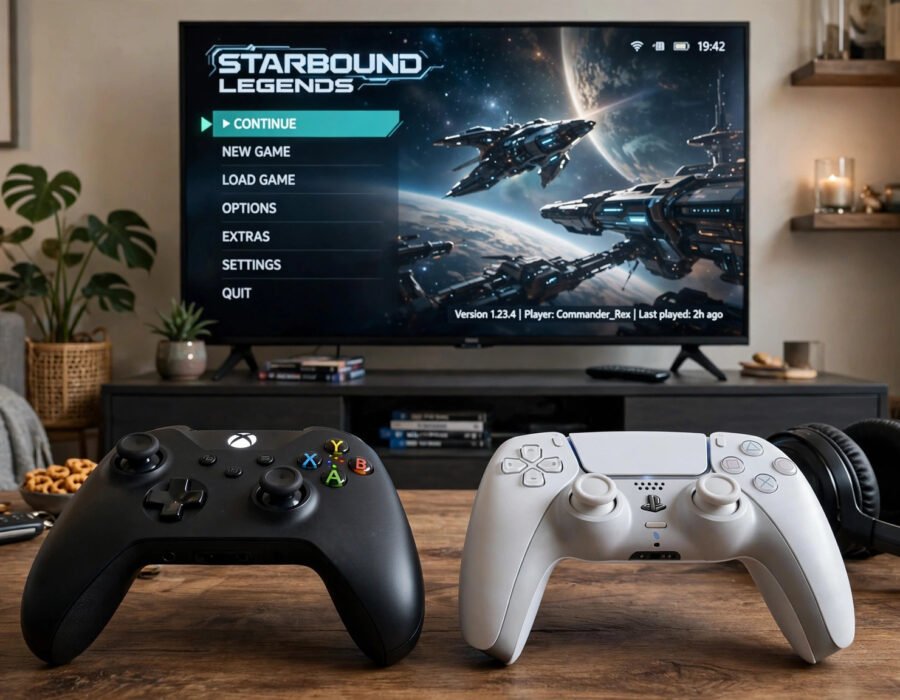
PlayStation vs. Xbox is gaming’s most tribal debate — and also its most poorly reasoned purchase decision. People pick sides based on brand loyalty, playground arguments from 2008, or which controller their friend likes, then spend $500+ on the wrong console for their actual life. In 2026, with both ecosystems mature and the differences narrower (and weirder) than ever, the decision deserves better than tribalism. Here are the biggest mistakes people make choosing between them — and how to actually decide.
Mistake #1: Choosing Based on Brand Loyalty Instead of Your Library
The most expensive mistake: buying the console your identity is attached to rather than the one that plays the games you’ll actually play. In 2026, exclusives still differ meaningfully — PlayStation’s first-party single-player epics versus Xbox’s Game Pass-powered breadth — but the your in “your games” matters more than the logo.
Do this instead: list the 10 games you’ll play most in the next two years. Check which platform has them, which has them better (performance, mods, community), and which subscription includes them. If 8 of your 10 are on Game Pass day one, the decision makes itself regardless of which plastic box you grew up with. Be honest about your backlog too — the best games for casual players are overwhelmingly multiplatform, which means ecosystem features (not exclusives) should drive your choice.
Mistake #2: Ignoring the Subscription Math
The console is the cheap part; the ecosystem is the expensive part. Run the real numbers:
- Xbox Game Pass Ultimate (~$20/month): Hundreds of games including day-one first-party releases. For players who try many games, this is the best value in gaming — two full-price purchases a year costs more than 12 months of Game Pass.
- PlayStation Plus tiers ($7–$18/month): Monthly games, online play, and (at higher tiers) a catalog of titles — but generally not day-one Sony exclusives.
The mistake: comparing $500 vs. $500 console prices while ignoring that a Game Pass subscriber might spend $240/year on subscriptions and $60 on games, while a PlayStation buyer spends $80/year on Plus and $400 on games. Over a 5-year console generation, the ecosystem cost difference dwarfs the hardware difference. Calculate your player type: sampler (subscription wins), specialist who plays 2–3 games endlessly (buy outright wins), or single-player epic devourer (varies by platform).
Mistake #3: Forgetting Where Your Friends Play
Multiplayer gaming is social infrastructure. The “better” console you play alone loses to the “worse” console where your five friends are. Cross-play has improved dramatically — many major titles now play across platforms — but it’s not universal, and party chat/voice ecosystems still favor same-platform groups.
Before deciding, literally ask your gaming group what they’re on and whether they’re staying. A console generation lasts 6–8 years; your friend group is the longest-lived feature of any platform. This single factor outweighs specs, exclusives, and subscriptions combined for multiplayer-heavy players.
Mistake #4: Overvaluing Specs, Undervaluing Experience
In 2026, both consoles play the same multiplatform games at comparable quality. The teraflop wars are marketing — real-world differences in load times and frame rates are marginal for most titles. What actually differs in daily use:
- Controller: PlayStation’s DualSense haptics and adaptive triggers are genuinely innovative — the most meaningful controller advance in a decade. Xbox’s controller is the refined comfort king with better battery life (and AA batteries vs. built-in). Try both in a store; hands differ.
- UI and ecosystem: Library management, cloud saves, remote play, quick resume — these quality-of-life features affect you daily, specs affect you never.
- Backward compatibility: Xbox’s is broader and better-implemented; PlayStation’s is more limited. If you own a library of older games, this isn’t a footnote — it’s the decision.
- Storage expansion costs: Both consoles need more storage eventually (games are 100GB+). Proprietary expansion (Xbox) vs. standard NVMe slots (PlayStation) means real cost differences — price the storage you’ll actually buy.
Mistake #5: Buying at the Wrong Time (or the Wrong Model)
Console generations have rhythms. Buying mistakes include:
- Buying the disc-less model to “save” $100 then spending $400 extra on digital games over the generation because you can’t buy discounted physical copies or resell. If you buy more than 3–4 games a year, the disc drive usually pays for itself — and physical games can be resold.
- Buying right before a mid-generation refresh without checking the rumor cycle. Mid-gen “Pro” models have become standard; buying the base model months before a refresh announcement stings.
- Ignoring bundles. Holiday bundles routinely package the console with games and subscriptions at effective discounts of $100+. Console availability patterns explain when stock (and deals) actually appear.
- Not checking your TV first. A 4K/120Hz console on a 10-year-old 1080p TV wastes half the hardware. If a display upgrade is also needed, budget for it — or save money with the less powerful model.
For family buyers, the ESRB’s rating system is worth consulting — and the FTC’s guidance on children’s privacy and gaming covers the parental-control side that matters more than which logo is on the box.
The 2026 Decision Framework
Answer in order; stop when one decides it:
- Where are your friends? (If multiplayer matters — decided.)
- Which exclusives will you actually play? (List them; count honestly.)
- Sampler or specialist? (Subscription value vs. ownership.)
- Physical or digital? (Disc drive math.)
- What display do you own? (Don’t overbuy hardware for an old TV.)
And if you’re mostly gaming on the go anyway, the best free phone games might scratch the itch for $0 — the cheapest console is the one you don’t need.
Conclusion
The biggest PlayStation-vs-Xbox mistakes in 2026 are: choosing by tribal loyalty instead of your actual game list, ignoring subscription economics, forgetting your friends’ platform, obsessing over specs instead of daily experience, and buying the wrong model at the wrong time. Run the five-question framework honestly, and the “right” console stops being a debate and starts being obvious — for you, which is the only person the decision needs to satisfy.
Frequently Asked Questions
Which is better in 2026, PlayStation or Xbox?
Neither universally — it depends on your games, friends, and playing habits. PlayStation leads in exclusive single-player epics and controller innovation; Xbox leads in subscription value (Game Pass) and backward compatibility. Run your personal game list and friend group through the decision before choosing.
Is Xbox Game Pass worth it?
For players who try many games, absolutely — day-one first-party releases plus hundreds of titles for ~$20/month beats buying games individually. For players who buy 2–3 games a year and play them endlessly, buying outright is cheaper. Match the model to your playing pattern.
Should I get the disc or digital edition?
Get the disc version if you buy 3+ games per year — discounted physical copies and resale value typically save more than the $100 upfront difference over the console’s life. Go digital only if you exclusively buy digital sales or subscribe to everything.
Does it matter which console my friends have?
Yes — enormously, for multiplayer gamers. Cross-play exists for many titles but isn’t universal, and same-platform parties are smoother. For single-player-only gamers, friends’ platforms are irrelevant.
When is the best time to buy a console?
Holiday season (October–December) brings the best bundles; avoid buying right before expected mid-generation refresh announcements. Check stock patterns — shortages still occur around launches — and never pay scalper prices; supply normalizes within months.


