SPF 30. SPF 50. Broad spectrum. Mineral vs. chemical. UVA vs. UVB. Reapply every two hours (but what does that actually mean at a desk job?). Sunscreen is the single most effective skincare product in existence — and the most misunderstood. Most people use too little, choose wrong for their needs, and misunderstand what the numbers mean. Here’s SPF from scratch: the complete beginner’s guide to how sun protection actually works.
What SPF Actually Measures
SPF (Sun Protection Factor) measures protection against UVB rays — the rays that burn. Specifically, it’s a ratio: SPF 30 means it takes 30 times longer for UVB to redden your skin than without protection. The math that matters:
- SPF 15 blocks ~93% of UVB
- SPF 30 blocks ~97% of UVB
- SPF 50 blocks ~98% of UVB
- SPF 100 blocks ~99% of UVB
Notice the diminishing returns — SPF 30 to SPF 100 gains you 2 percentage points, not triple the protection. Dermatologists recommend SPF 30 minimum because real-world application (too little product, missed spots) degrades labeled protection, and starting higher gives you margin. SPF above 50 offers negligible additional benefit and can create a false sense of security.
“Broad spectrum” is the other critical label — it means the product also protects against UVA rays, which don’t burn but penetrate deeper, causing premature aging and contributing to skin cancer. SPF alone tells you nothing about UVA. Always choose broad-spectrum.
Mineral vs. Chemical: The Real Differences
- Mineral (zinc oxide, titanium dioxide): sit on the skin’s surface and physically block/scatter UV. Start working immediately, less likely to irritate sensitive skin or sting eyes, better for rosacea/melasma-prone skin. Downsides: can leave a white cast (newer tinted and nano formulations help significantly), often thicker texture.
- Chemical (avobenzone, octocrylene, etc.): absorb UV and convert it to heat. Tend to be more elegant cosmetically (no cast, lighter feel), but need ~15 minutes to activate, can irritate sensitive eyes/skin, and some (oxybenzone) have environmental concerns — Hawaii and some other jurisdictions restrict oxybenzone/octinoxate for reef safety.
Neither is “safer” in absolute terms for most people — the FDA regulates sunscreens as OTC drugs and both categories have established safety profiles. The best sunscreen is the one you’ll actually wear daily. The Skin Cancer Foundation’s sunscreen guide is the definitive consumer reference.
How Much to Use (You’re Using Too Little)
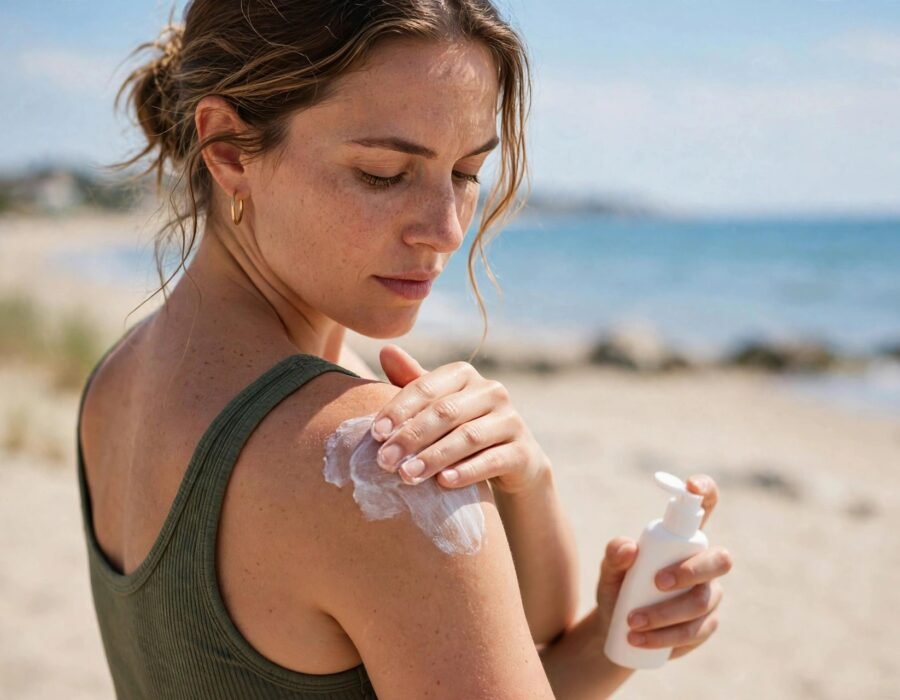
This is where nearly everyone fails. The tested SPF on the label assumes 2 mg/cm² — which translates to:
- Face and neck: a full finger-length strip (index to fingertip) — roughly 1/4 teaspoon — or the “two finger” rule (two full finger-lengths covers face + neck)
- Full body: a full shot glass (1 oz / 30ml)
Studies consistently show people apply 25–50% of the needed amount — which means your SPF 30 is performing like SPF 10. When in doubt, apply more. Makeup with SPF is not sufficient as your primary protection (nobody applies foundation at 2mg/cm²); treat it as a bonus layer over real sunscreen.
Reapplication: The Actual Rules
- Outdoors/continuous sun: every 2 hours, without exception.
- After swimming or heavy sweating: immediately, even with “water-resistant” formulas (note: no sunscreen is “waterproof” — the FDA banned the term; water-resistant means 40 or 80 minutes of retained protection).
- Indoor office day: morning application suffices for most — unless you sit by a window (UVA penetrates glass) or go out at lunch.
- Over makeup: SPF powders, setting sprays with SPF, or cushion reapplication — imperfect but better than nothing.
Common SPF Mistakes
- Skipping cloudy days: up to 80% of UV penetrates clouds. The worst burns happen on overcast days when people skip protection.
- Missing spots: ears, back of neck, tops of feet, lips (use SPF lip balm), and the part line in your hair — skin cancer loves neglected spots.
- Using last year’s bottle: sunscreen expires (check the date). Heat-degraded sunscreen (baking in a beach bag all summer) loses efficacy.
- Relying on high SPF instead of reapplying: SPF 100 applied once at 8 a.m. loses to SPF 30 reapplied properly. Reapplication beats number.
- Thinking dark skin doesn’t need it: melanin provides roughly SPF 13 equivalent — meaningful but insufficient. Skin cancer in darker skin is often diagnosed later and deadlier; everyone needs sunscreen.
SPF in Your Routine
Sunscreen goes last in the morning routine (over moisturizer), 15 minutes before sun exposure for chemical formulas. Let each layer absorb before the next to prevent pilling. If your moisturizer has SPF 30 broad-spectrum and you apply enough of it, that counts — but most people don’t apply enough moisturizer to hit the dose, so a dedicated sunscreen is the safer bet.
Sunscreen and Makeup: Making Them Work Together
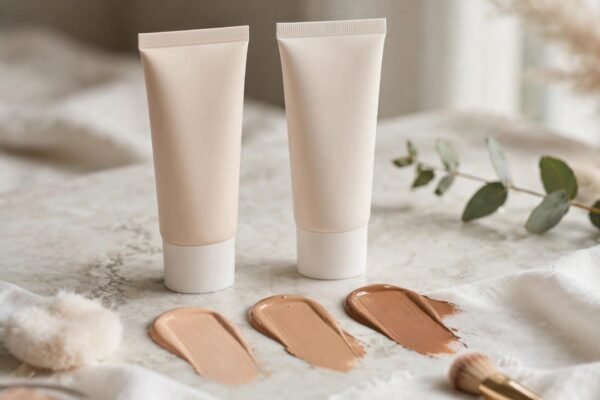
The sunscreen-makeup conflict is real: sunscreen needs a generous, even layer; makeup needs a smooth, dry canvas. The system that works: apply sunscreen first as a true sunscreen dose (the full finger-length), and let it set for 5–10 minutes — this is the step everyone rushes. Then apply a gripping or mattifying primer over it, which gives makeup something to hold onto and prevents the pilling that happens when foundation meets tacky sunscreen. Choose your sunscreen for makeup compatibility: fluid or gel textures layer better than thick creams; “dry touch” and “invisible” formulations were designed for exactly this. Tinted sunscreens can double as your base on light-makeup days. For reapplication over makeup (the genuinely hard problem): SPF setting sprays, SPF powders applied with a puff, or cushion compacts with SPF — none delivers a full sunscreen dose, but layered over a proper morning application they meaningfully extend protection. What doesn’t work: mixing sunscreen into foundation (dilutes the SPF unpredictably and voids the tested protection level), or relying on “SPF makeup” as your only protection. And at night, remove it all thoroughly — sunscreen + makeup + a full day is the heaviest load your skin carries, and double cleansing prevents the clogged pores people blame on sunscreen itself.
Conclusion
SPF from scratch: choose broad-spectrum SPF 30+, apply a full finger-length to face/neck (shot glass for body), reapply every 2 hours outdoors, and don’t trust makeup-SPF as primary protection. Mineral or chemical matters less than consistent daily use — the best sunscreen is the one you’ll wear. It’s the highest-ROI product in all of skincare: decades of data show daily users age visibly less and cut skin cancer risk substantially. Pair sun smarts with heat-appropriate clothing fabrics for full-spectrum summer protection, and remember stress affects skin too — sunscreen handles the UV; the rest of the routine handles the rest.
Frequently Asked Questions
What does SPF 30 mean?
It measures UVB protection as a ratio — skin takes 30x longer to redden than unprotected. SPF 30 blocks ~97% of UVB. Higher numbers add only marginal gains (SPF 50 = 98%, SPF 100 = 99%).
What’s the difference between UVA and UVB?
UVB burns (measured by SPF); UVA penetrates deeper, causing aging and contributing to skin cancer (covered by “broad spectrum” labeling). You need protection from both.
How often should I reapply sunscreen?
Every 2 hours during continuous sun exposure, and immediately after swimming or heavy sweating. For indoor office days, morning application is usually sufficient.
Is mineral or chemical sunscreen better?
Neither is universally better. Mineral suits sensitive skin and works immediately; chemical tends to feel more elegant with no white cast. Both are FDA-regulated with established safety. Choose based on your skin and what you’ll wear daily.
Do I need sunscreen on cloudy days?
Yes — up to 80% of UV rays penetrate clouds. Overcast-day burns are common precisely because people skip protection.
Sources: Skin Cancer Foundation and the FDA on sunscreen.