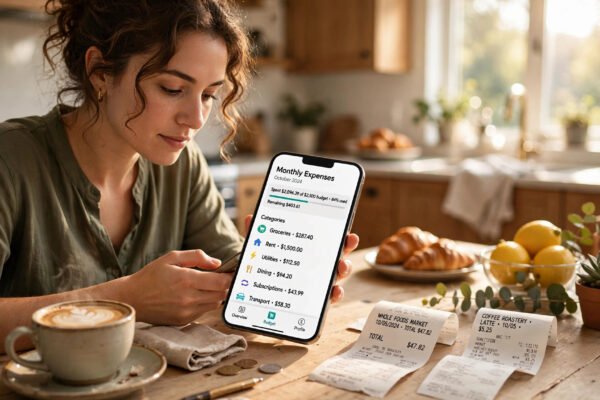
The promotion letter arrives: a $15,000 raise. Within a year, your bank balance looks… exactly the same as before. The nicer apartment, the car upgrade, the expanded dining-out budget — each felt like a small, deserved reward, and together they consumed every dollar of the raise. This is lifestyle inflation (or “lifestyle creep”), and it’s the reason so many high earners feel broke: income rises, spending rises faster, and wealth stays flat.
The best way to avoid lifestyle inflation after a promotion isn’t willpower — it’s architecture. Here’s the playbook for keeping your raise.
Why Promotions Trigger Spending Sprees
Four forces converge on every newly promoted worker. Hedonic adaptation: humans normalize improvements within months — the nicer car thrills in January, feels normal by June, and “needs” upgrading by next year. Social recalibration: promotions often come with new peer groups (and their spending norms) — the colleagues’ cars, vacations, and neighborhoods reset your baseline of “normal.” Deservedness narrative: “I worked hard for this” justifies each purchase individually, hiding the collective damage. Mental accounting: the raise feels like “extra” money rather than real money, so it gets spent with extra looseness.
Understanding these isn’t academic — each has a structural countermeasure, and willpower alone defeats none of them reliably. The promoted workers who build wealth aren’t more disciplined; they’re better designed.
The 50% Rule: The Single Most Effective Tactic
Here’s the playbook’s core: save or invest at least 50% of every raise, automatically, before you ever see it. Got a $15,000 raise (~$1,000/month after tax)? Route $500/month to investments via increased 401(k) contributions or automatic transfers the same week the raise takes effect. The remaining $500 is yours to enjoy — guilt-free, because the wealth-building already happened.
The timing is everything: capture the raise before lifestyle absorbs it. Money you’ve never lived on isn’t missed; money you’re already spending is agonizing to claw back. Update your 401(k) contribution percentage the day HR confirms the raise — future-you, watching the balance compound, will thank present-you enormously. This single automation does more than any budgeting app, spending freeze, or New Year’s resolution.
Give Yourself a (Bounded) Raise Too
Total deprivation backfires — the promotion deserves some celebration, and forbidding all lifestyle improvement breeds resentment that eventually explodes into a spending binge. The solution: allocate a specific, bounded lifestyle upgrade — one meaningful improvement, chosen deliberately, funded by a fixed portion of the raise.
Pick the upgrade with the highest joy-per-dollar: often it’s not the car (depreciating, stressful) but the thing that buys time or health — a housecleaner, a better mattress, the vacation you’ve postponed. Spend the allocated portion fully and happily; the boundary is what matters, not the amount. “I’m spending $300/month more on life and saving $500 more” is a plan. “I’ll try to be careful” is a hope.
Automate the Invisible Wealth-Building
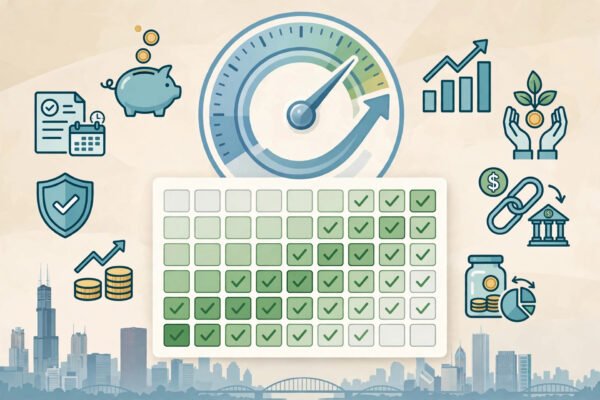
Beyond the 50% rule, promotions are the ideal moment to upgrade your financial infrastructure. Increase 401(k) contributions to capture more tax-advantaged growth (check new IRS limits yearly at the IRS website). Fund the IRA if you weren’t maxing it. Build the emergency fund to a full 6 months if it was thin. Attack remaining high-interest debt with the surplus.
Each of these is a one-time setup with permanent effects — the opposite of lifestyle inflation’s permanent costs for temporary thrills. And keep the wealth-building invisible: money that never hits checking never tempts. The budgeting systems in our monthly budgeting guide and everyday savings guide make the remaining spending intentional rather than accidental.
Defend Against the Big Three Creep Vectors
Lifestyle inflation concentrates in three categories that deserve specific defenses. Housing: the promotion-triggered move to a nicer apartment or bigger house is the single largest wealth destroyer — housing costs are sticky (leases, mortgages) and they reset every other spending norm upward. Rule: keep housing under 30% of gross after the raise, not before. Cars: the classic promotion purchase — depreciating, insurable, stressful. Rule: drive the current car one more year; if you must upgrade, buy modest and used. Recurring subscriptions and services: the $200/month in new subscriptions (meal kits, premium everything) that feels trivial but costs $2,400 yearly, forever.
For each vector, apply the 30-day rule: any lifestyle upgrade over a threshold ($200, say) waits 30 days. Most urges expire; the ones that survive are the ones actually worth it. And set concrete goals for the saved portion — our framework for setting realistic goals you’ll actually achieve turns “save more” from a wish into a plan with a finish line.
The Social Dimension: Spending Peer Pressure
Promotions change your social context — new team, new expectations, new norms. The defense is partly philosophical: recognize that visible spending is a status game with no finish line — there’s always someone promoted higher, spending more. Opt out consciously. It’s partly practical: cultivate friendships outside work where your title doesn’t set spending expectations, and practice the sentence “that’s not in my plan right now” until it’s comfortable.
Notably, the wealthiest people in most workplaces are rarely the biggest spenders — they’re the ones who captured their raises quietly for decades. Invisible wealth compounds; visible wealth depreciates. Choose which game you’re playing deliberately.
When Lifestyle Inflation Is Actually Fine
Honesty requires the caveat: not all lifestyle inflation is bad. If you were genuinely under-living — skipping healthcare, living somewhere unsafe, never taking time off — a promotion is the right moment to fix real deficits. The framework isn’t “never spend more”; it’s “spend deliberately on what matters, save automatically on the rest.” A raise that funds both a better life and a wealthier future is the entire point of career growth. The enemy was never spending — it was unconscious spending, the kind where the money vanishes and you can’t name what it bought.
Conclusion
Avoiding lifestyle inflation after a promotion comes down to architecture, not willpower: automatically capture 50%+ of every raise before you see it, grant yourself one bounded, deliberate lifestyle upgrade, use the promotion moment to upgrade your financial infrastructure (401(k), IRA, emergency fund, debt), defend specifically against the big three creep vectors (housing, cars, subscriptions) with waiting periods and percentage rules, and navigate the new social norms consciously. Do this with every promotion for a decade, and the compounding does something promotions alone never do: it makes you wealthy, not just well-paid. The raise was the opportunity. The system is what keeps it.
Frequently Asked Questions
What percentage of a raise should I save?
At least 50% is the gold standard — enough to dramatically accelerate wealth while leaving meaningful room to enjoy the promotion. Higher is better if your lifestyle was already comfortable; never below 30% unless addressing genuine deficits.
Is lifestyle inflation always bad?
No — deliberate upgrades that fix real quality-of-life deficits (healthcare, safety, rest) are good uses of a raise. The problem is unconscious inflation: spending that rises automatically without improving life proportionally.
How do I handle pressure to spend from a new peer group?
Recognize it as a status game with no endpoint, keep non-work friendships as grounding, and practice declining comfortably. Most colleagues respect financial boundaries more than you fear — and many are quietly drowning in their own lifestyle inflation.
Should I tell anyone about my savings plan?
A trusted partner should know (joint finances require joint plans). Beyond that, privacy is fine — but an accountability partner with similar goals dramatically improves follow-through. The Consumer Financial Protection Bureau’s Ask CFPB resources on savings habits reinforce the automation-first approach.