Learning how to be productive working from home sounds simple until your couch, your fridge, and your phone all start competing for your attention. I spent my first six months of remote work answering emails from bed and wondering why 5 p.m. arrived with nothing finished. The problem was never laziness. It was the lack of structure that an office used to provide for free.
The good news is that remote productivity is a skill, not a personality trait. Small changes to your environment, your schedule, and your habits compound fast. Below are the strategies that actually moved the needle for me and for dozens of remote workers I’ve talked to, none of which require buying a $400 standing desk.
Why being productive working from home feels so hard
Your brain links places to behaviors. An office cues work mode the second you walk in; your home cues rest, chores, and Netflix. When every room doubles as your workplace, those cues blur, and your focus pays the price. Researchers call this context switching, and it explains why you can feel busy all day at home yet finish almost nothing.
The fix starts with rebuilding those cues on purpose. A dedicated work spot, even a corner of the dining table you only use for work, tells your brain it’s go time. When you leave that spot, work is over. That single boundary does more for your output than any app I’ve tried.
Design a workspace that does half the work for you
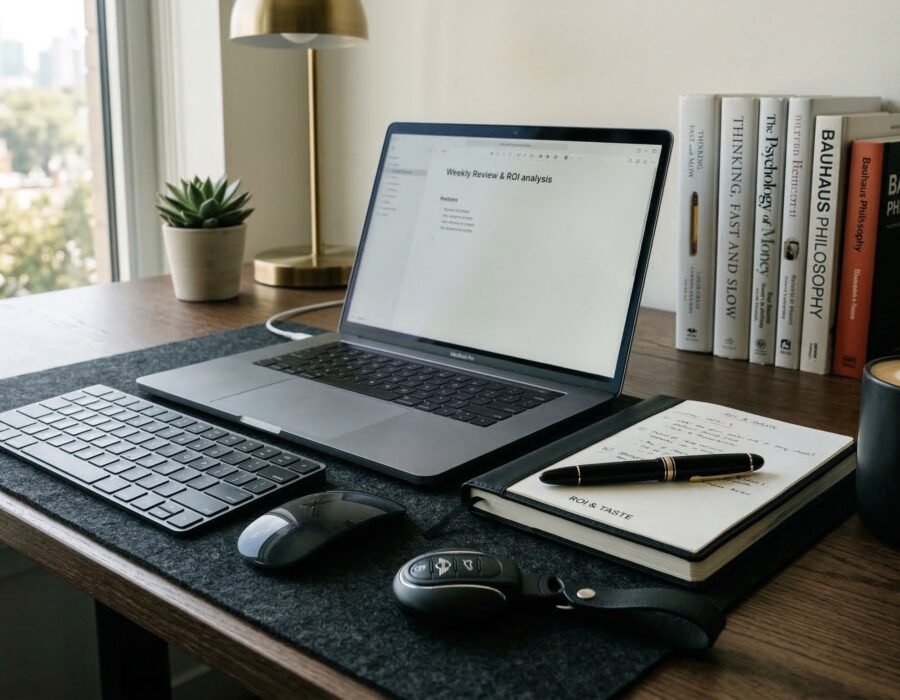
You don’t need a separate office. You need a consistent, comfortable setup with decent light and fewer distractions in arm’s reach. Face a window if you can, keep your phone in another room during deep work, and use headphones as a universal do-not-disturb signal, even if no one’s home to see them.
Noise is the silent productivity killer in most houses. A $30 pair of earplugs or a white-noise app handles barking dogs, leaf blowers, and chatty roommates. If your back aches by noon, raise your monitor to eye level with a stack of books. Ergonomics sounds boring until pain starts stealing your afternoons.
- Keep only the current task visible: close extra tabs and put papers for later in a drawer.
- Charge your phone outside your workspace so quick checks don’t become 20-minute scrolls.
- End each day by clearing the desk. A clean start removes morning friction.
- Add one plant or photo. A space that feels cared for makes you want to show up.
Time-block your day like you mean it
To-do lists fail remote workers because they ignore time. Time blocking assigns every meaningful task a slot on your calendar, including lunch and a hard stop. When 2 to 4 p.m. says deep work, that’s the plan, and everything else waits. I’ve found that 90-minute blocks with 15-minute breaks match my natural energy better than grinding for four hours straight.
Protect your peak hours ruthlessly. If you think clearest before lunch, that’s when the hard project goes, not email. Meetings and admin tasks belong in your low-energy valleys. This one shift, matching task difficulty to energy, made my afternoons stop feeling like wading through mud.
The two-list trick that ends the day cleanly
Each morning, write a must-do list of three items and a nice-to-do list for everything else. Three sounds small, and that’s the point. Finishing three real tasks beats half-finishing ten, and the momentum carries into tomorrow. On days when even three feels heavy, I shrink them further: answer the client email becomes open the draft and write two sentences.
This pairs well with a weekly review. Spend 20 minutes Friday afternoon noting what worked and what’s stuck. That habit alone answers the bigger question of how to plan a weekly schedule you actually follow, because you’re adjusting based on evidence instead of guilt.
Beat the three biggest home distractions
Household chores whisper all day. The rule that saved me: if it takes under two minutes, do it on a break; otherwise it goes on a list for after hours. Laundry can run while you work, but reorganizing the garage cannot. Similarly, well-meaning family members need explicit work hours, posted if necessary. A closed door means I’m at the office, even though the office is ten feet from the kitchen.
Then there’s the phone, the true archvillain. App timers help, but the nuclear option works best: grayscale mode plus the phone in another room during focus blocks. You’ll be shocked how rarely you actually miss it. For deeper science on why this works, the American Psychological Association’s research on workplace stress is worth a skim.
- Name your top distraction honestly. You can’t fix what you won’t admit.
- Design the environment against it: phone in the kitchen, TV unplugged, door closed.
- Schedule the temptation: 15 minutes of scrolling at lunch beats 15 stolen minutes six times a day.
- Tell one person your plan. Social accountability is weirdly powerful.
Know when to stop: rest is a productivity tool
The remote trap isn’t just distraction, it’s never clocking out. Without a commute, work bleeds into dinner and weekends, and chronic overwork quietly tanks next week’s output. Set a shutdown ritual: close the laptop, change clothes, take a walk. Your brain needs the signal that the workday has a door, and you’re walking through it.
If you’re pushing long hours and still falling behind, the issue might be bigger than habits. Burnout masquerades as a productivity problem, and learning to deal with burnout without quitting starts with admitting rest isn’t laziness. The most productive remote workers I know guard their evenings like client meetings.
The bottom line
Being productive working from home comes down to three things: a workspace that cues focus, a schedule that respects your energy, and a firm end to the day. Pick one strategy from each bucket this week and test it. You don’t need a perfect system, just one that’s slightly better than yesterday’s, repeated until it’s automatic.