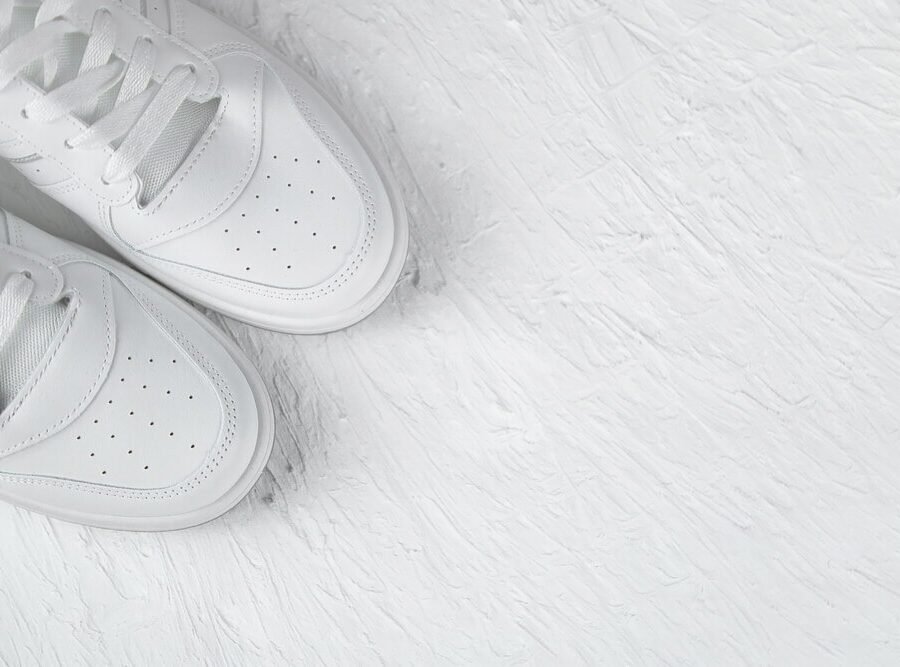
They were pristine white on day one. By day thirty, they’re a sad gray-yellow with scuffs, and the laces look archaeological. If you’re asking how to keep white sneakers looking new, here’s the truth: it’s 90% prevention and 10% cleaning. Once white sneakers are deeply stained, restoration is hard — but keeping them fresh from day one is easy. Here’s the full system.
Prevention (The 90%)
- Protect before first wear. Water and stain repellent spray (Crep Protect, Jason Markk Repel) — 2 minutes, invisible shield. Reapply monthly. This is the single highest-ROI step.
- Wipe after every wear. 30 seconds with a damp cloth or sneaker wipe prevents the buildup that becomes permanent. Keep wipes by the door.
- Rotate pairs. Daily wear grinds dirt in; 48 hours of rest between wears keeps them fresher dramatically longer.
- Choose your battles: don’t wear white sneakers to muddy festivals, dusty hikes, or rainy commutes. That’s what other shoes are for.
- Store properly: shoe trees or stuffing hold shape; dust bags prevent closet grime.
Cleaning (The 10%)
Regular maintenance (weekly)
- Soft brush or cloth + mild soap + warm water on uppers
- Magic eraser on midsoles and toe caps — remarkably effective
- Baking soda paste + old toothbrush on stubborn sole marks
Deep clean (monthly or as needed)
- Remove laces (soak separately or replace — $5 new laces = transformation)
- Full hand-wash per proper sneaker washing — never the machine
- White vinegar + baking soda paste on canvas for yellowing
- Stuff with paper towels, air dry away from sun (sun yellows white rubber)
Stain emergencies
- Scuffs: magic eraser, gentle pressure
- Mud: let dry completely, then brush off — wet mud spreads; dry mud crumbles
- Grass: white vinegar dabbed, then soap wash
- Yellowing soles: the hardest fix — salon-grade 40-volume cream peroxide + sun (the “sole sauce” method sneakerheads use), wrapped in plastic wrap for hours
Material-Specific Notes
- White leather: easiest to maintain — wipe clean, condition occasionally (see leather care)
- Canvas: stains fastest, cleans reasonably — the vinegar-baking soda treatment works well
- Knit: hardest — stains wick into fibers; protection spray is essential from day one
Restoration: Saving the Already-Dirty Pair
Prevention failed? All is not lost. Here’s the restoration ladder, from easy to nuclear.
Level 1 — The deep clean: full hand-wash (laces out, insoles out, mild soap, soft brush), magic erasers on midsoles, baking soda paste on stubborn marks. This revives 70% of “dirty” sneakers — most people give up before trying.
Level 2 — Targeted treatments: white vinegar + baking soda paste on canvas yellowing (apply, sun-dry 1 hour, rinse); hydrogen peroxide on tough sole stains; toothpaste (white, non-gel) as a mild abrasive on rubber. Test hidden spots first — always.
Level 3 — Sole de-yellowing: the sneakerhead method — 40-volume cream peroxide (salon supply), applied to soles, wrapped in plastic wrap, left in sun for hours. It reverses oxidation yellowing remarkably. Multiple sessions for severe cases. (Not for uppers — just soles.)
Level 4 — Professional cleaning: sneaker laundry services ($25–$50) with industrial tools and experience. Worth it for expensive pairs; overkill for beaters.
Level 5 — Repainting: Angelus leather paint on leather sneakers — the nuclear option. Properly done, it looks factory-new; improperly done, it looks painted. Practice on the beaters first.
Know when to retire: separated soles, cracked midsoles, structural collapse — cleaning can’t fix structural death. Retire them to yard-work duty with honor.
The Science of Sneaker Yellowing (And How to Fight It)
Yellowing isn’t dirt — it’s chemistry. Understanding it changes how you fight it.
Oxidation: the main culprit. Rubber and foam soles oxidize on contact with air — the same process that browns an apple. It accelerates with heat, sunlight, and humidity. This is why deadstock sneakers yellow in the box: oxidation doesn’t need wear, just time and air.
Why soles yellow first: midsoles are typically EVA foam or rubber — both oxidation-prone. Uppers (leather, canvas) yellow slower. The two-tone aging (yellow soles, white uppers) is chemistry, not neglect.
Prevention science: cool, dark, dry storage slows oxidation dramatically. Silica gel packets in the box absorb moisture; airtight storage limits oxygen exposure. Sneaker collectors store grails this way — the same science protects daily wearers.
The peroxide method, explained: hydrogen peroxide (or 40-volume cream developer) reverses oxidation — it’s a mild bleaching reaction that breaks down the yellowed compounds. Sunlight accelerates it (UV + peroxide = faster reaction). That’s why the salon-peroxide-in-sun method works: it’s photochemistry, not magic.
What doesn’t work: bleach (destroys rubber and foam structure — whiter today, crumbling tomorrow), abrasive scrubbing on foam (removes the yellowed layer along with the material), and “whitening” products without peroxide chemistry (cosmetic cover-ups that wash off).
Fight yellowing with science: store cool and dark, protect with repellent spray, and de-oxidize with peroxide when needed. (For authoritative material on oxidation chemistry, see the overview of polymer degradation.) Chemistry caused it; chemistry fixes it.
When to Retire White Sneakers
Every sneaker has a lifespan — here’s how to know it’s over. Structural death: separated soles, cracked midsoles, collapsed heel counters — cleaning can’t fix engineering failure. The smell test: odor that survives washing, baking soda, and airing means bacteria have colonized the interior permanently. The cost test: when professional cleaning ($25–$50) approaches replacement cost, replace. The honest timeline: daily-worn white sneakers last 6–12 months of good looks; rotated pairs last 2–3 years. Retire them to yard-work duty with honor — and start the protection routine on day one of the replacement pair. Prevention on the new pair beats restoration on the old one, every time.
Key Takeaways
- 90% prevention: protectant spray before first wear, wipe after every wear, rotate pairs.
- 10% cleaning: mild soap hand-wash, magic erasers on soles, never the machine.
- New laces ($5) are the cheapest visual refresh in footwear.
- Let mud dry before brushing; keep white sneakers out of direct sun when drying.
- Don’t wear them where they’ll die — rotation is protection.
The Bottom Line
Keeping white sneakers looking new is a prevention game: spray them day one, wipe them every wear, rotate them, and hand-wash gently when needed. Do this and they’ll look box-fresh for a year instead of a month. White sneakers are a commitment — a small, easy, totally worth-it one.