
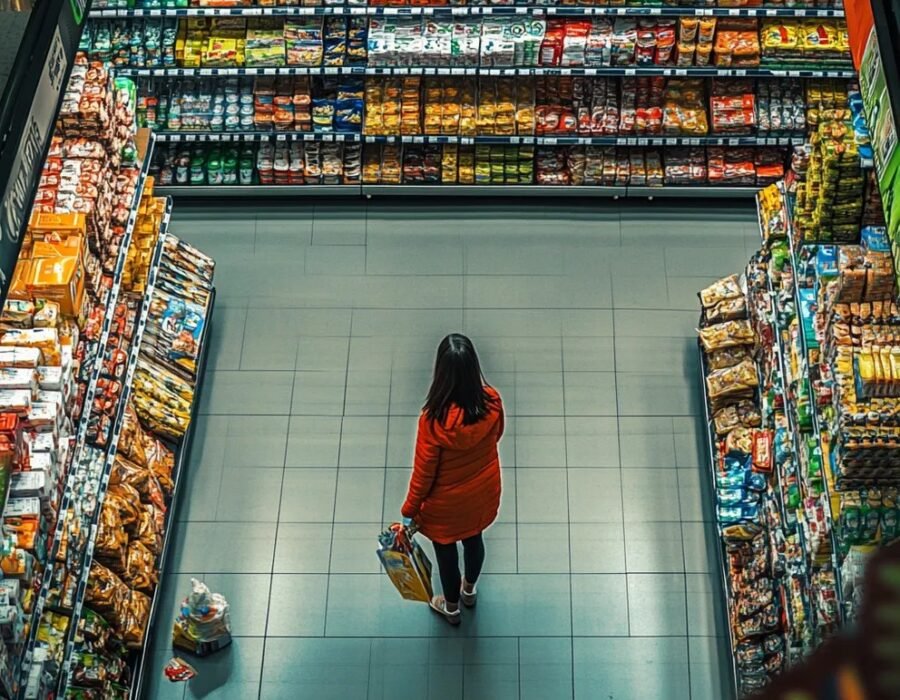
Your grocery store knows you’re going to buy avocados before you do. The shelves are stocked based on predictions, the prices shift with demand, the self-checkout watches for theft, and the app offers you coupons for exactly what you were about to buy anyway. Artificial intelligence has quietly transformed the supermarket — one of the oldest retail formats — into a data-driven operation. Here’s how AI is used in grocery stores and supermarkets, from the supply chain to the checkout line.
Most shoppers notice none of this, which is exactly the point. The best retail AI is invisible: shelves that are never empty, prices that feel fair, checkout that’s fast, and offers that feel serendipitous. But understanding the machinery helps you shop smarter — and think more carefully about the data you’re trading for convenience.
How AI Is Used in Grocery Stores and Supermarkets
Demand forecasting and inventory. This is AI’s biggest grocery impact. Machine learning models predict demand for every product in every store — factoring in weather, local events, holidays, historical patterns, even social media trends. The result: fewer empty shelves, less food waste, fresher produce. Walmart and Kroger credit AI forecasting with significantly reducing out-of-stocks and spoilage. Given that grocery operates on razor-thin margins (1-3%), these efficiency gains are transformative — and they mean the milk you want is actually there.
Supply chain optimization. AI routes delivery trucks, predicts disruptions, optimizes warehouse operations, and manages the cold chain for perishables. When a storm threatens a distribution region, AI reroutes proactively. The complexity of getting 40,000 products to thousands of stores daily — fresh — is a logistics problem AI was born to solve.
Dynamic pricing. Electronic shelf labels, now spreading through US chains, enable prices to change based on demand, time of day, and expiration dates. That rotisserie chicken gets cheaper as closing time approaches — not by employee decision, but by algorithm. This reduces food waste dramatically, though it raises questions about price fairness that regulators are beginning to examine.
Personalized promotions. Your loyalty app’s coupons aren’t random — AI analyzes your purchase history to predict what you’ll buy and offers targeted discounts to shape your behavior. The coupons feel personal because they are: the system knows you buy organic pasta but haven’t tried the store’s organic sauce. Our exploration of AI in online shopping recommendations covers the same techniques applied to e-commerce.
How AI Shows Up in the Store Itself
Self-checkout and theft prevention. AI-powered cameras and weight sensors detect unscanned items, misidentified produce (“that’s organic avocados, not conventional”), and sweethearting (cashier-assisted theft). The technology is controversial — false accusations embarrass innocent shoppers — but it’s spreading because shrink (retail theft) costs the industry tens of billions annually.
Cashierless stores. Amazon’s Just Walk Out technology (cameras + sensors + AI) lets shoppers grab items and leave, with billing handled automatically. While Amazon has scaled back some implementations, the technology demonstrated what’s possible — and competitors are developing their own versions.
Robotic assistance. Robots roam aisles checking inventory, identifying spills, and verifying prices. They don’t replace workers so much as handle the tedious auditing tasks humans hate — though the labor implications are real and debated.
Smart carts. AI-powered carts that scan items as you shop, show running totals, offer navigation to products, and enable skip-the-line checkout. They’re rolling out at major chains, turning the humble cart into a shopping computer.
What This Means for You as a Shopper
The benefits are real: better-stocked shelves, fresher food, less waste, personalized deals, faster checkout. These aren’t trivial — they save you time and money weekly.
But stay aware of the trade-offs. Privacy: loyalty apps track everything you buy, building detailed profiles of your household’s habits, health conditions (inferred from purchases), and lifestyle. Review what’s collected and decide if the discounts are worth it. Our AI privacy guide covers the evaluation framework. Price discrimination: personalized pricing means different shoppers may see different prices. Consumer advocates are watching whether this crosses from efficiency into unfairness — and the FTC’s work on commercial surveillance and data practices is the regulatory front to follow. Algorithmic nudging: the store layout, app notifications, and personalized offers are designed to increase your spending. Awareness is your defense — shop with a list, and recognize when you’re being steered.
Shop smarter with the system: use the app for digital coupons (they stack with sales), check for clearance timing on perishables (late-day markdowns are real), and compare the app’s “personalized” price against the shelf price — sometimes the personalization isn’t in your favor.
Looking ahead, expect the AI supermarket to get more personalized — and the privacy questions to get sharper. Some chains are testing personalized pricing via loyalty apps, where the price you see depends on your predicted willingness to pay. Consumer advocates are watching closely, and regulators are beginning to ask whether this crosses from efficiency into discrimination. Stay informed about your store’s data practices, use privacy settings in grocery apps, and remember: the loyalty discount is a trade, not a gift. The FTC’s ongoing work on commercial surveillance and data security is the regulatory front to watch. The grocery store of 2030 will know you better than ever — the question is whether that knowledge serves you, the retailer, or both. Informed shoppers tilt the answer toward themselves.
Small practical note: the savviest grocery shoppers I know treat the store’s AI as a game to be played well. They check the app for personalized deals before every trip, time perishable purchases for markdown windows, and keep a price book (mental or actual) for their 20 most-bought items so they recognize genuine deals versus fake ones. The store’s algorithms are optimizing for the store’s benefit; your awareness optimizes for yours. It’s not adversarial — it’s just commerce. But the shoppers who understand the system consistently spend 10-15% less than those who wander the aisles on autopilot. Knowledge is literally money in the AI supermarket.
The Bottom Line
AI is used in grocery stores for demand forecasting, supply chain optimization, dynamic pricing, personalized promotions, theft prevention, and increasingly automated checkout. The result is better-stocked, less-wasteful stores with personalized deals — real benefits you experience weekly. But the data trade is substantial: your purchase history builds detailed household profiles, and personalized pricing raises fairness questions worth watching via the FTC’s ongoing work. Shop with awareness: use the digital coupons, exploit the markdown timing, keep a list to resist algorithmic nudging, and decide consciously what your data is worth. The AI supermarket isn’t going away — but informed shoppers get the benefits without overpaying in privacy.




1 Comment