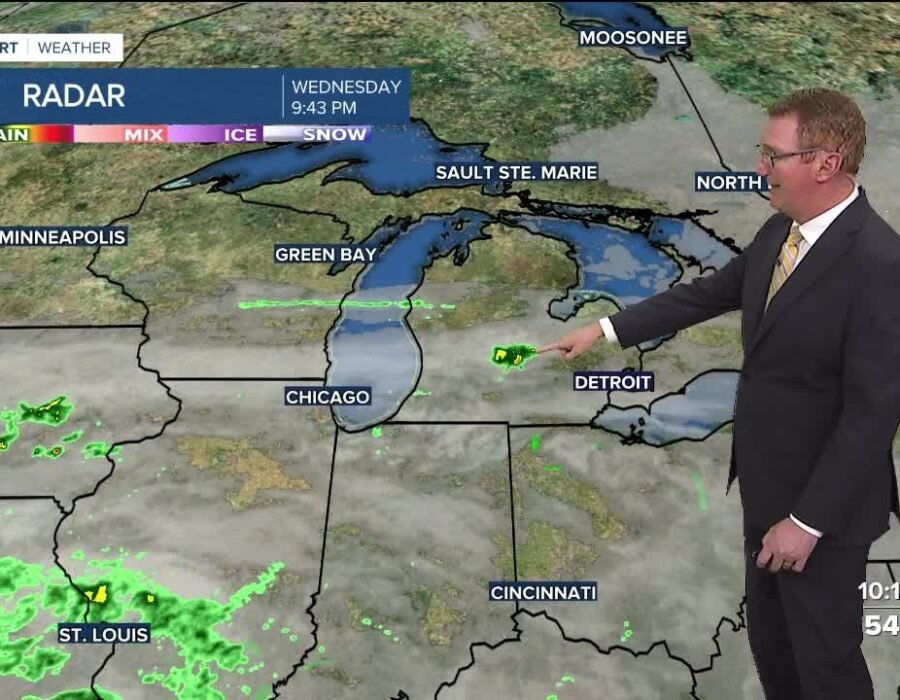
Your weather app just predicted rain at 3pm — and it was right. Ten years ago, that level of precision was impossible. Today, AI is transforming weather forecasting so dramatically that meteorologists talk about the biggest leap in prediction skill in decades. But how is AI actually used in weather forecasting? It’s not replacing meteorologists or their supercomputers — it’s doing something more interesting: learning weather patterns from data in ways that complement physics-based models. Here’s what’s happening in the sky above your forecast.
Let me give you the 30-second background. Traditional forecasting uses numerical weather prediction: massive supercomputers solving physics equations across a 3D grid of the atmosphere. It’s powerful but computationally brutal — a single global forecast can take hours on a supercomputer. AI approaches the problem differently: instead of solving physics equations, machine learning models learn patterns from decades of historical weather data, then predict future weather from current conditions. The result is often faster, sometimes more accurate, and always cheaper to run.
How AI Is Used in Weather Forecasting: The Breakthroughs
Global prediction models. The headline breakthrough: AI models like Google DeepMind’s GraphCast, Huawei’s Pangu-Weather, and NVIDIA’s FourCastNet now produce 10-day global forecasts in under a minute — compared to hours for traditional supercomputer models — with accuracy matching or exceeding the best physics-based systems on many metrics. They learned by training on decades of historical weather data (ERA5 reanalysis), discovering atmospheric patterns no human explicitly programmed. When GraphCast outperformed the European Centre’s gold-standard model on most variables, the meteorological world took notice.
Nowcasting — the next few hours. Traditional models struggle with 0-6 hour predictions (they’re optimized for days ahead). AI excels here: analyzing radar, satellite, and sensor data to predict rain, storms, and fog in the immediate future with remarkable precision. That “rain starting in 20 minutes” notification? That’s AI nowcasting — and it’s the forecast type most people actually use daily.
Severe weather prediction. AI helps predict hurricanes (track and intensity), tornadoes (identifying precursor patterns in radar data), floods (combining rainfall predictions with terrain models), and wildfires (spread prediction from weather, vegetation, and topography). Earlier, more accurate severe weather warnings save lives — this is AI forecasting at its most consequential. The National Weather Service incorporates increasingly sophisticated modeling into the warnings millions of Americans rely on.
Hyperlocal forecasting. AI downscales global predictions to your specific location — accounting for local terrain, urban heat effects, and microclimates. The forecast for “your street” versus “your city” differs meaningfully, and AI makes that granularity computationally feasible.
Climate modeling. The same techniques improving daily forecasts are advancing long-term climate projections — helping scientists model cloud formation, ocean currents, and extreme event probabilities with greater confidence. Better climate models mean better planning for everything from infrastructure to agriculture.
What AI Doesn’t Replace (The Meteorologists’ Role)
Here’s what working forecasters will tell you: AI is a powerful tool, not a replacement. Physics still matters: AI models learn from historical data, which means they can struggle with unprecedented conditions — exactly when accurate forecasting matters most. Physics-based models encode understanding that transfers to novel situations. Human judgment interprets: the National Weather Service meteorologist deciding whether to issue a tornado warning weighs model outputs against experience, local knowledge, and the human cost of false alarms versus missed events. That judgment call — with lives in the balance — remains human. Communication is human: translating “70% probability of severe hail” into actionable public guidance requires understanding communities, not just statistics.
The emerging consensus: hybrid systems. AI for speed and pattern recognition, physics models for novel situations and physical consistency, humans for judgment and communication. Each covers the others’ weaknesses. It’s the same AI-plus-human pattern transforming medicine, and it’s proving more powerful than either alone.
What This Means for You
Practically, your forecasts are getting better — measurably. Precipitation timing, severe weather warnings, and hyperlocal accuracy have all improved with AI integration. A few tips for using modern forecasts well:
- Trust the near-term most: 0-48 hour forecasts are remarkably accurate now. Beyond 7 days, treat forecasts as trends, not promises — uncertainty grows exponentially.
- Understand probabilities: “30% chance of rain” means 30% of similar situations produced rain, not “it’ll rain 30% of the day.” AI improved the calibration of these probabilities, but they’re still probabilities.
- Use official sources for severe weather: For watches and warnings, the National Weather Service remains the gold standard — technology assists, but their meteorologists make the life-safety calls.
- Check multiple models for important plans: Outdoor wedding? Major travel? Compare a couple of forecast sources. When they agree, confidence is high; when they diverge, uncertainty is real.
Weather forecasting sits at the intersection of two fascinating trends: AI’s pattern-recognition power and humanity’s oldest scientific challenge — predicting nature. Our broader look at AI working invisibly in everyday life puts weather prediction alongside the dozens of other silent AI systems you rely on daily. It’s a reminder that AI’s most valuable applications are often the quiet, infrastructural ones rather than the flashy demos.
For those who want to understand the bigger picture, weather forecasting sits at the intersection of two fascinating trends: AI’s pattern-recognition power and humanity’s oldest scientific challenge — predicting nature. The same machine learning techniques improving your daily forecast are also advancing climate modeling, helping scientists project long-term changes with greater confidence. It’s a reminder that AI’s most valuable applications are often the quiet, infrastructural ones rather than the flashy demos. Our broader look at AI working invisibly in everyday life puts weather prediction alongside the dozens of other silent AI systems you rely on daily. The forecast on your phone represents one of humanity’s great scientific achievements — and it’s getting better every year.
The Bottom Line
AI is used in weather forecasting through global prediction models that rival supercomputers in a fraction of the time, hyper-accurate short-term nowcasting, severe weather prediction, hyperlocal downscaling, and improved climate modeling. It complements rather than replaces physics-based models and human meteorologists — the hybrid of all three outperforms any alone. For you, this means measurably better forecasts: trust the near-term, understand probabilities, rely on the National Weather Service for severe weather, and check multiple sources for important plans. The next time your app nails that 3pm rain prediction, you’ll know why — and you’ll appreciate the quiet revolution happening in the sky above your forecast.