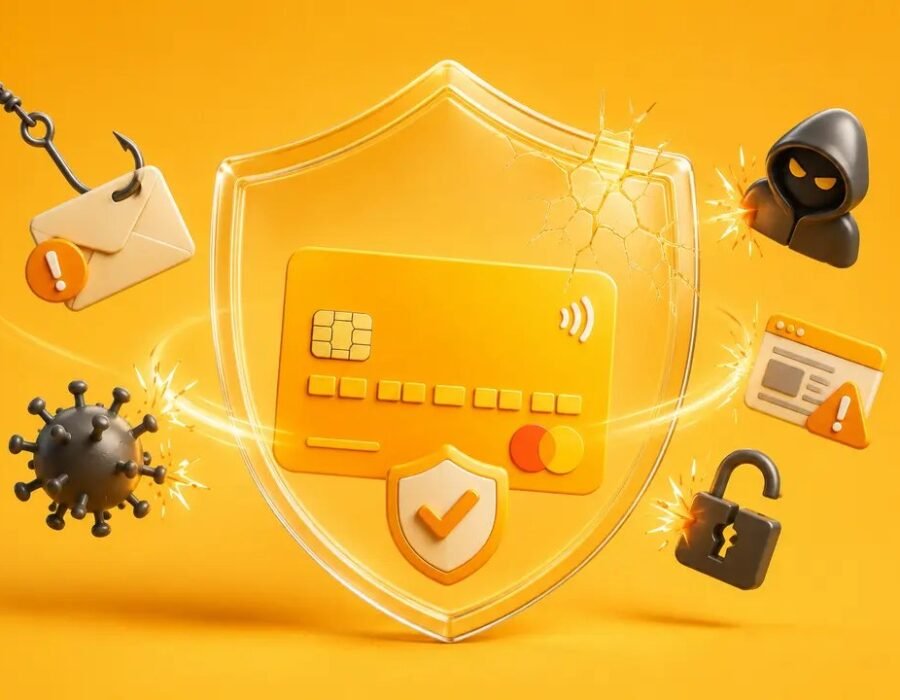
You’re traveling abroad. You buy dinner. Your card gets declined — but a text arrives seconds later: “Was this you? Reply YES to approve.” Annoying in the moment, but that interruption just saved you from potential fraud. Behind it is one of AI’s most successful real-world deployments: the invisible systems that monitor billions of credit card transactions daily, catching fraud in milliseconds. So is AI used to detect fraud on credit cards? Absolutely — and it’s the reason card fraud, despite exploding e-commerce, hasn’t overwhelmed the system. Here’s how it works.
I’ll skip the technical deep-dive and focus on what matters: how the protection works, what triggers it, what to do when it fires (correctly or incorrectly), and how to protect yourself beyond what the AI does. This is AI at its best — silent, effective, and working entirely in your interest.
How AI Detects Fraud on Credit Cards: The Mechanics
Every time you swipe, tap, or click, your transaction passes through AI fraud scoring in milliseconds. Here’s what’s happening:
- Behavioral profiling. The system builds a model of YOUR normal spending: typical merchants, usual locations, normal amounts, typical times, online versus in-person patterns. Every transaction is compared against your profile. The dinner abroad looks anomalous — hence the text.
- Real-time anomaly scoring. Each transaction gets a fraud probability score based on hundreds of features: Is this merchant category unusual for you? Is the amount out of pattern? Is the location impossible (a purchase in New York followed by one in Tokyo an hour later)? Is the device or IP address new? High scores trigger interventions.
- Network-level pattern detection. Beyond your individual profile, AI monitors patterns across millions of cards: a merchant whose transactions suddenly show fraud spikes (possible breach), a new fraud technique spreading geographically, coordinated testing of stolen card numbers (small “test” purchases before big ones). This collective intelligence catches fraud waves no individual profile would reveal.
- Adaptive learning. When you confirm “yes, that was me,” the system learns — your profile updates, and similar future transactions won’t trigger alerts. When fraud is confirmed, the patterns feed back into the models, making them smarter for everyone. Every interaction trains the system.
- Graduated responses. Not every anomaly means a declined card. Low-risk flags might pass silently while logging the pattern. Medium risk triggers verification texts. High risk declines the transaction and may freeze the card. The response matches the risk — most of the time, you never notice the AI working.
The scale is staggering: major card networks score billions of transactions daily with false-positive rates low enough that commerce flows smoothly. It’s arguably the most successful large-scale AI deployment in consumer finance — and almost entirely invisible, which is why our tour of invisible everyday AI features it prominently.
Why Your Card Gets Declined (and What to Do)
False positives are the price of protection. Common triggers: travel (especially international), large unusual purchases, multiple rapid transactions, new merchants, online purchases from foreign sites, and gas station pumps (a favorite fraud testing ground). To minimize hassle:
- Set travel notifications. Most banks let you flag travel dates and destinations in their app. This single step prevents most travel declines.
- Keep contact info current. The verification text only helps if it reaches you. Ensure your bank has your current mobile number.
- Respond to alerts promptly. “Reply YES” texts are the fastest path to unblocking your card. Ignoring them can lead to extended holds.
- Carry a backup payment method. A second card from a different issuer. When one card’s AI gets cautious, the other’s might not — and you’re never stranded.
- Don’t panic at declines. A declined transaction followed by a verification text is the system working correctly, not a crisis. Confirm or deny, and move on.
Protecting Yourself Beyond the AI
The AI is good, but you’re part of the defense system too:
- Monitor your statements. AI catches most fraud, but review statements monthly for anything unfamiliar. You’re legally protected — the FTC notes that federal law limits your liability for unauthorized credit card charges to $50, and most issuers offer $0 liability — but early reporting makes resolution smoother.
- Use virtual card numbers for online shopping. Many issuers offer single-use or merchant-locked virtual numbers. Even if breached, they’re useless to thieves.
- Prefer credit over debit. Credit cards have stronger fraud protections and don’t expose your bank balance. Debit card fraud can drain your actual cash while it’s investigated.
- Freeze your credit reports. Free, takes minutes at each bureau, and prevents new-account fraud — the type card AI can’t catch because it’s not on your card. Check your reports annually at AnnualCreditReport.com.
- Watch for the human side. AI catches transaction fraud; it can’t stop you from voluntarily sending money to a scammer. Social engineering — phishing, fake support calls, romance scams — bypasses every algorithm. Skepticism is your firewall here.
It’s worth appreciating how this protection fits into the broader picture of AI quietly working in your daily life. Our overview of AI operating invisibly throughout your day puts fraud detection alongside the dozens of other silent systems — from spam filters to navigation — that you rely on without noticing. The common thread: the best AI disappears into the experience, working continuously in the background until the moment you need it. You never think about fraud detection when it works — you only notice the declined card, the verification text, the brief interruption. That invisibility is the achievement. Behind every seamless transaction is a machine learning system making millisecond judgments about trust, learning from every interaction, and getting slightly better each day. It’s not glamorous, but it’s AI at its most reliably useful.
The Bottom Line
AI detects credit card fraud through behavioral profiling, real-time anomaly scoring, network pattern detection, and adaptive learning — processing billions of transactions daily with minimal disruption to legitimate commerce. It’s one of AI’s quietest triumphs. Help it help you: set travel notifications, keep contact info current, respond to verification texts, carry a backup card, and monitor statements. Add your own layers — virtual card numbers, credit freezes, and healthy skepticism toward social engineering. The AI guardian works 24/7 without you noticing; your job is the occasional verification text and the common-sense habits no algorithm can replace. Together, human and machine make card fraud a manageable nuisance rather than the crisis it would otherwise be.