You want your kids to see the great films — the ones that shaped cinema, the ones everyone references, the ones that are genuinely wonderful. But you put on a beloved classic and within ten minutes the kids are squirming: “it’s so slow,” “why is it black and white,” “this looks weird.” If you’re asking what is the best way to introduce kids to classic movies, you’re facing a real generational gap in viewing habits — modern kids are calibrated to fast pacing, constant stimulation, and contemporary references. Classics demand patience they haven’t developed yet. But I’ve successfully converted skeptical kids into classic film lovers, and it’s absolutely doable with the right approach.
First, reframe the goal: you’re not assigning homework, you’re sharing treasure. The moment classic movies feel like an obligation (“you should watch this because it’s important”), kids resist. The moment they feel like a discovery (“you’ve never seen this? Oh, you’re in for something special”), kids lean in. Your enthusiasm is contagious — but so is your duty-bound solemnity. Be the friend recommending a favorite, not the teacher assigning a text.
What Is the Best Way to Introduce Kids to Classic Movies? Start With the Accessible Ones
Don’t start with 2001: A Space Odyssey or Citizen Kane — start with classics that feel alive to modern kids. The gateway classics share traits: strong stories, humor, pace that holds up, and emotional directness:
- The Princess Bride (1987): the ultimate gateway classic. Funny, romantic, adventurous, endlessly quotable. Kids who “hate old movies” love this one — it doesn’t feel old because the wit is timeless. Start here if you start anywhere.
- Back to the Future (1985): perfect pacing, high concept, comedy and heart. The 80s setting reads as fun retro rather than dated. The rare “classic” that needs no apology or context.
- E.T. (1982) / The Goonies (1985): kids seeing kids having adventures — the identification is instant. The practical effects have a tangible charm that CGI-raised kids often find refreshing.
- The Wizard of Oz (1939): yes, it’s old, but it’s also pure magic — music, color, memorable characters. Young kids (5–8) accept it completely; older kids need the “this was the Avatar of 1939” framing.
- Mary Poppins (1964) / The Sound of Music (1965): musicals are a cheat code — songs bypass critical resistance. Kids who won’t sit through a drama will happily watch a musical.
- Ghostbusters (1984): comedy plus supernatural adventure. The effects are dated in a charming way, the jokes hold up, and the theme song is eternal.
Level 2: Building the palate
Once they’ve learned that old movies can be great, expand: Jurassic Park (still thrilling), Home Alone, Mrs. Doubtfire, The Muppets movies, Who Framed Roger Rabbit (a revelation for animation-loving kids), Big, Honey, I Shrunk the Kids. Then the slightly more demanding: Stand By Me (for teens), Dead Poets Society (for teens), Forrest Gump, The Shawshank Redemption (older teens — it’s long but gripping).
Level 3: The real classics
For teens who’ve developed the habit: 12 Angry Men (one room, twelve actors, unbearably tense — teens are always surprised), Casablanca (works when they’re old enough for the romance), Rear Window (Hitchcock is the action director of classic cinema — start here, not Psycho), Some Like It Hot (still hilarious), Singin’ in the Rain (joy incarnate), It’s a Wonderful Life (save for Christmas — the season does half the work).
Techniques That Actually Work
Provide context, not lectures. A 30-second setup transforms reception: “This was the first movie to do X,” “People lined up around the block for this,” “The effects were done without computers — everything you’re seeing is real.” Kids engage more when they understand why something mattered. But keep it to 30 seconds — a film-history lecture before the film kills the mood.
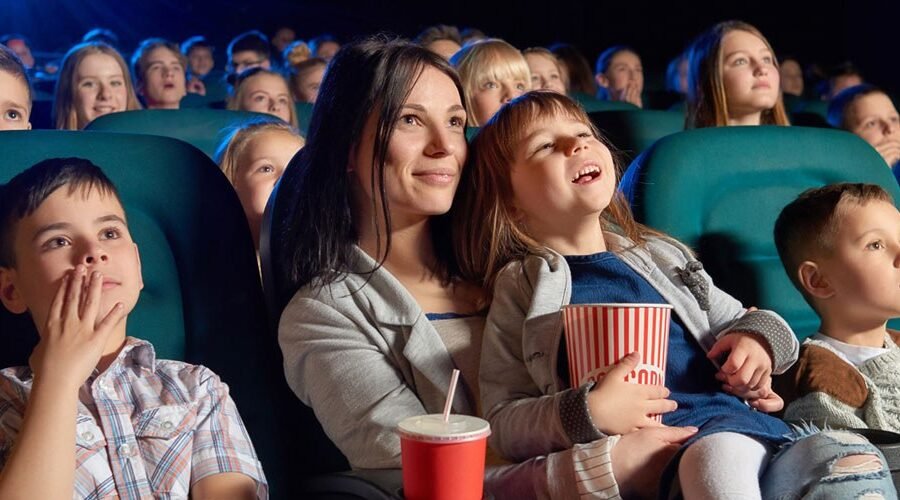
Watch together and react genuinely. Your laughter, gasps, and tears give kids permission to feel. Watching a classic alone in their room is homework; watching it with a parent who’s clearly delighted is an event. Don’t shush their questions during the movie — curiosity is engagement. (Pause if needed; the movie will wait.)
Bridge with the familiar. “You know how in Avengers they…? This movie invented that.” “This is the movie that Stranger Things is referencing.” Connecting classics to things kids already love reframes them from “old” to “original.” The Mandalorian fan who learns it’s a western will watch High Noon with different eyes.
Respect the black-and-white barrier. For many kids, black-and-white is the line between “movie” and “artifact.” Don’t force it early. When you do cross it, pick the most engaging option (12 Angry Men, Some Like It Hot, Young Frankenstein — which is black-and-white as a joke they’ll appreciate) and frame it: “Give it ten minutes — you stop noticing.” They’re always surprised that this is true.
Make it an event. Classic movie night with themed snacks, no phones, maybe costumes for fun ones. The ritual signals that this is special, not routine. Marathon planning tips apply — and pair with family movie night structure.
What Not to Do
Don’t start with slow, demanding masterpieces (even if they’re your favorites — 2001 can wait). Don’t show the edited-for-TV versions (the pacing is ruined and the cuts are confusing). Don’t force it if they’re truly not ready — a bad first experience creates resistance that lasts years. Don’t apologize for the film (“I know it’s slow, but…”) — you’re signaling that it’s a chore. And don’t make it about cultural literacy as obligation; make it about sharing something you love. The literacy follows the love, not the other way around.
For the films themselves, the Wikipedia overview of classical Hollywood cinema provides context. For age-appropriateness, Common Sense Media is invaluable.
So what is the best way to introduce kids to classic movies? Start with the accessible gateway classics (Princess Bride, Back to the Future, Ghostbusters), provide 30 seconds of context, watch together with genuine enthusiasm, bridge to things they already love, respect the black-and-white barrier until they’re ready, and make it an event. You’re not teaching film history — you’re sharing treasure. Do it with joy, and they’ll discover the rest themselves. The kid who falls for The Princess Bride today is the teen who asks for Hitchcock tomorrow.