The eye doctor says “see you next year.” Your vision feels fine. Your wallet feels lighter. If you’re wondering how often adults should actually get their eyes checked, here’s the straight answer: it depends on your age, risk factors, and whether you wear correction — but “never until something’s wrong” is the wrong answer for everyone. Eye exams catch silent diseases that steal vision without symptoms.
The Actual Guidelines
- Ages 20–39: every 2–3 years if no symptoms or risk factors; every 1–2 years with glasses/contacts
- Ages 40–64: every 1–2 years — this is when presbyopia, early glaucoma, and other age-related changes begin
- 65+: annually — cataract, macular degeneration, and glaucoma risk all climb
- Glasses/contact wearers: annually, regardless of age — prescriptions drift and contacts carry infection risk
- Diabetes: annually at minimum (diabetic retinopathy is a leading cause of blindness and has zero early symptoms)
- Family history of glaucoma: earlier and more frequent screening — glaucoma damage is irreversible but preventable if caught
These align with the American Optometric Association’s recommendations — the authoritative source.
What an Exam Catches (Beyond Your Prescription)
The vision test is the least important part. A comprehensive dilated exam screens for:
- Glaucoma — the “silent thief of sight”; no symptoms until permanent damage is done
- Diabetic retinopathy — early changes visible years before vision symptoms
- Macular degeneration — early detection enables treatments that slow progression
- Cataracts — tracked over time; surgery timed optimally, not emergently
- Hypertensive/diabetic vascular changes — your eyes reveal systemic disease; eye doctors regularly spot undiagnosed diabetes and hypertension
- Eye cancers — rare but caught at routine exams
This is preventive medicine with your eyes as the window. Skipping exams doesn’t just risk blurry vision — it risks missing diseases that are treatable early and devastating late.
Signs You Need an Exam Now (Not Next Year)
- Sudden vision changes, flashes, new floaters, or a “curtain” over vision — urgent
- Eye pain (not dryness — real pain)
- Frequent headaches with visual work — possibly uncorrected vision or dry eyes
- Squinting, holding things at new distances, closing one eye to see
- Night driving getting harder — halos, glare, unreadable signs
- Diabetes diagnosis — schedule the dilated exam promptly
Making It Affordable
- Vision insurance (VSP, EyeMed) — often $10–$15/month through employers; exams typically $10–$20 copay
- Retail clinics (Costco, Target, Walmart optical) — quality exams at $50–$100 without insurance
- Ask the cash price — many practices discount significantly for self-pay (ask about cash-pay discounts upfront)
- Don’t skip dilation to save time — the undilated exam misses the peripheral retina where problems hide
- Mention dryness symptoms — gritty, burning eyes often share causes with morning dry mouth, like dehydration and nighttime mouth breathing
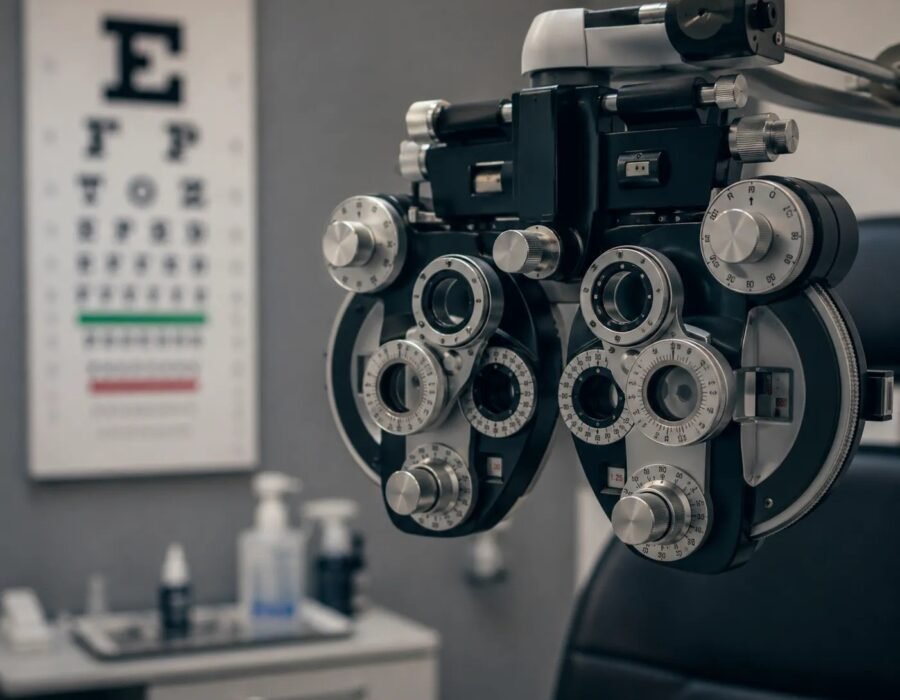
For background on what the exam measures, the components of an eye examination explains each test.
Protecting Your Vision Between Exams
Annual exams catch problems; daily habits prevent them. Here’s what protects your eyes the other 364 days.
UV protection, always. Sunglasses aren’t fashion — they’re cataract and macular degeneration prevention. Look for 100% UVA/UVB protection (the label matters more than the price or darkness). Wear them year-round, not just summer — winter sun and snow glare are intense. Cheap sunglasses with real UV protection beat expensive ones without it.
The 20-20-20 rule for screens. Every 20 minutes, look at something 20 feet away for 20 seconds. It relaxes the focusing muscle and reminds you to blink (screen use halves blink rate). Pair with conscious blinking — dry eye from screen work is the most common modern eye complaint.
Nutrition for eyes: leafy greens (lutein/zeaxanthin — the macular pigments), colorful fruits and vegetables, omega-3s from fish, and adequate vitamin C, E, and zinc. The AREDS2 formula (specific high-dose nutrients) slows macular degeneration in people who have it — ask your eye doctor if you’re a candidate. For everyone else, the dietary pattern matters more than pills.
Don’t smoke; manage health conditions. Smoking dramatically raises cataract and macular degeneration risk. Diabetes and hypertension damage eyes silently — controlling them is eye care. Your eye exam and your physical are teammates.
Safety glasses for risky tasks. Yard work, DIY, sports — most eye injuries are preventable with $10 safety glasses. Emergency rooms see thousands of preventable eye injuries yearly; nearly all involved no protection.
Exams detect; habits protect. Do both, and your eyes get the full defense they deserve.
What Different Eye Doctors Do (And Who You Need)
Ophthalmologist, optometrist, optician — the titles confuse everyone. Here’s the breakdown.
Optometrists (OD): primary eye care — exams, prescriptions, contact lens fittings, and detection of eye disease. For routine checkups and vision correction, this is your doctor. Four years of optometry school after college; licensed to prescribe most eye medications.
Ophthalmologists (MD/DO): medical doctors specializing in eyes — everything optometrists do, plus surgery (cataracts, LASIK, retinal procedures) and management of complex disease. You need one for surgical issues, advanced glaucoma, macular degeneration, or diabetic eye disease.
Opticians: not doctors — they fit and dispense glasses and contacts from prescriptions written by the above. Great for frames and fitting; they don’t examine or diagnose.
Who do you need? Healthy adult, routine exam: optometrist. Eye disease, surgery, or complex medical history: ophthalmologist. New glasses with an existing prescription: optician.
Cost reality: routine exams run $50–$250 without insurance; medical eye visits bill to health insurance (not vision plans) when disease is involved — an important distinction that affects your out-of-pocket cost. Vision insurance (VSP, EyeMed) typically covers annual exams plus an eyewear allowance. If you have diabetes, many health plans cover annual diabetic eye exams fully — use that benefit; it’s the highest-value screening in eye care.
Key Takeaways
- 20s–30s: every 2–3 years; 40s–60s: every 1–2 years; 65+: annually.
- Glasses wearers, diabetics, and those with glaucoma family history: annually regardless.
- Exams screen for silent blinding diseases — the prescription check is the least of it.
- Sudden vision changes, flashes, or eye pain need prompt (not routine) care.
- Retail optical clinics offer quality exams at reasonable cash prices.
The Bottom Line
How often adults should get their eyes checked ranges from every few years in your 20s to annually after 65 — but the interval matters less than the habit. These exams catch the silent diseases that steal sight without warning. Schedule the next one before you leave the current one. Your future vision is worth an hour a year.