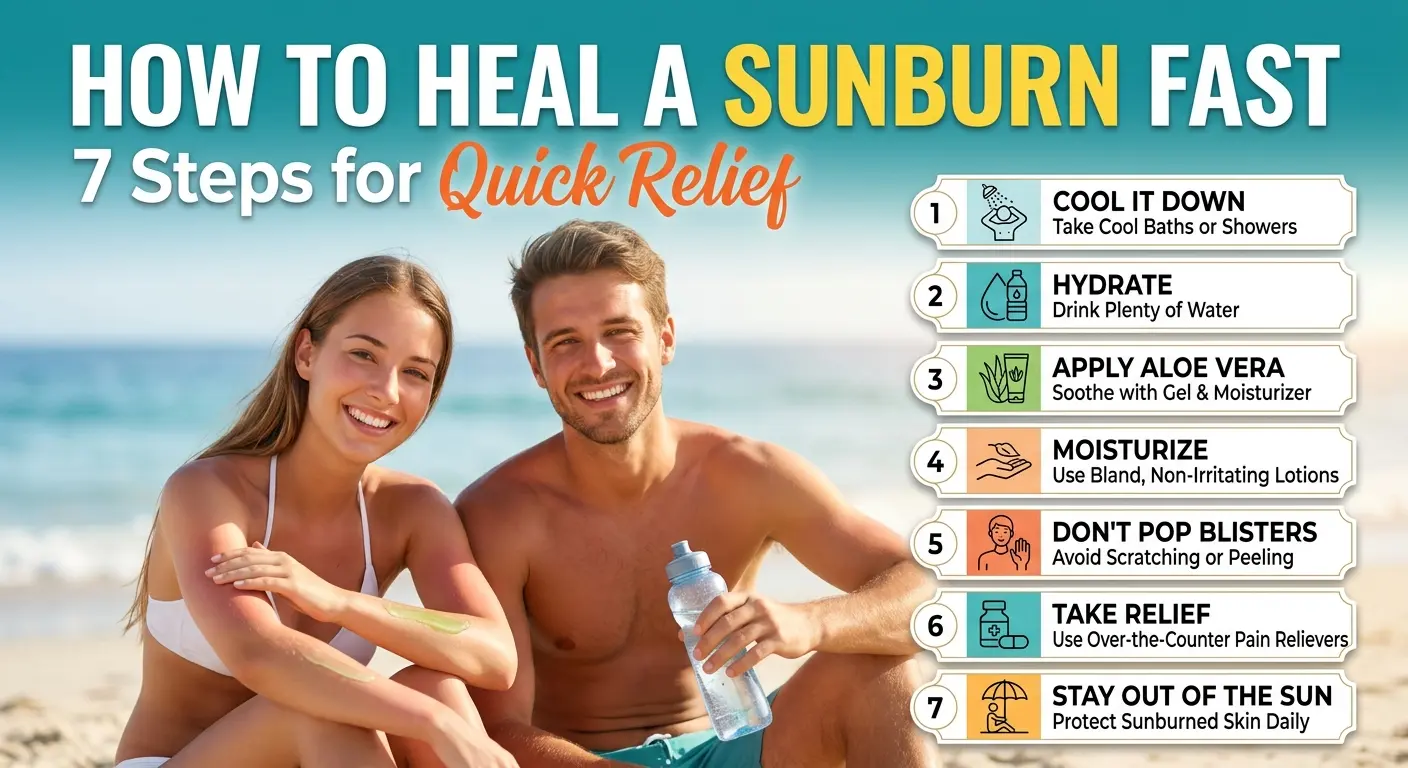
The fastest way to soothe a sunburn is to get out of the sun, cool the affected skin with a cool shower or damp compress, and apply a gentle moisturizer containing aloe vera or soy. Drinking extra water and using appropriate pain relief can also help you feel better. Although these steps ease discomfort, there is no instant cure for sunburn. Most mild sunburns improve within several days and usually heal within about a week, while more severe burns take longer.
How to Heal a Sunburn Fast
If your skin feels hot, looks red or darker than usual, or hurts when touched after spending time outdoors, you may have a sunburn. Ultraviolet (UV) radiation damages skin cells and triggers inflammation, causing pain, tenderness, warmth, and sometimes swelling or blisters.
The best approach is to relieve the inflammation, keep the skin comfortable, prevent dehydration, and avoid additional UV damage.
According to the American Academy of Dermatology, early treatment can help soothe stinging skin and reduce discomfort.
The fastest way to soothe a sunburn
For mild sunburn, follow this simple routine:
- Move indoors or into deep shade immediately.
- Take a cool shower or apply a clean, cool, damp towel to the burned area.
- Gently pat your skin dry and apply an unperfumed moisturizer containing aloe vera or soy.
- Drink water regularly to help prevent dehydration.
- Use an appropriate over-the-counter pain reliever if needed and safe for you.
- Keep the affected area covered and away from direct sunlight while it heals.
Repeat cooling as needed throughout the day. Avoid rubbing the skin, using ice directly on the burn, or applying irritating skin-care products.
7 Steps to Help a Sunburn Heal
1. Get Out of the Sun Immediately
The first step is to stop exposing the damaged skin to sunlight. Staying outdoors can worsen the burn, increase discomfort, and delay recovery.
Move indoors if possible. If you must go outside, cover the affected area with loose, lightweight clothing that blocks sunlight. A wide-brimmed hat can help protect a burned face, ears, and neck.
Do not assume that cloudy weather or being under an umbrella provides complete protection. UV radiation can still reach exposed skin.
Give your skin time to recover before returning to activities involving prolonged sun exposure.
2. Cool Your Skin With Water
A cool shower, bath, or damp washcloth is one of the simplest ways to reduce sunburn discomfort.
Cool water helps lower the skin’s surface temperature and temporarily eases the burning sensation. It does not reverse the underlying UV damage, but it can make you considerably more comfortable.
How to cool sunburned skin:
- Take a cool, rather than hot, shower.
- Alternatively, place a clean, cool, damp towel over the affected area.
- Leave the compress in place until the skin feels more comfortable, then repeat as needed.
- Gently pat the skin dry instead of rubbing it with a towel.
Avoid ice cubes, ice packs directly against the skin, and extremely cold water. Burned skin is already injured, and excessive cold can cause further damage.
After cooling, apply a gentle moisturizer while the skin is still slightly damp.
3. Apply Aloe Vera or a Gentle Moisturizer
A suitable moisturizer can soothe tight, dry, or uncomfortable skin during recovery.
Aloe vera gel and moisturizers containing soy are commonly recommended for sunburn relief. Choose a simple product without added fragrance, alcohol, or ingredients that sting your skin.
What should you look for in a sunburn moisturizer?
- Aloe vera gel or an aloe-based moisturizer.
- A fragrance-free moisturizing lotion.
- A gentle product designed for sensitive skin.
- A product that does not sting, irritate, or increase redness.
You can refrigerate a suitable moisturizer for a cooling effect, provided the product’s label allows it.
Apply it gently after showering and again whenever your skin feels dry or tight. Stop using any product that causes irritation.
Keep in mind that aloe vera may soothe the skin, but it has not been established as a way to erase UV damage overnight.
If your sunburn has developed blisters, treat it as a more significant burn rather than simply applying cosmetic products. Protect the blisters and seek medical advice when appropriate.
4. Drink Plenty of Water
Sunburn can contribute to dehydration because fluid shifts toward the inflamed skin, and heat exposure may cause additional fluid loss through sweating.
Drink water regularly throughout the day, especially if you have been outdoors in hot weather. If you have also been sweating heavily, replacing lost fluids is important.
Water is generally a good choice for routine hydration. If you have been vomiting, have significant dehydration symptoms, or cannot keep fluids down, seek medical care rather than relying on water alone.
Avoid excessive alcohol while recovering, particularly if you are dehydrated or overheated.
Drinking water will not instantly remove redness or repair damaged skin, but maintaining hydration supports normal bodily functions during recovery.
5. Manage Pain and Swelling Safely
Sunburn can cause tenderness, throbbing, inflammation, and pain when clothing touches the affected area.
If cooling and moisturizing are not enough, an over-the-counter pain reliever may help.
Options commonly used for sunburn discomfort include:
- Ibuprofen: May reduce pain and inflammation.
- Paracetamol (acetaminophen): Can help relieve pain and fever.
Follow the package instructions and use only medicines that are suitable for your age and health circumstances.
Ibuprofen may not be appropriate if you have certain kidney problems, stomach ulcers, dehydration, or take medicines that increase bleeding risk. Paracetamol requires particular caution in people with liver disease or those taking other products containing the same ingredient.
Ask a pharmacist or healthcare professional if you are unsure which medicine is appropriate. Do not give aspirin to children or teenagers with a suspected viral illness unless specifically directed by a healthcare professional.
For mild to moderate sunburn, a pharmacist or clinician may also recommend a suitable topical treatment. Do not use strong steroid creams or anesthetic sprays indiscriminately, particularly on blistered or broken skin.
6. Protect Blisters and Peeling Skin
Blisters can develop when sunburn damages deeper layers of the skin. They indicate a more significant injury and deserve extra care.
If your sunburn blisters:
- Do not pop, squeeze, or deliberately drain them.
- Keep the area clean and avoid unnecessary friction.
- Protect the skin with a suitable nonstick dressing if needed.
- Seek medical advice for large, numerous, painful, or infected-looking blisters.
An intact blister helps protect the underlying skin while it heals. If a blister breaks, gently clean the area with water and mild soap, avoid pulling away attached skin, and cover it with a clean, nonstick dressing. Ask a healthcare professional how best to care for a substantial open blister.
Peeling often begins a few days after sun exposure. It is part of the skin’s recovery process, not a sign that you should scrub away the damaged layer.
Apply a gentle moisturizer and allow loose skin to shed naturally. Picking or peeling skin prematurely can cause further injury, irritation, and infection.
7. Avoid Further Sun Exposure
Protecting your skin from additional UV radiation is essential while a sunburn heals.
Whenever possible, remain indoors or in shade until the redness and tenderness have resolved. If you need to go outside, cover the burned area with loose, protective clothing and a hat.
For exposed, unburned skin, use a broad-spectrum, water-resistant sunscreen with an SPF of 30 or higher. Follow the product’s instructions and reapply at least every two hours when outdoors, and after swimming or sweating.
Sunscreen should not be treated as permission to expose already burned skin to more sunlight. Physical coverage and shade are especially important during recovery.
The NHS sunburn guidance also recommends avoiding direct sunlight until the skin has healed.
What Helps a Sunburn Heal Faster?
The most effective approach combines cooling, gentle skin care, hydration, and protection from additional sunlight. No single cream or home remedy can reliably make a sunburn disappear overnight.
Best products for sunburn relief
| Product or treatment | How it may help | Important consideration |
|---|---|---|
| Cool water or damp compress | Temporarily reduces heat and discomfort | Never apply ice directly |
| Aloe vera moisturizer | Soothes dry, uncomfortable skin | Choose a gentle, nonirritating formula |
| Fragrance-free moisturizer | Reduces dryness and tightness | Stop if it causes stinging or irritation |
| Calamine lotion | May soothe itching and irritation | Follow label directions |
| Oral pain reliever | Helps reduce pain; some also reduce inflammation | Check contraindications and dosing |
| Nonstick wound dressing | Protects a broken blister | Seek advice for significant burns |
For mild sunburn, start with cooling and a gentle moisturizer rather than layering several products on irritated skin.
The Mayo Clinic’s sunburn treatment guidance provides further information on symptom relief and blister care.
Remedies to avoid
Some popular sunburn remedies can irritate damaged skin or make the injury worse.
Avoid these common mistakes:
- Direct ice application: Ice can injure already damaged skin.
- Hot showers: Heat may increase discomfort.
- Scrubbing or exfoliating: Friction can worsen irritation and damage fragile skin.
- Popping blisters: This increases the risk of infection.
- Picking peeling skin: Allow it to shed naturally.
- Fragranced lotions and alcohol-based products: These may sting or irritate the skin.
- Benzocaine or other topical anesthetics without appropriate advice: These can trigger irritation or allergic reactions.
- Unproven kitchen remedies: Butter, toothpaste, lemon juice, and similar substances are not recommended sunburn treatments.
Petroleum jelly requires some nuance. It is generally not recommended as the first treatment for a fresh, hot sunburn, and NHS guidance advises against using it on sunburned skin. However, the American Academy of Dermatology recommends petroleum jelly to protect a broken blister during wound care. These are different situations, so follow appropriate wound-care advice rather than applying it indiscriminately.
How Long Does a Sunburn Take to Heal?
Most mild sunburns begin improving within a few days and usually settle within about seven days. More severe burns, particularly those involving blisters, may take longer.
The time required depends on the severity of the burn, the size of the affected area, and whether the skin experiences additional irritation or sun exposure.
| Time after exposure | What you may notice |
|---|---|
| First several hours | Skin may become warm, tender, red, or darker than usual |
| First 24 hours | Pain, redness, and inflammation may become more noticeable |
| Days 2–3 | Symptoms may begin improving, although some burns remain painful |
| Days 3–7 | Peeling may start as the damaged outer layer sheds |
| After a week | Mild burns may have largely healed; more severe burns may need additional time |
This is a general guide, not a guaranteed schedule. Symptoms can vary, and the appearance of the skin may not reflect the full extent of UV damage.
If the burn is worsening rather than improving, or you develop significant blisters or other concerning symptoms, seek medical advice.
Can a sunburn heal overnight?
No. A sunburn cannot reliably heal overnight because the skin needs time to repair UV-induced damage.
You may feel better after a cool shower, a gentle moisturizer, and appropriate pain relief. However, these measures provide symptom relief rather than instantly restoring injured skin.
Be cautious of products claiming to erase sunburn overnight or eliminate all redness within a few hours.
How long does sunburn redness last?
Mild redness may start to settle over a few days, but a more intense burn can remain visibly inflamed for longer.
On brown and Black skin, redness may be less obvious. Warmth, tenderness, swelling, and changes in skin tone can still indicate sunburn.
Avoid using strong exfoliants, retinoids, or aggressive brightening treatments on freshly burned skin. Wait until the skin has recovered before restarting potentially irritating products.
How to Treat Different Types of Sunburn
Mild sunburn
Mild sunburn usually causes warmth, tenderness, and discoloration without significant blistering or systemic symptoms.
For a mild burn:
- Cool the skin with water or a damp towel.
- Apply a gentle moisturizer.
- Drink water regularly.
- Avoid friction and direct sunlight.
- Monitor the skin as it heals.
Most mild burns can be managed at home, provided symptoms improve and no warning signs develop.
Sunburn with blisters
Blistering suggests a deeper skin injury and should not be treated like simple redness.
Do not pop the blisters or use harsh products. Keep the affected area clean and protected. Large or widespread blisters, blisters on the face, hands, or genitals, and burns accompanied by fever or significant swelling need prompt medical assessment.
A healthcare professional can determine whether you need specialized wound care or other treatment.
Sunburn on the face
Facial sunburn can be especially uncomfortable because the skin may become swollen, tight, and sensitive to ordinary skin-care products.
To care for a sunburned face:
- Use a cool, damp cloth.
- Apply a gentle, fragrance-free moisturizer.
- Avoid scrubs, exfoliating acids, retinoids, and irritating acne treatments until the skin has recovered.
- Avoid rubbing or peeling the skin.
- Wear a wide-brimmed hat and stay out of direct sunlight.
Be particularly careful around the eyes. If you experience eye pain, pronounced light sensitivity, or changes in vision after sun exposure, seek medical attention.
When to Seek Medical Attention
Although many sunburns improve with home care, some require professional treatment.
Seek prompt medical advice if you experience:
- Large, widespread, or very painful blisters.
- Significant swelling, especially of the face.
- Fever, chills, or worsening pain.
- Severe headache, nausea, or vomiting.
- Marked dizziness, unusual weakness, or reduced urination.
- Pus, spreading redness, or other signs of infection.
- Eye pain or changes in vision.
Seek emergency care for serious symptoms such as confusion, fainting, severe dehydration, or a high fever accompanied by vomiting. These may indicate heat-related illness or another serious complication.
Babies and young children with sunburn should receive prompt medical advice, particularly if they develop blisters, fever, or appear unwell.
For more details, consult Mayo Clinic’s sunburn warning signs or the NHS guidance on when to seek help.
How to Prevent Another Sunburn
Preventing another burn is important because repeated UV exposure damages skin and increases the risk of skin cancer and premature skin aging.
Make these habits part of your routine:
- Use sunscreen: Choose a broad-spectrum, water-resistant product with SPF 30 or higher.
- Apply enough: Cover all exposed skin and follow the label instructions.
- Reapply regularly: Reapply every two hours outdoors and after swimming or sweating.
- Wear protective clothing: Use long sleeves, a wide-brimmed hat, and UV-protective sunglasses.
- Seek shade: Limit direct exposure when UV levels are high.
- Avoid tanning beds: Artificial UV radiation can also damage skin.
- Protect recovering skin: Wait until the burn has healed before resuming prolonged sun exposure.
Learn more from the American Academy of Dermatology’s sunscreen application guidance.
Frequently Asked Questions
What is the fastest way to get rid of a sunburn?
The fastest way to relieve sunburn discomfort is to leave the sun, cool the skin with a cool shower or damp compress, apply a gentle aloe vera moisturizer, drink water, and use appropriate pain relief if needed. The skin still needs time to heal.
How do you heal a sunburn overnight?
You cannot fully heal a sunburn overnight. Cooling the skin and applying a gentle moisturizer before bed may make it more comfortable, but redness, tenderness, and damaged skin may take several days to recover.
Does aloe vera help a sunburn heal faster?
Aloe vera can soothe uncomfortable skin and provide moisture. However, it is not a proven instant cure for UV damage. Choose a gentle product without irritating additives.
Should I put ice on a sunburn?
No. Do not apply ice or ice packs directly to sunburned skin. Use cool water or a clean, cool, damp towel instead.
Is a cold shower good for sunburn?
A cool shower can temporarily ease heat and pain. Avoid very cold or hot water, and gently pat your skin dry afterward.
How can I reduce sunburn redness quickly?
Cooling the skin, applying a gentle moisturizer, and avoiding further sun exposure may help the redness settle as the skin recovers. There is no reliable way to eliminate redness instantly, and the duration varies with burn severity.
What should I put on a sunburn before bed?
After a cool shower, gently apply an unperfumed moisturizer containing aloe vera or soy. Wear loose clothing and avoid sleeping in a way that creates friction against the burn.
Should I moisturize peeling sunburn skin?
Yes. A gentle moisturizer can help reduce dryness and tightness while your skin sheds its damaged outer layer. Do not scrub, pick, or pull off peeling skin.
Can I go outside with a sunburn?
It is best to avoid direct sunlight until the skin has healed. If going outside is unavoidable, cover the burned area with protective clothing and use shade. Apply sunscreen to exposed, unburned skin.
When should I worry about a sunburn?
Seek medical advice for significant blistering, severe swelling, worsening pain, fever, chills, or signs of infection. Confusion, fainting, severe dehydration, or a high fever with vomiting require emergency assessment.
Conclusion
The best way to heal a sunburn fast is to reduce discomfort, support normal skin recovery, and prevent further UV damage. Start with a cool shower or compress, apply a gentle moisturizer, drink plenty of water, and protect the affected area from sunlight.
Avoid ice, harsh skin-care products, and picking at blisters or peeling skin. Most mild sunburns improve within several days, but severe symptoms or worsening skin require medical attention.
The key takeaway: Fast relief is possible, but safe healing takes time. Give your skin the care and protection it needs to recover.