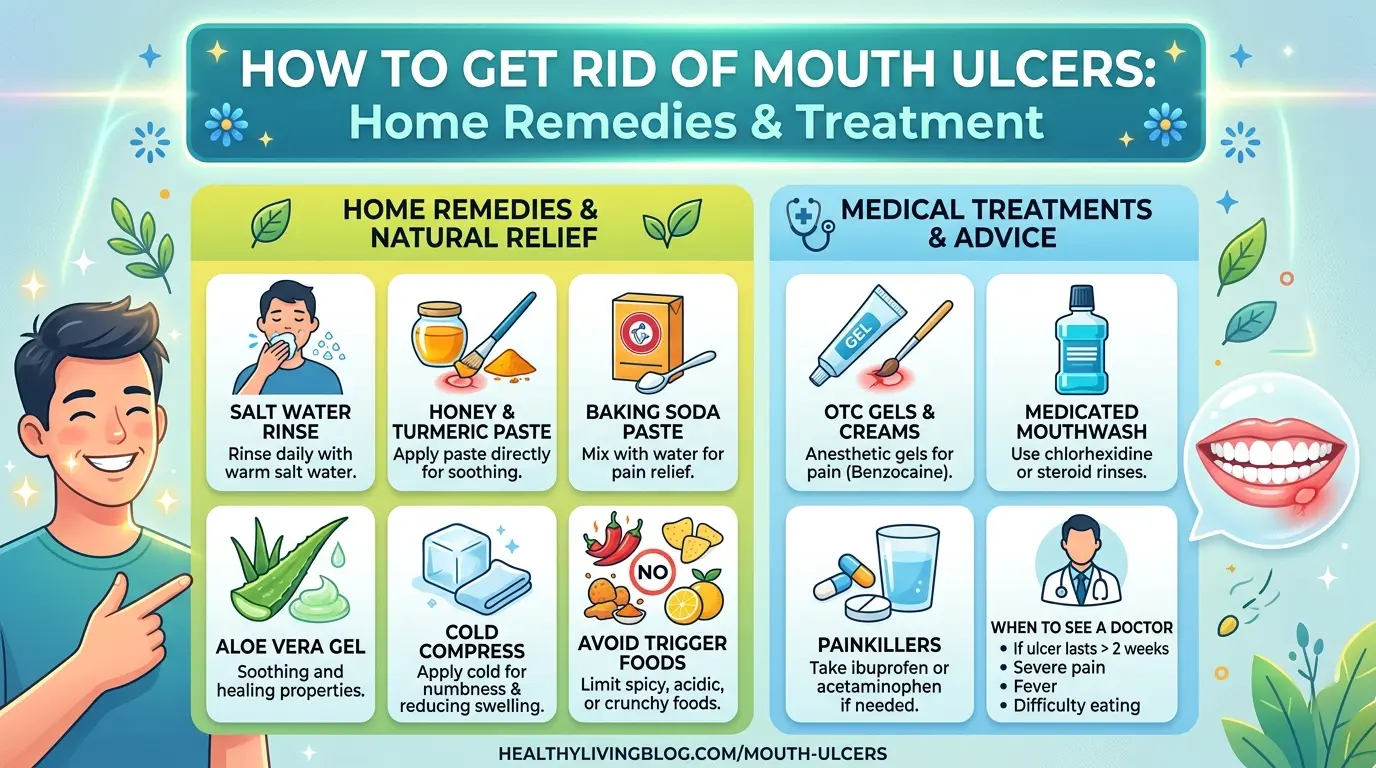
To get rid of mouth ulcers, rinse your mouth gently with warm salt water, avoid spicy and acidic foods, drink plenty of water, and use a soft-bristled toothbrush. Pharmacy gels and protective mouth-ulcer treatments can help relieve pain while the sore heals. Most common mouth ulcers clear up within one to two weeks, although larger ulcers may take longer. There is no guaranteed overnight cure, and persistent or unusual sores should be checked by a dentist or doctor.
How to Get Rid of Mouth Ulcers
Mouth ulcers can make everyday activities such as eating, drinking, brushing your teeth, and speaking uncomfortable. Fortunately, most minor ulcers heal naturally, and a few simple measures can make the healing period easier.
If you have a typical small ulcer inside your cheek, on your tongue, or inside your lip, start with these steps:
- Rinse with salt water: Dissolve half a teaspoon of salt in a glass of warm water, rinse gently, and spit it out.
- Avoid irritating foods: Temporarily stop eating very spicy, salty, acidic, or crunchy foods that aggravate the sore.
- Choose soft foods: Try yogurt, soft rice, porridge, scrambled eggs, or lukewarm soup.
- Drink enough water: Take frequent sips of cool or room-temperature water to prevent dehydration.
- Brush gently: Use a soft toothbrush and avoid scraping the ulcer.
- Consider a pharmacy treatment: Ask a pharmacist about a protective paste, pain-relieving gel, or suitable mouth rinse.
These measures primarily reduce pain and irritation while your mouth heals. Some treatments may help healing, but the right option depends on the type, size, and cause of the ulcer.
Home Remedies for Mouth Ulcers
Several simple home remedies can ease mouth-ulcer discomfort. The aim is to keep the affected area comfortable and clean without damaging the delicate tissue.
Rinse With Warm Salt Water
A saltwater rinse is an inexpensive way to soothe an irritated mouth.
How to make it:
- Mix half a teaspoon of ordinary table salt into one glass of warm water.
- Swish the solution gently around your mouth.
- Spit it out rather than swallowing it.
- Repeat as needed, provided the rinse does not irritate the ulcer.
Warm water helps dissolve the salt. The rinse may soothe discomfort and support oral cleanliness, but it is not a guaranteed cure.
Avoid applying dry salt directly to an ulcer. Direct contact can cause intense stinging and further irritation.
Try a Baking Soda Mouth Rinse
A baking soda rinse is another option for some canker sores. Mayo Clinic describes mixing one teaspoon of baking soda into half a cup of warm water.
Swish gently and spit the solution out. Do not swallow it, and stop if it causes irritation. Use a properly diluted rinse rather than rubbing dry baking soda into the sore.
Neither salt water nor baking soda will necessarily make an ulcer disappear immediately. Both are mainly intended to help manage symptoms while healing takes place.
Use Ice Chips and Cool Drinks
If your ulcer hurts when you eat or drink, cold temperatures may temporarily ease the discomfort.
You can try:
- Allowing a small ice chip to dissolve slowly in your mouth.
- Drinking cool water in small sips.
- Eating chilled yogurt or other soft foods.
- Choosing cool drinks instead of very hot tea or coffee.
Do not press sharp ice directly against the ulcer or force yourself to tolerate anything that worsens the pain.
Keep Your Mouth Clean
Good oral hygiene helps limit additional irritation and keeps the mouth clean while the sore heals.
Brush twice a day with a soft-bristled toothbrush, using gentle movements around the affected area. Floss carefully if you can do so without aggravating the ulcer.
Some people find that toothpaste containing sodium lauryl sulfate (SLS), a foaming ingredient, triggers or worsens their canker sores. If you notice this pattern, consider trying an SLS-free toothpaste.
Avoid alcohol-based mouthwashes if they sting or irritate the affected tissue.
Avoid Harsh Home Remedies
Not every popular home remedy is safe or effective. Applying undiluted hydrogen peroxide, alcohol, concentrated essential oils, or other harsh substances directly to an ulcer can irritate or damage the tissue.
Do not attempt to burn, cut, scrape, or puncture the sore. Avoid placing aspirin directly against it because this can damage the mouth lining.
If a remedy causes burning or makes the ulcer more painful, stop using it.
What Is the Best Medicine for Mouth Ulcers?
The best mouth-ulcer medicine depends on whether you mainly need pain relief, protection from irritation, or treatment for an underlying cause.
Over-the-Counter Gels and Protective Pastes
A pharmacist may recommend an oral gel, spray, mouth rinse, or protective paste suitable for your symptoms.
Depending on the product, treatment may:
- Temporarily reduce pain.
- Form a protective layer over the ulcer.
- Make eating and drinking more comfortable.
- Help keep the affected area clean.
Follow the product instructions carefully. Some numbing medicines can affect swallowing or increase the risk of accidentally biting the affected area. Check age restrictions and ask a pharmacist before using these products for a child.
For specific treatment options, see the NHS guide to mouth ulcers and Mayo Clinic’s canker sore treatment guidance.
Prescription Treatments for Severe Ulcers
A dentist or doctor may recommend prescription treatment if ulcers are unusually painful, large, persistent, or frequent.
Possible options include corticosteroid preparations that reduce inflammation, prescribed mouth rinses, or other medicines selected for the suspected cause. These treatments are not necessary for every minor ulcer.
If ulcers keep returning, a healthcare professional may also assess whether a medication, nutritional deficiency, or underlying health condition is contributing to the problem.
Do not start antibiotics, oral steroids, or high-dose vitamin supplements on your own. They are not appropriate for every mouth ulcer, and unnecessary treatment may cause harm.
Foods to Eat and Avoid When You Have Mouth Ulcers
The right foods can make eating less painful while your mouth heals. Choose meals that are soft, mild, and easy to swallow.
| Foods that may be easier to eat | Foods that may irritate ulcers |
|---|---|
| Yogurt and soft cheese | Chili and heavily spiced foods |
| Porridge and soft rice | Oranges, lemons, and other acidic fruits |
| Scrambled eggs | Tomato-based sauces if they sting |
| Mashed potatoes | Salty snacks and crisps |
| Lukewarm soups | Very hot food and drinks |
| Soft, cooked vegetables | Toast and other sharp, crunchy foods |
| Cool water | Acidic fruit juices and fizzy drinks if painful |
You do not need to eliminate every food on the second list permanently. Avoid the items that trigger pain while the ulcer is active, then return to your normal balanced diet as tolerated.
Eat slowly, take smaller bites, and cut food into manageable pieces. If swallowing becomes difficult or you cannot drink enough, seek medical advice promptly.
What Causes Mouth Ulcers?
Mouth ulcers have several possible causes. The common canker sore, also called an aphthous ulcer, is often recognized by its round shape, pale center, and red border. However, not every sore inside or around the mouth is a canker sore.
Common causes and triggers include the following.
Minor Mouth Injuries
Accidentally biting your cheek, brushing too hard, dental procedures, braces, or a sharp tooth can damage the mouth lining and lead to an ulcer.
If a sharp tooth or dental appliance repeatedly rubs against the same area, a dentist can help correct the source of irritation.
Stress and Hormonal Changes
Some people notice that ulcers appear during periods of emotional stress, poor sleep, or hormonal changes. These factors may contribute to flare-ups, although they do not explain every case.
Tracking when sores develop may help you recognize personal triggers.
Nutritional Deficiencies
Low levels of iron, vitamin B12, folate, or certain other nutrients can be associated with recurring mouth ulcers.
A balanced diet is important, but frequent ulcers do not automatically mean that you have a deficiency. A healthcare professional can decide whether blood tests or supplements are appropriate.
Toothpaste or Food Irritation
Some people find that particular toothpastes or foods trigger canker sores. Acidic foods, spicy meals, and products containing sodium lauryl sulfate may aggravate symptoms in susceptible individuals.
A simple symptom diary can help you identify whether a consistent trigger exists.
Medical Conditions or Medicines
Repeated or severe ulcers can sometimes be associated with conditions such as celiac disease, inflammatory bowel disease, or immune-system disorders. Certain medicines may also contribute.
Do not stop a prescribed medicine without speaking to the clinician who prescribed it. If the ulcers began after starting a new medicine, mention the timing to your doctor or pharmacist.
Mouth Ulcers Versus Cold Sores
These conditions are easy to confuse, but they are not the same.
Typical canker sores develop inside the mouth and are not contagious. Cold sores are commonly caused by herpes simplex virus and often appear as blisters on or around the lips. They can spread to other people.
Sores on the outer lips, clusters of blisters, fever, or other unusual symptoms may require a different assessment and treatment.
How Long Do Mouth Ulcers Last?
Most minor mouth ulcers heal within about seven to fourteen days. Pain may begin to improve before the sore has completely disappeared.
Larger or deeper ulcers can take several weeks to heal and may leave a scar. The recovery time depends on the ulcer’s size, location, cause, and whether the area continues to be irritated.
| Type or situation | Typical recovery pattern |
|---|---|
| Minor canker sore | Often heals within one to two weeks |
| Larger or deeper ulcer | May take several weeks |
| Ulcer caused by ongoing irritation | May persist until the cause is addressed |
| Ulcer associated with an underlying condition | Recovery depends on the cause and its treatment |
These are general patterns, not a diagnosis or a guarantee. A sore that is not healing, keeps returning, or looks unusual should not simply be ignored.
How to Prevent Mouth Ulcers From Returning
You may not be able to prevent every mouth ulcer, but a few habits can reduce avoidable irritation and help you recognize patterns.
Improve Your Oral Care Routine
Use a soft toothbrush and brush gently twice daily. Avoid aggressive brushing, and attend regular dental checkups.
If a broken tooth, braces, dentures, or another dental appliance repeatedly irritates your mouth, ask a dentist about an appropriate solution.
Identify Personal Triggers
Notice whether ulcers tend to follow particular foods, toothpaste changes, dental treatment, or periods of stress.
If you suspect toothpaste is a trigger, an SLS-free option may be worth trying. Change one suspected trigger at a time so that you can better judge whether it makes a difference.
Maintain a Balanced Diet
Eat a varied diet containing vegetables, fruit that you can tolerate, whole grains, protein sources, and foods rich in iron and B vitamins.
If ulcers occur frequently, ask a healthcare professional whether testing for nutritional deficiencies is appropriate before taking supplements.
Manage Stress and Protect Your Mouth
If you notice a link between stress and flare-ups, regular sleep and practical stress-management habits may help.
Avoid chewing too quickly, and protect your mouth during contact sports. If an ulcer keeps appearing in the same place, look for a repeated source of friction rather than relying only on remedies.
When to See a Doctor or Dentist
Most ordinary mouth ulcers heal without medical treatment, but some require professional assessment.
Arrange an appointment with a dentist or doctor if:
- An ulcer lasts longer than three weeks.
- The sore is unusually large, deep, or different from previous ulcers.
- Ulcers keep returning or new sores develop before old ones heal.
- The ulcer bleeds, becomes increasingly red, or grows more painful.
- You have unexplained fever, a skin rash, joint symptoms, or sores elsewhere on your body.
- Pain interferes with eating or drinking.
- You notice a persistent lump or other unusual changes in your mouth.
Seek urgent medical care if you have difficulty breathing, cannot swallow fluids, or develop signs of significant dehydration. A person with a weakened immune system should seek medical advice promptly for new or worsening mouth sores.
A persistent ulcer does not automatically mean cancer or another serious illness. However, it is important to have an unusual or non-healing sore examined rather than assuming it is harmless.
Frequently Asked Questions
How can I get rid of mouth ulcers quickly?
Rinse gently with warm salt water, avoid foods that irritate the sore, drink enough water, and keep your mouth clean. A suitable pharmacy gel or protective paste may ease pain. Most minor ulcers still need time to heal.
How do you heal a mouth ulcer overnight?
There is no reliable way to make a typical mouth ulcer disappear overnight. Saltwater rinses, cool drinks, and appropriate pain-relieving products may make it more comfortable, but complete healing usually takes longer.
Is salt water good for mouth ulcers?
A gentle saltwater rinse may soothe the mouth and help keep it clean. Dissolve half a teaspoon of salt in a glass of warm water, rinse, and spit it out. Do not apply dry salt directly to the ulcer.
Are mouth ulcers contagious?
Typical canker sores are not contagious. Cold sores caused by herpes simplex virus are contagious, so it is important to distinguish between the two types of sores.
Why do I keep getting mouth ulcers?
Recurring ulcers may be associated with minor injuries, stress, hormonal changes, certain toothpaste ingredients, nutritional deficiencies, medicines, or underlying health conditions. If they occur frequently, a dentist or doctor can help identify possible causes.
Can vitamin deficiencies cause mouth ulcers?
Yes. Low iron, vitamin B12, and folate levels can be associated with mouth ulcers. However, ulcers have many other causes, so testing is more useful than assuming a deficiency or taking high-dose supplements without advice.
Should I pop or scrape a mouth ulcer?
No. A typical mouth ulcer is not a pimple, and popping or scraping it can damage tissue, increase pain, and delay healing. Leave it alone and use gentle symptom-relief measures.
Can I use mouthwash when I have an ulcer?
A gentle, alcohol-free mouthwash may be suitable if it does not sting. Alcohol-based products can irritate some ulcers. A pharmacist or dentist can recommend a suitable rinse if symptoms are severe or persistent.
When should I worry about a mouth ulcer?
Arrange a dental or medical assessment if it lasts longer than three weeks, repeatedly returns, is unusually large, bleeds, or becomes more painful. Seek urgent care for breathing difficulties, inability to swallow fluids, or significant dehydration.
Conclusion
The best way to get rid of mouth ulcers is to reduce irritation, keep your mouth clean, stay hydrated, and use appropriate treatments to manage pain while the tissue heals. Saltwater rinses, soft foods, gentle brushing, and pharmacy products can make recovery more comfortable, but no home remedy guarantees an immediate cure.
Most minor ulcers clear up within one to two weeks. If yours persists beyond three weeks, keeps returning, or has unusual symptoms, arrange an examination with a dentist or doctor to identify the cause and get the right treatment.