
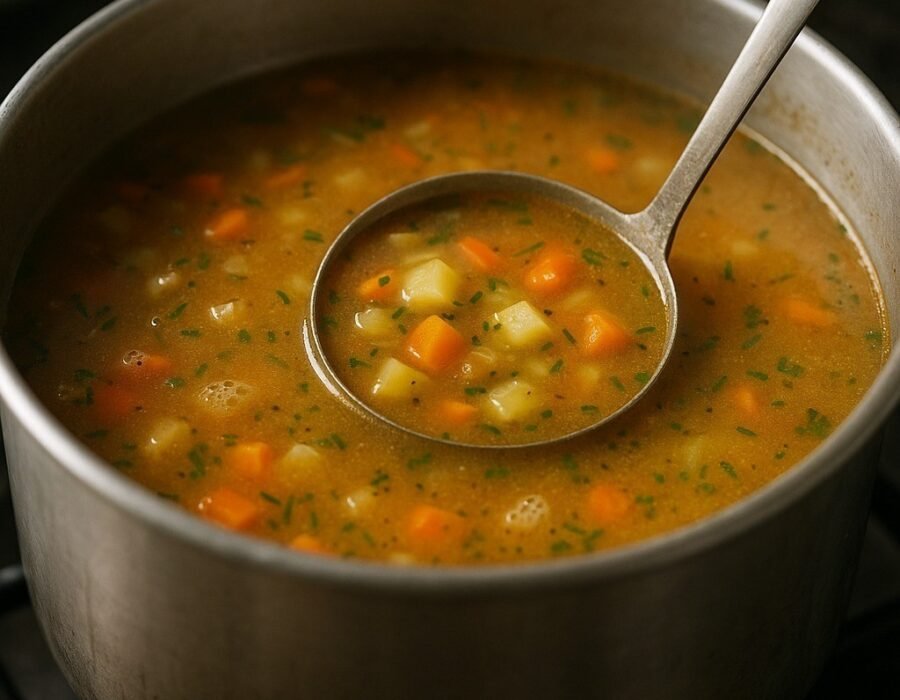
You followed the recipe. There’s salt in there — you added it. And yet the soup tastes like… hot vegetable water with ambitions. If your soup tastes bland no matter what you add, you’re almost certainly making one of a few specific mistakes, and none of them are “add more of the same seasoning.” Bland soup is a diagnostic puzzle, and the fixes take minutes.
Here’s the framework professional cooks use: soup needs salt, fat, acid, and depth. Blandness means at least one is missing. Most home soups are missing two. Run through them in order and the soup transforms.
Fix #1: Salt — More Than You Think (and at the Right Time)
Under-salting is the #1 cause of bland soup, full stop. Home cooks chronically under-salt because they’re afraid of over-salting. But soup is mostly water — it needs aggressive seasoning to taste like anything. Taste, add a big pinch, stir, wait 30 seconds, taste again. Repeat until it tastes seasoned but not salty. The difference between bland and deeply flavorful is often 2-3x the salt you initially added.
When matters too: salt in layers — some at the start (draws moisture from vegetables, builds foundation), more during cooking, final adjustment at the end. And use the right salt: kosher or sea salt for cooking (clean flavor, easy to pinch), never iodized table salt for finishing (it can taste metallic). If you’ve been salting “enough” and it’s still bland, the problem is below.
Fix #2: Acid — The Missing Brightness
This is the secret most home cooks never learn: bland soups are usually missing acid, not salt. A squeeze of lemon juice, a splash of vinegar (apple cider, red wine, rice vinegar — match to the cuisine), or even a dollop of yogurt stirred in at the end wakes up every other flavor. Acid doesn’t make soup taste sour — it makes it taste more like itself. Add a teaspoon at a time, tasting between additions. The moment the flavors “pop” into focus, stop. This single trick fixes more “bland” soups than all other fixes combined.
Why Your Soup Tastes Bland: Fixes #3-5
Fix #3: Fat. Fat carries flavor to your palate. A swirl of olive oil, a knob of butter, a spoonful of coconut cream, or crispy bacon/sausage on top adds richness that water-based soup lacks. Skimmed-all-the-fat healthy soups often taste bland precisely because the flavor vehicle is gone — add back a little.
Fix #4: Depth (umami). If the soup tastes thin and one-dimensional, it needs savory depth: a parmesan rind simmered in the pot (remove before serving), a spoonful of miso or tomato paste, soy sauce or fish sauce (a teaspoon disappears into the background while adding enormous savoriness), dried mushrooms or mushroom powder, or anchovy paste (melts invisibly, tastes like nothing fishy, adds incredible depth).
Fix #5: Better foundation. Water-based soups taste watery — use real stock, not water plus a bouillon cube (though better-than-bouillon paste is genuinely good). Brown your aromatics and proteins properly before adding liquid — the Maillard reaction creates hundreds of flavor compounds that simmering alone never produces. And don’t drown ingredients: soup should be brothy, not a swimming pool with vegetables.
The 5-Minute Rescue Protocol
Soup’s done and it’s bland? Do this, in order: 1) Salt aggressively in stages, tasting. 2) Add acid (lemon or vinegar), a teaspoon at a time. 3) Stir in fat (olive oil, butter, cream). 4) Add umami (soy sauce, parmesan, miso). 5) Fresh herbs and black pepper at the very end (heat kills fresh herb flavor — always last). Taste after each step. I promise: one of these steps will be the moment your soup goes from “meh” to “seconds please.” It’s never all five — but you won’t know which until you try them in order.
Prevention: Building Flavor From the Start
Great soup is built, not fixed: brown the meat, sweat the aromatics until sweet (not just soft), toast the spices in fat for 30 seconds, deglaze the pot (those browned bits are pure flavor), use stock not water, salt in layers, and finish with acid and fresh herbs. Follow that sequence and you’ll rarely need the rescue protocol. And the same principles apply to other “why does this taste off” mysteries — blandness almost always has a specific, fixable cause. Your soup was never doomed. It was just under-acided.
Three Soups That Teach the Framework
The fastest way to internalize salt-fat-acid-depth is to cook soups that showcase each element. Tomato soup is the acid lesson: canned tomatoes are already acidic, so the fix here is usually salt and fat — a swirl of cream or olive oil plus aggressive salting transforms it. If it’s still flat, a pinch of sugar (not more salt) balances the tomato acidity. Chicken noodle is the depth lesson: the difference between watery and rich is the stock quality and browned aromatics — sweat the mirepoix until genuinely golden, use real stock, and finish with fresh dill and lemon.
Butternut squash soup is the fat lesson: roasted squash blended with stock tastes thin until you add the fat — coconut milk, brown butter, or cream — plus acid (a splash of apple cider vinegar) to cut the sweetness. Make these three in a month and you’ll season by instinct afterward. The framework stops being a checklist and becomes taste memory. And once soup clicks, the same four elements fix pasta sauces, stews, and braises — blandness is one problem wearing different costumes.
The Stock Upgrade: Homemade vs. Store-Bought
Fix #5 said “use real stock” — here’s what that means in practice. Homemade stock (a roasted chicken carcass + vegetable scraps + water + 4 hours) costs almost nothing and tastes profoundly better than anything in a box — gelatinous body, real chicken flavor, no weird aftertaste. Save carcasses and vegetable trimmings in a freezer bag until you have enough; the stock practically makes itself. Better Than Bouillon paste is the best store shortcut — concentrated, flavorful, far superior to cubes or most boxed stocks.
Standard boxed stock varies wildly; taste before you commit a whole soup to it. And whatever you use, reduce it slightly before building the soup — simmering a quart down by a quarter concentrates flavor for free. If you make big batches, safe storage matters: cool stock quickly (ice bath, then fridge) and follow USDA-aligned home food preservation guidelines from the National Center for Home Food Preservation for cooling and storing. Great soup starts before the soup starts — it starts with what’s in the pot before the vegetables go in.


1 Comment