Family movie night sounds simple until you’re scrolling for 45 minutes while the kids bicker, your teenager declares everything “boring,” and someone suggests the same animated movie for the fourth time. If you’re asking what are the best family movies to watch together, you need films that work on multiple levels — entertaining for kids, genuinely enjoyable for adults, and capable of surviving the wildly different tastes under one roof. I’ve curated family movie nights for years, and the best picks share a secret: they’re great movies that happen to be family-friendly, not “kids’ movies” adults endure.
Here’s my selection principle: the best family movie is one where the adults aren’t checking their phones. If the grown-ups are engaged, the kids feel it — shared laughter and shared tension are what make movie night bonding rather than just co-located screen time. Every film below passes the “would I watch this without kids in the room” test. That’s the bar.
What Are the Best Family Movies to Watch Together? The All-Time Greats
Animated masterpieces (all ages, genuinely for everyone)
Pixar’s best remain the gold standard: Toy Story (all of them, but the original is perfect), Inside Out (the rare film that helps kids understand emotions while making adults cry), Coco (gorgeous, musical, deeply moving), Up (the first ten minutes are the finest short film ever made), and Ratatouille (a love letter to passion and craft that adults appreciate even more than kids). These aren’t kids’ movies — they’re masterpieces that respect young viewers enough to tackle real themes.
Studio Ghibli films are essential family viewing: My Neighbor Totoro (gentle, magical, perfect for young kids), Kiki’s Delivery Service (a warm story about independence), Ponyo (hand-drawn ocean wonder), and for older kids, Spirited Away (a landmark of animation). They move at a calmer pace than American animation, which is either a welcome change or an adjustment depending on your kids — but the artistry is unmatched.
Other animation standouts: Spider-Man: Into the Spider-Verse (visually revolutionary, thrilling for all ages), The Lego Movie (funnier than it has any right to be), Paddington and Paddington 2 (live-action but animated in spirit — Paddington 2 is legitimately one of the best-reviewed films ever made), Wallace & Gromit: The Curse of the Were-Rabbit, and Klaus (a stunning Netflix original that reinvents the Christmas movie).
Live-action adventures (ages 6+)
The classics that hold up: The Princess Bride (the ultimate family movie — adventure, comedy, romance, endlessly quotable), E.T. (still magical), The Goonies (every kid’s adventure fantasy), Back to the Future (perfect pacing, timeless fun), Jurassic Park (thrilling but intense — better for 8+), Matilda, Mrs. Doubtfire, and Home Alone (the first two are holiday staples).
Modern favorites: Wonder (kindness-themed tearjerker), The Greatest Showman (musical spectacle), the Harry Potter series (start around age 7–8; the later films get dark), Night at the Museum, Jumanji: Welcome to the Jungle (the reboot is surprisingly great), The Mitchells vs. the Machines (animated but feels live-action in energy), and Enola Holmes (clever, fun mystery).
For families with teens
Older kids can handle — and deserve — more sophisticated fare. The Hunger Games series, Spider-Man: No Way Home and the broader MCU (the Guardians of the Galaxy films are the most family-friendly entry point), Knives Out (a mystery the whole family can try to solve together), The Martian (smart, funny, inspiring), Hidden Figures (important history, hugely entertaining), Big, Groundhog Day, and School of Rock. These are films teens won’t roll their eyes at — the highest possible praise.
Making Family Movie Night Actually Work
Solve the selection problem with a system. The 45-minute scroll is the enemy of movie night. Try a rotation: each family member picks in turn, no vetoes (this rule is sacred — it teaches kids that other people’s choices deserve respect, and it forces adults to watch things they’d never choose). Or use a “three options” method: one person proposes three films, the family votes. Keep a running list of candidates on the fridge or a shared note so good ideas aren’t forgotten.
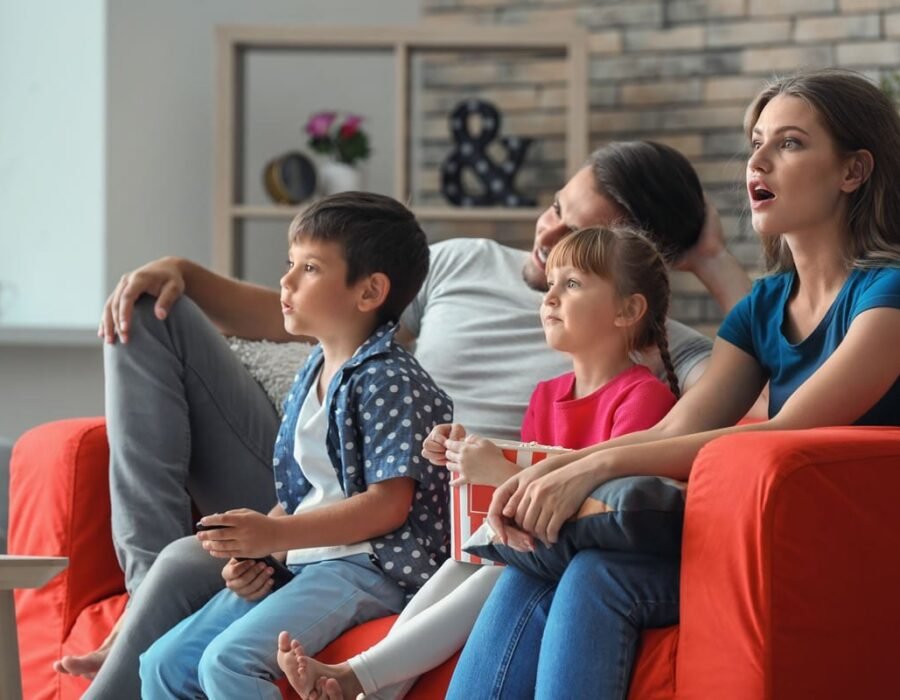
Set the scene. Dim the lights, make popcorn (the ritual matters), put phones in another room — including yours. The no-phones rule has to apply to adults too, or it’s meaningless. Blankets, pajamas, the couch configured for maximum togetherness. These environmental cues tell kids that this time is special and protected, which is really what they’re craving.
Talk about it after. The movie is only half the experience — the conversation afterward is where the bonding happens. Ask what surprised them, who their favorite character was, what they’d have done differently. For deeper films (Inside Out, Wonder, Coco), these conversations can be genuinely meaningful. You’re not just watching movies; you’re building a shared emotional vocabulary.
Handle the scary/intense stuff thoughtfully. Know your kids’ thresholds and preview when unsure (Common Sense Media is invaluable for age-appropriateness). It’s okay to pause and check in during intense scenes. And respect genuine fear — forcing a scared kid to “tough it out” creates negative associations with movie night. There’s always another film.
Build the full experience with a budget home theater setup and movie marathon planning for special occasions. For introducing older films, see how to introduce kids to classic movies.
One more idea that transformed our movie nights: the “film festival” approach for school breaks. Pick a theme for the week — Studio Ghibli week, 80s adventure week, musical week — and watch one film each evening. The cumulative effect is powerful: kids start noticing directorial styles, comparing films, and developing actual taste. My daughter went from tolerating Totoro to requesting Kiki’s Delivery Service unprompted after our Ghibli week. Themed weeks turn passive viewing into a mini film education, and the shared project gives the whole break a shape that everyone remembers.
So what are the best family movies to watch together? The Pixar and Ghibli masterpieces, timeless adventures like The Princess Bride and Back to the Future, modern hits like Spider-Verse and Knives Out — films that respect every viewer in the room. Pick with a fair rotation system, set the scene without phones, and talk about it after. The movie is the excuse; the togetherness is the point.