Tire rotation is the cheapest life-extension your car can get — and the most skipped. In New York, where potholes, stop-and-go traffic, and winter salt conspire against your tires, the question of how often to rotate has a specific answer shaped by local driving conditions. Get it right and you add thousands of miles to every set; get it wrong and you buy tires a year early.
Here is the evidence-based rotation schedule, the patterns for your drivetrain, how New York conditions change the math, what it costs, and the warning signs that you waited too long.
The Standard Answer: Every 5,000 to 8,000 Miles
The industry consensus — from tire manufacturers, AAA, and automakers — is rotation every 5,000 to 8,000 miles, roughly every other oil change. Your owner's manual is the final authority: some specify 5,000, others 7,500. Follow the manual over generic advice, because warranty coverage on tires can hinge on documented rotation compliance.
Why it matters mechanically: front tires on front-wheel-drive cars do the steering, most of the braking, and all of the power delivery — they wear roughly twice as fast as rears. Rotation evens out the wear so all four tires reach replacement together, which matters for handling, all-wheel-drive system health, and your wallet. A 40 to 80 dollar rotation that adds 10,000-plus miles to an 800 dollar tire set is among the best returns in car maintenance.
New York Factors That Shorten the Interval
New York driving is unusually hard on tires. Potholes — a perennial NYC and upstate plague after every freeze-thaw cycle — cause uneven wear and alignment damage that rotation alone cannot fix; if you feel pulling or see feathering, get an alignment check with the rotation. Stop-and-go city traffic concentrates wear on front tires through constant braking. Winter salt and temperature swings accelerate rubber aging.
For NYC daily drivers and upstate winter drivers, lean toward the 5,000-mile end of the range rather than 8,000. If you run dedicated winter tires, rotate the winter set when it goes on and note the mileage — seasonal swaps are natural rotation checkpoints. And after any pothole strike hard enough to feel, inspect for bulges and alignment issues immediately; a rotation will not save a damaged tire.
The full background is available at National Highway Traffic Safety Administration.
Rotation Patterns: Which One Your Car Needs
The pattern depends on drivetrain and tire type. Front-wheel drive: move fronts straight back, cross rears to the front. Rear-wheel and all-wheel drive: move rears straight forward, cross fronts to the back. These patterns exist because directional wear differs by axle role — crossing evens out the asymmetric wear each position creates.
Directional tires marked with rotation arrows cannot be crossed side-to-side; they rotate front-to-back only, staying on the same side. Staggered setups with wider rears cannot rotate front-to-rear at all — many owners simply accept faster wear. Your tire shop knows your pattern, but knowing it yourself prevents the 'we rotated them' claim on a car that cannot be rotated — it happens more than you would think.
Cost, DIY, and What Else to Check
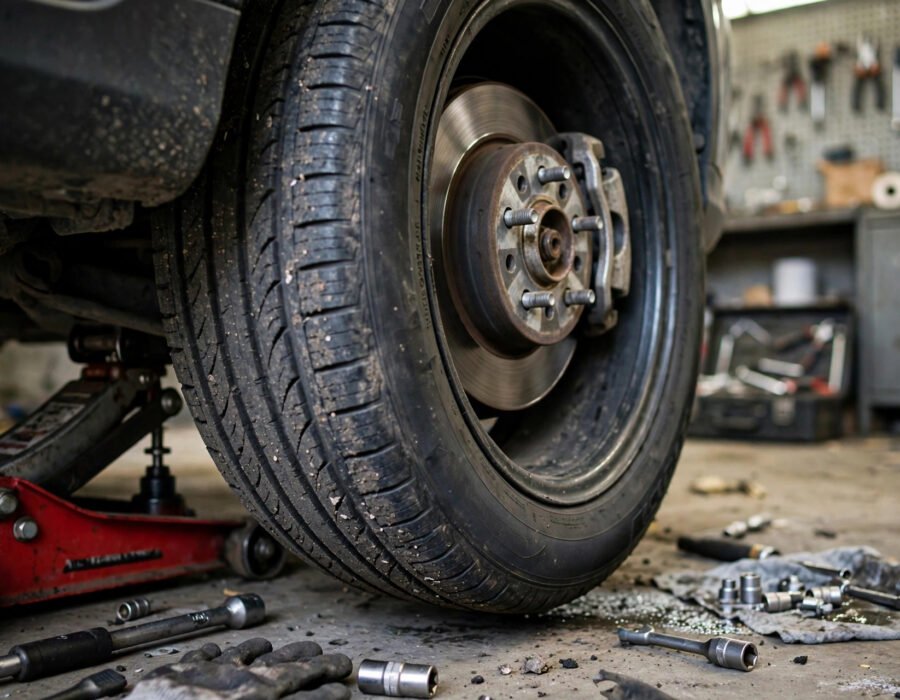
Professional rotation costs 40 to 80 dollars at most shops, and many tire retailers include free rotations for the life of tires purchased from them — ask at purchase, because this perk alone is worth hundreds over a tire's life. DIY is genuinely feasible: a jack, jack stands (never work under a car on a jack alone), a lug wrench, and a torque wrench — about 100 dollars in tools pays for itself in two rotations.
Every rotation is an inspection opportunity: check tread depth with the penny test, look for uneven wear patterns that signal alignment or suspension issues, check sidewalls for bulges or cracks, and verify pressures against the door-jamb sticker. In New York, also check the spare's pressure — a flat spare discovered during a roadside emergency is a preventable disaster.
Warning Signs You Waited Too Long
Uneven tread wear visible to the eye — one tire balding on the edges while others look fine — means rotation is overdue and alignment may be needed. Vibration at highway speeds, especially 55 to 70 mph, often indicates uneven wear or balance issues. Increased road noise, longer wet-weather stopping distances, and visible cupping on tread edges are all late-stage signs.
At that point, rotation helps less: severely unevenly worn tires may need replacement rather than rotation, and chronic skipping can mean replacing pairs instead of rotating singles — doubling the cost the maintenance was meant to prevent. The New York takeaway: set a mileage reminder at 5,000 miles, pair rotations with seasonal tire swaps, and treat the 60 dollar service as the cheapest insurance your tires have.
For official guidance, see AAA.
Seasonal Tire Swaps in New York
Upstate and western New York drivers should seriously consider dedicated winter tires — the rubber compounds stay pliable below 45°F where all-seasons harden, cutting stopping distances dramatically on cold pavement, not just snow. The economics: a winter set (600 to 1,000 dollars mounted) extends the life of your all-seasons by the months they sit idle, so the true cost is closer to half over time.
NYC drivers on plowed, treated roads can often manage with quality all-seasons, but the boroughs' freeze-thaw pothole season still argues for the 5,000-mile rotation discipline. Storage: many tire shops offer seasonal storage for 60 to 100 dollars per season — worth it for apartment dwellers. Mark tire positions when swapping so rotations stay correct, and check pressures monthly in winter — cold air contracts, and underinflation wears tires fast.
Learn more from Edmunds.
For more on this topic, see renting a car for a week and finding cheap gas on road trips.
Rotate your tires every 5,000 to 8,000 miles — closer to 5,000 for New York's potholes, city traffic, and winters — following the pattern for your drivetrain and tire type. At 40 to 80 dollars (often free with tire purchase), rotation is the highest-ROI maintenance most drivers skip, adding thousands of miles to every set. Pair it with pressure checks, tread inspections, and alignment attention after hard pothole hits. Your tires are the only part of the car touching the road; treating rotation as non-negotiable is simply respecting physics and your budget.
Frequently Asked Questions
How often should tires be rotated in miles?
Every 5,000 to 8,000 miles per industry consensus, with your owner's manual as the final authority. New York drivers facing potholes and heavy city traffic should favor the 5,000-mile end of the range.
What happens if you never rotate your tires?
Front tires on front-wheel-drive vehicles wear roughly twice as fast as rears, leading to uneven wear, vibration, noise, poor wet traction, and early replacement — often in pairs instead of a full set, costing more long-term.
Can I rotate tires myself?
Yes, with a jack, jack stands, lug wrench, and torque wrench. Never work under a car supported only by a jack. Many drivers find shop rotations worth it for the included inspection alone.
Do all-wheel-drive cars need more frequent rotation?
AWD vehicles are more sensitive to uneven tire wear since circumference differences stress the drivetrain, making regular rotation especially important — though the mileage interval itself stays the same.