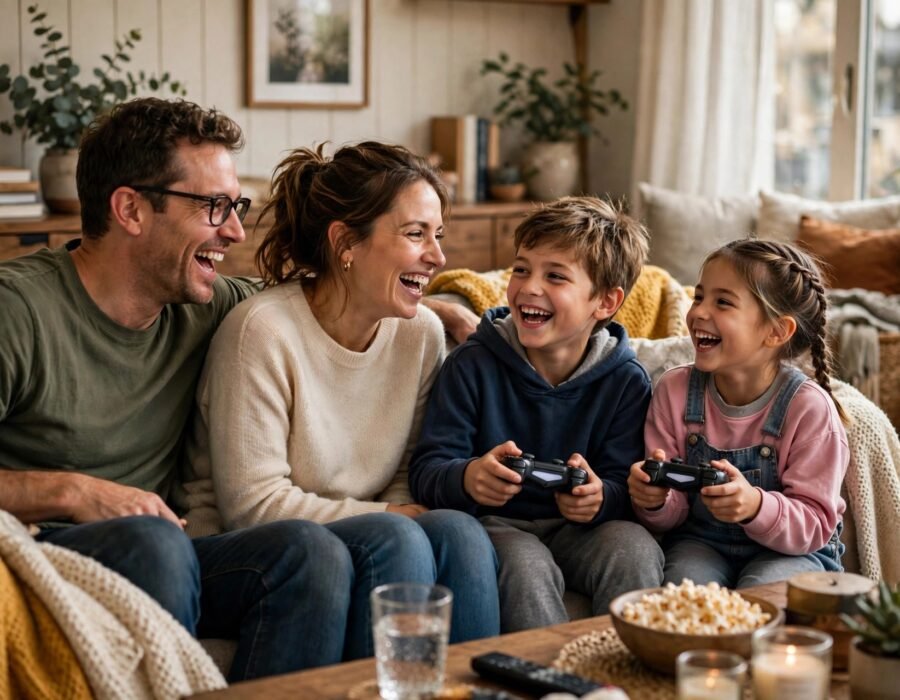
The kids want to play together. You want something that will not expose them to voice-chat toxicity, microtransaction traps, or content meant for adults. Finding games the whole family can genuinely enjoy — not just tolerate — is harder than it should be, because “family-friendly” on a store page often means “has bright colors” rather than “well-designed for mixed ages.” If you are asking is it worth it to find family-friendly multiplayer games, the answer is an emphatic yes: the right game creates the kind of shared memories that outlast every console generation.
Family-friendly multiplayer means games where different ages and skill levels can play together meaningfully — not just coexist. The best ones share design traits: simple core mechanics with hidden depth, cooperative options alongside competition, no reliance on reflexes alone, and social dynamics that build connection rather than conflict. Here is how to find them and what to look for.
What Makes a Game Truly Family-Friendly
Look past the age rating to the actual design. The best family multiplayer games use asymmetric roles — different players doing different things at their own skill level. Overcooked has one player chopping while another serves; nobody needs to be good at everything. Cooperative games (as opposed to competitive) let skilled players carry without humiliating beginners — the family wins or loses together. Games with handicaps, assist options, or rubber-banding (Mario Kart’s infamous blue shell is secretly brilliant family design) keep mixed-skill groups competitive.
Just as important is what is absent: unmoderated voice chat with strangers, aggressive monetization targeting kids, and content that is “technically E-rated” but developmentally inappropriate. The ESRB rating system is your first filter — check the rating summaries, not just the letter, since they detail exactly what content triggered the rating. For the psychology of kids and games, APA-published research offers evidence-based guidance on screen time, content, and the genuinely positive effects of cooperative play. And the best board games for adults prove the underlying principle: the best multiplayer experiences are about the people, not the platform.
The Standout Picks by Category
Cooperative adventures: It Takes Two (designed exclusively for two players, widely considered the best co-op game ever made), the LEGO game series (drop-in co-op, gentle difficulty, humor for all ages), and Stardew Valley’s multiplayer (build a farm together at whatever pace suits). Party games: Mario Kart 8 Deluxe (rubber-banding keeps races close), Super Mario Party, and Jackbox Party Packs (phone-based trivia and drawing games that work brilliantly across generations — grandparents included).
Creative and exploration: Minecraft in creative or peaceful mode is the ultimate family sandbox — build together, explore together, no pressure. Animal Crossing offers gentle shared island life. Sports and movement: Nintendo Switch Sports, Ring Fit Adventure, and Just Dance get everyone moving and laughing. The common thread: these games make skill gaps irrelevant or charming, rather than punishing. Planning a fun game night with friends uses the same curation principles — match the game to the group, not the group to the game.
The Games to Approach Carefully
Popular does not mean family-appropriate. Fortnite and Roblox are where kids’ friends are, but both need active parental setup: voice chat restrictions, spending controls, and content filters. They are manageable with fifteen minutes of settings work and periodic check-ins — but “the kids are playing Roblox” without that setup is asking for trouble. Treat these as privileges requiring setup, not defaults.
Setting Up for Success
The technical setup matters as much as game choice. Create child accounts with appropriate restrictions before the first play session — retrofitting controls after problems arise is harder. Use platform-level spending passwords everywhere; stories of kids spending thousands are always, without exception, stories of missing passwords. Establish the gaming space physically too: the living room TV beats isolated bedroom play for young kids, keeping gaming social and visible.
Set expectations as a family: when gaming time happens, how long sessions run, and what the rules are for online interaction. The families who enjoy gaming most treat it like any shared activity — with structure, not anxiety. And play with them, at least sometimes. The research is clear that co-play (parents playing alongside kids) transforms gaming from a solitary concern into a genuine family activity — which is the entire point.
Gaming Across Generations
The most magical family gaming crosses generations, not just ages. Grandparents who never touched a controller can bowl in Switch Sports, solve cozy puzzles, or explore Minecraft’s peaceful mode alongside grandkids — and the shared activity bridges gaps that conversation alone cannot. Design your game nights for the least experienced player, not the most: the skilled players will find their fun in helping, showing off gently, and enjoying the chaos. Some families maintain multi-year Minecraft worlds or Animal Crossing islands that become genuine family heirlooms — digital places thick with shared history, visited the way other families revisit vacation spots. Those are worth more than any leaderboard, and they cost nothing but time together.
The Co-Play Dividend
Researchers have a term for parents playing alongside kids — “co-play” — and the findings are encouraging: co-play transforms gaming’s effects, increasing its social and cognitive benefits while defusing most concerns. Kids whose parents play with them show better understanding of game content, stronger parent-child communication, and healthier gaming habits. The mechanism is simple: presence turns a solitary activity into a shared one, and shared activities build relationships. You do not need to be good — being willing to be bad at Mario Kart while your kid laughs is the whole point.
The Bottom Line
Family-friendly multiplayer games are worth finding because they turn screen time into together time: cooperative adventures, party games, and creative sandboxes where mixed ages play meaningfully together. Filter with ESRB ratings, set up accounts and spending controls before problems, and prioritize games where skill gaps do not matter. The console will be obsolete in seven years. The memory of the whole family laughing through a chaotic Overcooked kitchen will not be.
Frequently Asked Questions
What age is appropriate for multiplayer gaming?
It depends on the game, not the child. Cooperative, creative games work from ages 4–5 with parent participation; competitive online games deserve more caution until 10–13, when kids better handle both the social dynamics and the content. Use ESRB ratings as a starting filter, then evaluate the specific game’s community and monetization.
How do I keep my kids safe in online games?
Create child accounts with restrictions, disable or limit voice chat with strangers, set spending passwords, and keep gaming in shared spaces for younger kids. The fifteen-minute settings setup prevents nearly all the horror stories. Revisit settings as kids age and games update.
Are video games bad for kids?
The research is nuanced: excessive solitary gaming correlates with problems, but moderate cooperative play shows neutral to positive effects on problem-solving, social bonding, and even learning. Context matters more than hours — co-play with family is fundamentally different from isolated grinding.
What is the best first multiplayer game for a family?
Mario Kart 8 Deluxe is the consensus pick: simple to learn, rubber-banding keeps everyone competitive, and it scales from toddlers mashing buttons (with auto-steer) to genuinely skilled play. For cooperation, the LEGO games or Overcooked; for creativity, Minecraft in peaceful mode.