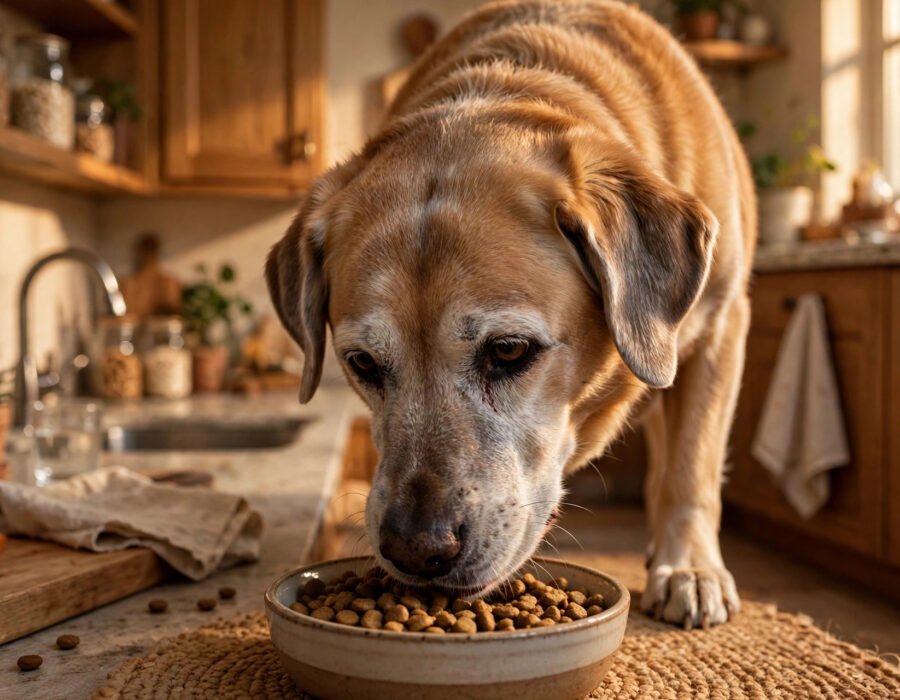
Your dog's muzzle is gray, the vet mentioned 'senior formula,' and the pet store aisle offers bags from 25 to 90 dollars with no clear explanation of the difference. Feeding a senior dog well in Texas — where heat, local prices, and your dog's changing needs all factor in — does not require the most expensive bag. It requires understanding what aging dogs actually need and what the price tiers genuinely buy.
Here is the real monthly cost breakdown by food type, the nutrients that matter for seniors, how to read labels like a professional, Texas-specific considerations, and how to save without compromising.
Monthly Cost Ranges: What You Will Actually Pay
For a medium senior dog (30 to 50 pounds), realistic Texas monthly costs: budget kibble, 25 to 45 dollars; mid-tier senior-formula kibble, 45 to 75 dollars; premium senior kibble, 75 to 110 dollars; wet food feeding, 90 to 180 dollars; fresh/frozen subscription food, 150 to 300-plus dollars. Large dogs (70-plus pounds) run roughly 1.5 to 2 times these figures; small dogs half.
The price tiers buy different things: budget foods meet AAFCO minimums with cheaper ingredients and less rigorous testing; mid-tier adds senior-specific formulations (joint support, adjusted protein and fat); premium adds feeding trials, stricter quality control, and specialized ingredients. The honest assessment: the jump from budget to mid-tier senior formula is the highest-value upgrade — the jump from mid-tier to premium buys smaller marginal gains. Most Texas senior dogs thrive on a good mid-tier senior kibble, not the 100 dollar bag.
What Senior Dogs Actually Need Nutritionally
Aging changes nutritional needs, but not how marketing suggests. Senior dogs generally need: high-quality digestible protein maintained (not reduced — older dogs need protein to preserve muscle, contrary to old advice), moderate fat adjusted for activity level, added joint support (glucosamine, chondroitin, omega-3 fatty acids like EPA/DHA), and adjusted calories — metabolism slows while many seniors gain weight, and obesity worsens arthritis dramatically.
What they do not automatically need: grain-free formulas (the FDA has investigated links between grain-free diets and heart disease in dogs — do not choose grain-free without veterinary reason), exotic proteins, or 'senior' labels as magic — the label is unregulated marketing; the nutrient profile is what matters. The single best nutritional move: ask your vet for a food recommendation based on your dog's specific conditions (kidney, heart, arthritis), because senior needs are individual, not one-formula-fits-all.
The full background is available at Association of American Feed Control Officials.
Reading Labels Like a Professional
Ignore the front of the bag — read the guaranteed analysis and ingredient list. Look for: an AAFCO nutritional adequacy statement ('formulated to meet the nutritional levels established by AAFCO for maintenance' — or better, 'animal feeding tests using AAFCO procedures' indicating actual trials); a named meat or meat meal as the first ingredient; and calorie content per cup, which lets you compute true cost per day.
Compute cost per day, not per bag: divide bag price by days it lasts at your dog's feeding amount. A 60 dollar bag lasting 40 days (1.50/day) beats a 40 dollar bag lasting 20 days (2.00/day) — the expensive bag is often cheaper. Beware: vague ingredients ('meat by-products' without naming the animal), no AAFCO statement, and marketing terms like 'holistic' or 'human-grade' that have no regulatory meaning in pet food. The label's boring fine print tells the truth the front panel hides.
Texas-Specific Considerations
Texas heat changes feeding logistics: store kibble in cool, sealed containers — heat and humidity degrade nutrients and invite pests, and garage storage in a Texas summer can ruin a bag. Fresh and frozen foods need reliable cold-chain delivery, which Texas heat complicates — choose subscriptions with proven insulated shipping if you go that route.
Local price advantages: Texas's warehouse clubs (Costco, Sam's) sell quality house-brand dog foods at significant discounts — Kirkland's formulas are well-regarded and run notably cheaper than equivalents. Local independent pet stores often price-match and offer frequent-buyer programs (buy 10 get 1 free is common). And Texas's large veterinary market means competitive pricing on prescription diets if your senior needs them — price-shop vet clinics and authorized online pharmacies, where the same prescription food often costs 15 to 20 percent less.
Saving Smart Without Compromising Health
The effective savings hierarchy: buy larger bags of the right food (cost per pound drops 15 to 25 percent) if you can store them properly; use autoship subscriptions for 5 to 10 percent discounts; join manufacturer loyalty programs; and ask your vet about therapeutic versus over-the-counter options — some 'prescription' needs can be met with well-chosen retail formulas at half the price.
Do not save by: buying the cheapest food with poor digestibility (you feed more and the dog gets less — false economy), switching foods abruptly (transition over 7 to 10 days to avoid GI upset that costs a vet visit), or skipping the vet's dietary advice for a senior with kidney, heart, or weight issues — the wrong food for a sick senior costs far more in treatment than the right food costs in kibble. The cheapest healthy diet is the right mid-tier food, bought smart, fed in correct portions — because overfeeding wastes more money than any brand choice.
For official guidance, see U.S. Food and Drug Administration.
Transitioning Foods Safely for Seniors
Senior dogs often need diet changes, but switching abruptly causes digestive upset that mimics illness. The transition protocol: mix 25 percent new food with 75 percent old for three days, then 50-50 for three days, then 75-25 for three days before going full new. For sensitive seniors, stretch each phase to five days. Watch stool quality throughout — it is the honest feedback mechanism.
Time transitions away from stressful events: not the week of a move, a new pet's arrival, or post-surgery recovery. Keep the old food on hand until the transition completes in case the new formula disagrees. And involve your vet when the switch is medical (kidney, heart, or allergy diets) rather than elective — therapeutic transitions sometimes need different pacing or monitoring bloodwork to confirm the new diet is doing its job.
Learn more from PetMD.
For more on this topic, see eating healthy on a budget and the best flooring for homes with pets.
Choosing healthy food for a senior dog in Texas costs roughly 45 to 75 dollars monthly for a medium dog on a good mid-tier senior kibble — the sweet spot where nutritional quality meets value. Focus on what seniors truly need (quality protein, joint support, correct calories), read AAFCO statements instead of marketing, compute cost per day, store food against Texas heat, and buy smart through warehouse clubs and autoship. The most expensive bag is not the healthiest; the right food, fed in the right amount, on veterinary guidance, is.
Frequently Asked Questions
How much should I budget monthly for senior dog food?
For a medium senior dog in Texas: 45 to 75 dollars monthly for a quality mid-tier senior kibble, 75 to 110 for premium, more for wet or fresh foods. Large dogs run 1.5 to 2 times higher; small dogs about half.
Do senior dogs need less protein?
No — this is outdated advice. Senior dogs need maintained high-quality protein to preserve muscle mass. What changes is calorie needs (usually lower) and the addition of joint-support nutrients like glucosamine and omega-3s.
Is grain-free better for senior dogs?
Not automatically. The FDA has investigated potential links between grain-free diets and canine heart disease. Choose grain-free only for a specific veterinary reason, not as a default health upgrade.
What does the AAFCO statement on dog food mean?
It certifies the food meets established nutritional standards — either by formulation or by actual feeding trials (the stronger claim). Foods without an AAFCO adequacy statement may not provide complete nutrition.