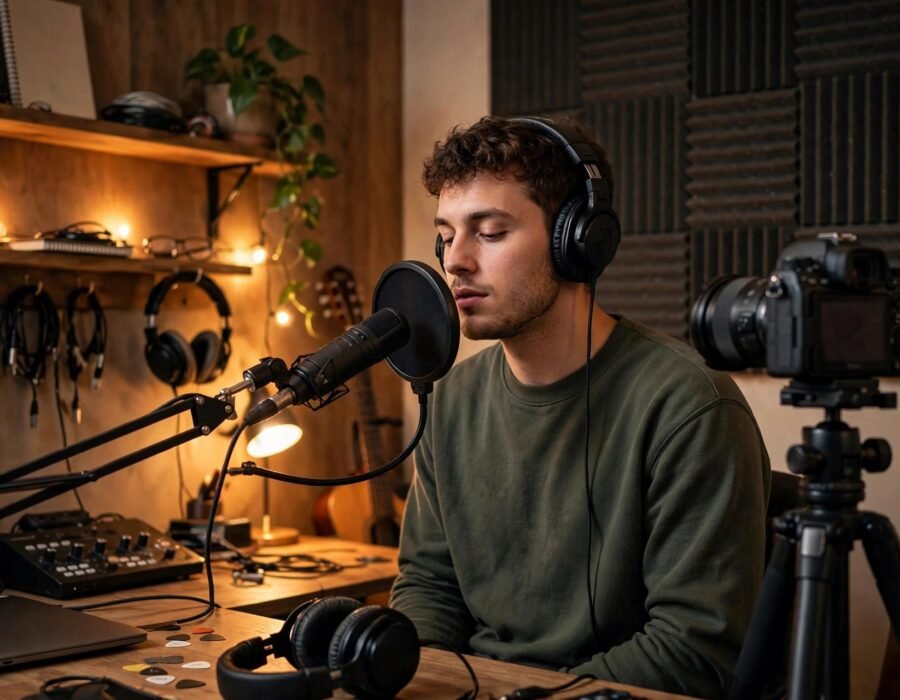
You filmed yourself covering your favorite song — great vocal take, nice guitar tone, 4K video. You upload it to YouTube, and then the anxiety starts: is this legal? Will it get taken down? Will you get sued? Can you monetize it? Music copyright for YouTube covers is one of the most misunderstood areas of internet law, tangled in platform policies, licensing deals, and persistent myths. If you want to understand how long does it take to really understand music copyright for YouTube covers in the US, this guide gives you the working knowledge in one reading.
The core principle: a cover song involves two copyrights — the composition (melody and lyrics, owned by songwriters/publishers) and the sound recording (the original artist’s recorded version). Your cover creates a new sound recording (yours), but it uses someone else’s composition — and that requires permission, in the form of a license. The good news: YouTube’s system handles most of this automatically. The bad news: “automatically” does not mean “in your favor.”
How YouTube Actually Handles Covers
YouTube’s Content ID system scans uploads against a database of copyrighted works. When it detects a cover, one of three things happens: the rights holder monetizes your video (ads run, revenue goes to them — the most common outcome), the rights holder blocks it (in some or all countries — less common for covers), or the rights holder tracks it (allows it while collecting data). YouTube has licensing agreements with major publishers that permit covers to stay up under these terms — which is why millions of covers exist without takedowns.
What this means practically: you can almost certainly upload your cover without legal trouble, but you probably cannot monetize it — the ad revenue goes to the composition’s rights holders. Some publishers allow revenue sharing; most simply claim it all. And Content ID is automated and imperfect: false claims happen, disputes are possible but slow, and the power imbalance favors rights holders. The U.S. Copyright Office’s resources explain the underlying rights clearly — understanding what you own (your recording) versus what you are borrowing (their composition) is the foundation. For the broader music business context, discovering new music you will like increasingly happens through covers, which is why rights holders tolerate them.
The Myths, Corrected
“Giving credit avoids copyright issues” — false. Credit is polite; it is not a license. “Under 30 seconds is fair use” — false; there is no time-based safe harbor, and courts have ruled against uses of just seconds. “Non-monetized videos are fine” — misleading; monetization affects fair-use analysis but lack of monetization does not immunize you (though rights holders rarely bother with non-monetized covers). “Changing the lyrics/melody makes it mine” — dangerous; derivative works still require permission, and parody has specific (narrow) protections.
The fair-use reality: cover songs almost never qualify as fair use — they are not commentary, criticism, or parody of the original (Weird Al gets permissions; his parody defense is narrower than people think). You are performing someone else’s composition for entertainment, which is precisely what the composition copyright controls. The system works because platforms licensed it at scale, not because covers are legally exempt. The Recording Academy’s advocacy resources track the legislative side of these issues, including ongoing debates about platform liability. And if your covers take off, enjoying a music festival on a budget might include watching artists whose careers started exactly where you are.
When You Need an Actual License
YouTube’s blanket licenses cover YouTube only. Distributing your cover to Spotify, Apple Music, or as a download requires a mechanical license — easily obtained through services like DistroKid, TuneCore, or Songfile ($15–20 per song), which handle the paperwork and royalty payments. Selling merch with lyrics, using the cover in a film or ad (synchronization license — negotiated directly, often expensive), or performing it in certain commercial contexts each need separate permissions. The rule: platform-native posting is handled; taking the cover elsewhere is not.
Protecting Yourself as a Cover Artist
Best practices: keep your covers on YouTube (where the licensing infrastructure exists), do not use the original recording’s audio (that is a separate copyright — always record your own version), avoid claiming false ownership, and document everything if you dispute a Content ID claim. If you build a real audience, consider the mechanical-license route for streaming distribution — it converts YouTube-only covers into catalog assets earning on every platform.
And understand the takedown process: a DMCA takedown requires the rights holder to assert infringement under penalty of perjury; you can file a counter-notification if you believe the claim is wrong — but counternotifications carry legal risk if you are wrong, so reserve them for genuine errors. Most cover artists never need any of this; the system hums along with revenue flowing to rights holders. Know the machinery, respect the rights, and keep creating.
Building a Cover Channel That Lasts
The cover artists who thrive treat it as a craft, not a loophole. Consistency beats virality: weekly uploads build audiences that one viral cover cannot sustain. Develop a signature — a genre twist (metal covers of pop songs), an arrangement style, a visual identity — because a thousand people post covers daily and distinction is survival. Engage the original artists’ fan communities respectfully; many successful cover artists were eventually embraced (and even collaborated with) by the originals. And diversify: the artists who last pair covers with originals, using the covers’ discovery power to funnel listeners toward their own songs — the only catalog they fully own.
The Takedown Survival Guide
Even with platform licenses, problems occur. If Content ID misidentifies your original song as someone else’s, dispute it with evidence (project files, timestamps). If you receive a DMCA takedown you believe is wrong, a counter-notification is your recourse — but understand it initiates a legal process, so reserve it for clear errors, not wishful thinking. Keep records of your licenses for distributed covers. And never buy “copyright-free” cover clearances from shady sites — the legitimate paths (platform licenses, mechanical licensing services) are cheap and real; the scams prey on confusion.
The Bottom Line
YouTube covers are broadly permitted through platform licensing deals: upload freely, expect rights holders to claim the ad revenue, and do not mistake tolerance for ownership. Credit is courtesy, not a license; fair use almost never covers covers; and distributing beyond YouTube requires mechanical licenses. Understand which copyrights you are using, respect the system that lets covers exist, and focus your energy on the performance — the law is settled enough to create with confidence.
Frequently Asked Questions
Can I monetize cover songs on YouTube?
Usually not — Content ID typically routes ad revenue to the composition’s rights holders. Some publishers allow revenue sharing, but the default is that they claim it. You keep the exposure and audience growth; they keep the ad dollars.
Will my cover get taken down?
Unlikely if it is a straightforward cover — YouTube’s publisher agreements permit covers under Content ID claiming. Takedowns happen mostly for uses of original recordings, uncleared samples, or publishers who opt for blocking. Record your own version and you are in the safest category.
Do I need a license to post a cover on YouTube?
Not directly — YouTube’s blanket agreements with publishers cover it. But you need a mechanical license to distribute the same cover to Spotify, Apple Music, or as a download (easily obtained via distributors for ~$15–20/song).
Is it fair use if I change the song significantly?
Probably not — altered covers are derivative works, which still require permission. True parody (commenting on the original) has narrow protections, but most covers are performances of the composition, not commentary on it. When in doubt, assume you need the license.