Florida winters are a skincare paradox: 65 degrees and sunny outside, yet your skin feels tight, flaky, and itchy. The culprit is not cold — it is the combination of lower humidity, indoor heating, hot showers, and air conditioning running year-round, which quietly strips moisture even in the Sunshine State. Choosing the right moisturizer means understanding this specific dryness, not buying whatever the northern winter guides recommend.
Here is why Florida winter skin dries out, the ingredient categories that fix it, how to choose for your skin type, and the application method that multiplies any moisturizer's effectiveness.
Why Florida Winters Dry Your Skin
Florida's winter humidity regularly drops into the 40 to 60 percent range — not desert-dry, but a sharp fall from summer's 80 percent-plus, and your skin notices the gradient. Indoor heating, even used lightly, drops indoor humidity further. Add Florida's year-round air conditioning, which dehumidifies constantly, plus hotter winter showers (people compensate for 'chilly' 60-degree weather with scalding water), and you have a multi-front moisture assault.
The skin barrier science: dry air increases transepidermal water loss — moisture evaporating from skin — while hot water and harsh cleansers strip the natural lipids that seal it in. The result is the classic Florida winter pattern: oily T-zone but flaky cheeks, tight feeling after cleansing, and itchy shins. Recognizing this as barrier disruption, not just 'dry skin,' points to the right fix: repair the barrier and seal in moisture, not just add surface hydration.
The Three Ingredient Categories That Matter
Moisturizers work through three mechanisms, and the best formulas combine all three. Humectants (hyaluronic acid, glycerin, urea) draw water into the skin — critical, but in dry air they can pull moisture from deeper skin layers if not sealed, so they need backup. Emollients (squalane, ceramides, fatty acids) fill gaps between skin cells, smoothing flakiness. Occlusives (petrolatum, dimethicone, shea butter) form a seal that locks everything in — the most underrated category.
For Florida winter dryness, prioritize ceramide-containing formulas (ceramides are the skin's natural barrier lipids — replenishing them repairs the barrier itself) with both humectant and occlusive components. Petrolatum, despite its unglamorous image, remains the gold-standard occlusive in dermatology — it reduces water loss by up to 98 percent. Fragrance-free is non-negotiable for compromised winter skin; fragrance is a top irritant when the barrier is already struggling.
The full background is available at American Academy of Dermatology.
Choosing for Your Skin Type
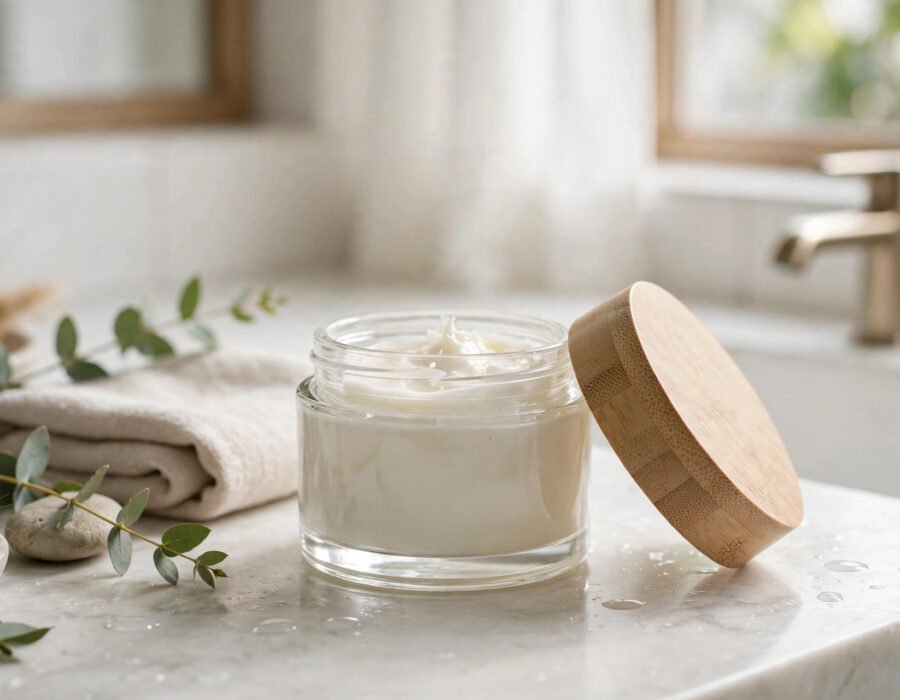
Dry/sensitive: rich creams (not lotions — creams have higher oil content) with ceramides, applied to damp skin. Look for 'cream' or 'balm' textures; avoid gel moisturizers, which evaporate too fast in dry air. Oily but dehydrated (the Florida classic): a lightweight humectant serum under a medium lotion — hydrate without heaviness, and do not skip moisturizer because you are oily; dehydrated oily skin overproduces oil to compensate.
Combination: different zones, different needs — a richer cream on cheeks, lighter lotion on the T-zone, or a single medium formula if you prefer simplicity. Mature skin: richer formulas with added cholesterol and fatty acids alongside ceramides, since aging skin produces fewer barrier lipids. Eczema-prone: stick to dermatologist-recommended barrier creams and see a doctor if winter flares resist over-the-counter care — Florida winter is peak eczema season.
The Application Method That Multiplies Results
Technique rivals product choice. Apply moisturizer within 60 seconds of cleansing or showering, on damp (not dripping) skin — this traps the surface water under the product, multiplying hydration. Use enough: a nickel-sized amount for the face is the dermatologist rule of thumb; most people under-apply by half. Do not forget the neck, and in Florida winter, extend body moisturizer to shins and arms, the itchiest zones.
Layering order: thinnest to thickest — humectant serum first, then cream, then (for very dry skin) a thin occlusive layer like petrolatum on top at night ('slugging,' which dermatologists confirm works). Morning: moisturizer, then sunscreen — Florida UV is year-round, and winter sun through car windows ages skin steadily. Adjust as spring humidity returns: Florida skin needs seasonal formula swaps, lighter in May, richer in December.
What to Avoid and When to See a Doctor
Avoid: long hot showers (keep them lukewarm and under 10 minutes), harsh foaming cleansers (switch to creamy non-foaming ones in winter), over-exfoliating (cut acids and scrubs to half frequency — compromised barriers cannot handle normal exfoliation loads), and fragranced products. Also avoid the 'more is better' trap with actives — winter is the season to simplify routines, not intensify them.
See a dermatologist if: dryness comes with cracking, bleeding, or intense itching; over-the-counter moisturizers fail after two weeks of correct use; you develop rashes or patches (possible eczema, psoriasis, or contact dermatitis needing diagnosis); or dryness is sudden and severe, which can occasionally signal thyroid or other systemic issues. Florida has abundant dermatologists and many offer winter-season appointments precisely because this is peak complaint season — you are not alone in the waiting room.
For official guidance, see Mayo Clinic.
Body Moisturizing: Beyond the Face
Florida winter dries more than faces — shins, arms, and hands take the worst of it. The body protocol: moisturize within 3 minutes of showering (damp skin rule applies everywhere), use cream textures not light lotions for winter, and give extra attention to shins and elbows where itching concentrates. Fragrance-free matters for body too when skin is compromised.
Hands deserve special mention: frequent washing plus Florida's winter dryness cracks them fast — keep a rich hand cream at every sink and reapply after washing. Feet: heavy moisturizer plus socks overnight once weekly prevents the cracked-heel season. The face gets the attention, but the body covers 95 percent of your skin — winter body care is not vanity, it is comfort. Itchy shins at 2 a.m. will convince any skeptic.
Learn more from U.S. Food and Drug Administration.
For more on this topic, see why skin breaks out when stressed and why hair falls out more in the shower.
Choosing the right moisturizer for Florida's dry winters means targeting the real cause — humidity drops, indoor heating, hot showers, and year-round AC disrupting the skin barrier — with ceramide-rich, fragrance-free creams combining humectants, emollients, and occlusives, applied to damp skin within a minute of washing. Match texture to your skin type, layer correctly, keep showers lukewarm, and do not skip sunscreen. Florida winter dryness is fixable with the right formula and method — no northern-heavy balm required.
Frequently Asked Questions
Why is my skin dry in Florida winter when it is not cold?
Lower humidity (40 to 60 percent vs. summer's 80 percent-plus), indoor heating, year-round air conditioning, and hotter showers combine to strip the skin barrier — cold is not required for dryness.
Should I use a cream or lotion for winter dry skin?
Cream — creams contain more oil and provide stronger barrier protection than lotions. For Florida's mild-but-drying winters, a ceramide-rich cream is the sweet spot; reserve heavy balms for severe dryness.
What ingredients are best for dry winter skin?
Ceramides (repair the barrier), hyaluronic acid and glycerin (humectants that draw in water), and petrolatum or dimethicone (occlusives that seal moisture in). Fragrance-free formulas are essential for compromised skin.
When should I apply moisturizer?
Within 60 seconds of cleansing or showering, on damp skin — this traps surface water underneath. Use a nickel-sized amount for the face, and layer thinnest to thickest if using serums.