To get rid of a piercing bump, start by identifying what caused it, then keep the area clean with sterile saline wound wash, reduce pressure and friction, and avoid touching or squeezing the bump. Mild irritation bumps may improve with consistent aftercare, but an infected piercing or a growing keloid may need medical treatment. If you notice increasing pain, heat, spreading redness, pus, or fever, seek medical advice rather than relying on home remedies.
A bump around a nose ring, ear piercing, cartilage piercing, or belly button piercing does not automatically mean you have a keloid or infection. Several conditions can look similar, and using the wrong treatment may make the problem worse.
You can browse more features and updates from UK Journal Magazine’s in-depth features.
What Causes a Piercing Bump?
A piercing creates an opening through the skin, so the surrounding tissue needs time to heal. During that process, friction, swelling, irritation, allergies, and abnormal scar formation can cause a raised area to develop.
Understanding the cause is the first step toward choosing the right treatment.
1. Irritation and friction
An irritation bump is a common explanation for a small lump around a healing piercing. It may develop when the jewelry moves excessively, catches on clothing, rubs against a pillow, or puts pressure on the surrounding skin.
Other contributing factors include touching the piercing with unwashed hands, twisting the jewelry unnecessarily, cleaning too aggressively, and changing jewelry before the piercing has healed.
What helps: Reduce friction, leave the jewelry alone as much as possible, and follow a gentle cleaning routine. If the bump persists, have a reputable professional piercer assess whether the jewelry fits properly.
2. Infection
A piercing bump can sometimes be a sign of infection, particularly when the surrounding skin becomes increasingly swollen, painful, hot, or discolored.
Other warning signs include thick white, yellow, or green discharge, bleeding, and feeling feverish or generally unwell.
An infected piercing may require antibiotics or another treatment prescribed by a healthcare professional. Cleaning alone is not always sufficient.
What helps: Seek prompt medical assessment if you suspect an infection. Do not squeeze the bump, attempt to drain it, or start using leftover antibiotics.
The NHS provides further guidance in its official guide to infected piercings.
3. Granuloma
A granuloma is a type of raised tissue response that can develop after a piercing. Some bumps contain extra blood vessels or trapped fluid, and certain lesions may bleed or ooze easily.
These bumps can resemble pimples or irritation bumps, making them difficult to identify without an examination.
What helps: Keep the area clean and avoid picking at it. A small, persistent, bleeding, or enlarging bump should be assessed by a healthcare professional to determine whether it needs specific treatment.
4. Hypertrophic scars and keloids
A hypertrophic scar forms when extra scar tissue develops at the site of an injury. It generally remains within the boundaries of the original wound.
A keloid is different: it grows beyond the original injury and may continue enlarging over time. It can feel firm, itchy, tender, or painful.
Both can appear after ear, nose, or other body piercings, but not every raised bump is a scar.
What helps: Consult a dermatologist if the bump becomes firm, keeps growing, or remains after the piercing has otherwise healed. Keloids do not disappear on their own and may require treatments such as corticosteroid injections or other specialist procedures.
Read the American Academy of Dermatology’s guidance on keloid scars for more information.
5. Jewelry allergies and pressure
Some people develop contact dermatitis from metals such as nickel. Symptoms may include itching, redness, swelling, irritation, and a rash around the piercing.
Jewelry that is too tight, too heavy, or poorly suited to the piercing can also put pressure on the surrounding tissue. This pressure may contribute to swelling and delayed healing.
What helps: Ask a qualified piercer or healthcare professional to assess the jewelry’s material, fit, and suitability. Implant-grade titanium may be an option for people with metal sensitivities, but the appropriate material depends on the individual and the piercing.
Do not force jewelry through swollen tissue or change it yourself if the area is painful or potentially infected.
How to Get Rid of a Piercing Bump at Home
If the bump is small and there are no warning signs of infection, gentle aftercare and removing sources of irritation are reasonable first steps. These measures can help a mild irritation bump settle, although they cannot treat every cause.
Step 1: Clean the piercing gently
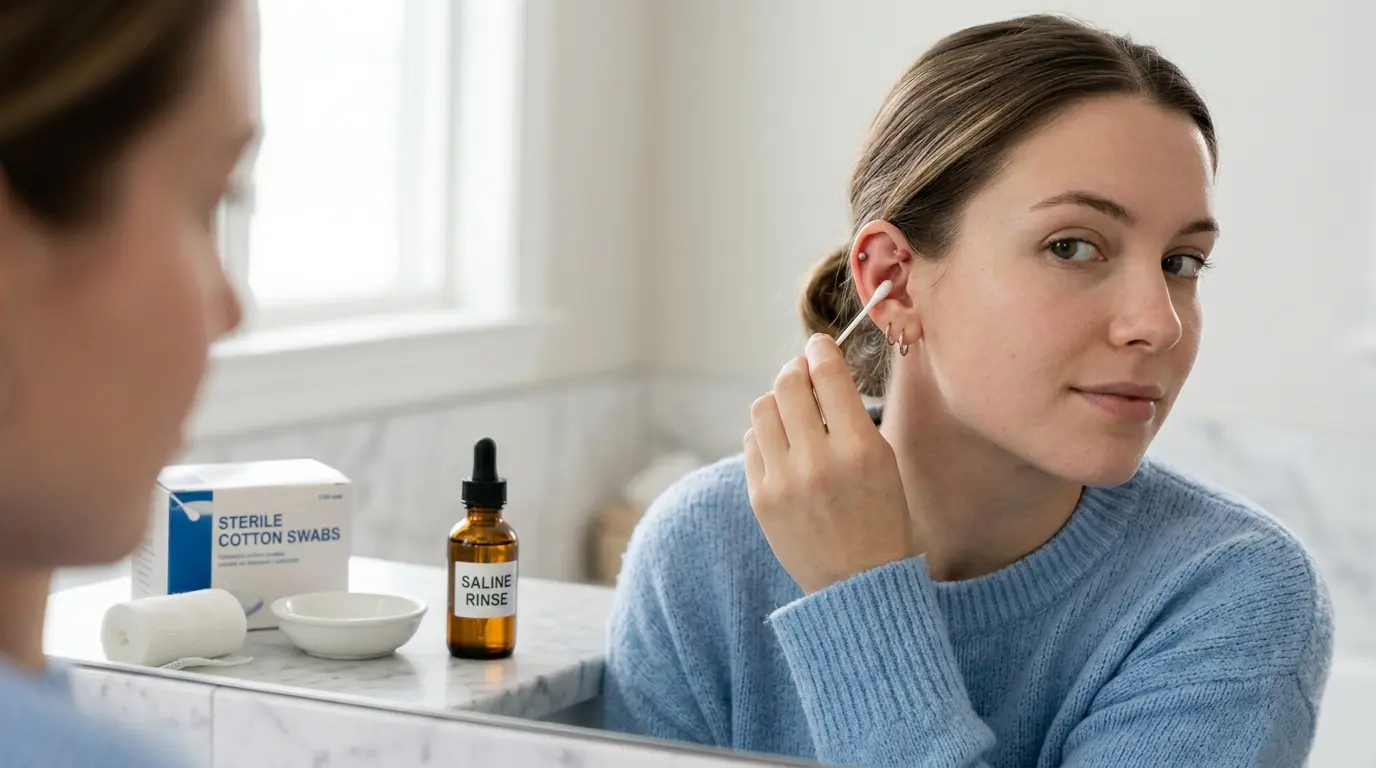
Wash your hands before touching the area. Use sterile saline wound wash labeled for wound cleansing, ideally with 0.9% sodium chloride as the only active ingredient.
Gently rinse the piercing according to the product instructions, then pat the surrounding area dry with clean disposable gauze or a paper towel.
Avoid repeatedly scrubbing the skin or cleaning it so frequently that it becomes dry and irritated. Follow your piercer’s aftercare instructions unless a healthcare professional advises otherwise.
Step 2: Use a warm compress when appropriate
A clean, comfortably warm compress may help soften crusting and soothe some minor piercing-related irritation.
To use one:
- Wash your hands thoroughly.
- Wet clean gauze or a clean cloth with warm water.
- Hold it gently against the area without pressing hard.
- Remove it after several minutes and pat the area dry.
Never use water hot enough to burn the skin. A warm compress is not a substitute for medical care if the bump is infected, severely painful, or getting worse.
Step 3: Reduce pressure and friction
Repeated pressure can prevent a piercing from settling down. Small changes to your daily routine may help reduce irritation.
- Avoid sleeping directly on an affected ear.
- Keep hair, clothing, and accessories from catching on the jewelry.
- Avoid headphones or helmets that press against the piercing.
- Do not twist, rotate, or repeatedly move the jewelry.
- Keep cosmetics and skincare products away from the opening while it heals.
If the jewelry is embedding into the skin, feels excessively tight, or appears to be swallowed by swelling, seek urgent medical attention.
Step 4: Avoid harsh products and home remedies
Many popular remedies for piercing bumps lack good evidence of benefit and may irritate healing tissue.
Avoid applying the following directly to the bump unless specifically directed by a healthcare professional:
- Tea tree oil and other essential oils
- Rubbing alcohol
- Hydrogen peroxide
- Undiluted homemade salt mixtures
- Toothpaste, aspirin paste, or crushed tablets
- Strong antiseptics or unprescribed antibiotic creams
Do not pop, cut, squeeze, or puncture the bump. Doing so can injure the tissue, introduce bacteria, worsen inflammation, or increase scarring.
The American Academy of Dermatology’s piercing aftercare guidance explains why gentle cleansing and avoiding irritating products matter.
Step 5: Have the jewelry checked if the bump persists
A professional piercer can assess whether the jewelry is too short, too long, heavy, or poorly suited to the piercing. They may also identify repeated pressure or movement that is interfering with healing.
If a metal allergy is suspected, a healthcare professional can help determine whether contact dermatitis is responsible and advise on an appropriate replacement material.
Do not remove jewelry yourself simply because a bump appears. If infection is possible, leave it in place until a clinician advises you otherwise. Removal may sometimes be necessary for other complications, so decisions about jewelry should depend on the situation.
How to Treat Different Types of Piercing Bumps
The location of a piercing can influence the likely cause of a bump and the care it needs.
How to get rid of a nose piercing bump
A nose piercing bump may develop inside or outside the nostril. Irritation from movement, pressure, unsuitable jewelry, and delayed healing are possible causes.
To care for a mild bump:
- Clean gently with sterile saline wound wash.
- Avoid picking at crusts or squeezing the lump.
- Prevent towels, clothing, and hands from catching on the jewelry.
- Avoid changing the jewelry unnecessarily during healing.
- Seek medical advice if the bump becomes increasingly painful, hot, swollen, or produces pus.
A persistent or easily bleeding lump may need evaluation for a granuloma or another skin condition. A firm bump that continues growing should be assessed for abnormal scar formation.
Because infections around the nose can occasionally cause serious complications, do not ignore worsening symptoms.
For additional detail, see Cleveland Clinic’s guide to nose piercing bumps.
How to get rid of an ear or cartilage piercing bump
Ear piercing bumps may form on the earlobe, helix, tragus, or other cartilage areas. Pressure from sleeping, headphones, helmets, and tight jewelry can contribute to irritation.
Avoid sleeping on the affected ear and prevent anything from pressing against the jewelry. Continue gentle aftercare, and have the fit checked if the jewelry appears to be pulling on the tissue.
Cartilage piercings deserve particular caution. Increasing pain, marked swelling, warmth, discharge, or spreading redness can indicate infection and warrant prompt medical assessment.
Do not assume that a persistent cartilage bump is simply a keloid or try to treat it by squeezing it.
How to get rid of a lip piercing bump
A bump around a lip piercing may be related to friction, swelling, jewelry pressure, infection, or scar tissue.
Avoid biting or playing with the jewelry, and follow the aftercare instructions appropriate for an oral or external piercing. Use an alcohol-free mouth rinse if recommended for the oral portion of the piercing, and avoid irritating products around the outer opening.
If the jewelry is pressing into the lip, the tissue is rapidly swelling, or there is increasing pain or pus, seek medical care. Significant swelling that affects breathing or swallowing requires emergency care.
How to get rid of a belly button piercing bump
Belly button piercings can be irritated by waistbands, tight clothing, bending, friction, and moisture. Their healing process can take time, so repeated pressure may keep the surrounding skin inflamed.
Choose loose clothing that does not rub against the jewelry. Clean gently, dry the area carefully, and avoid unnecessary movement of the piercing.
A bump that becomes hot, increasingly painful, or starts draining pus needs medical assessment. A growing or persistent raised scar should be evaluated by a dermatologist.
How to treat a keloid or persistent piercing scar
A keloid generally needs a different approach from an ordinary irritation bump. Improving cleaning habits alone will not remove established keloid tissue.
Depending on the diagnosis, a dermatologist may recommend corticosteroid injections, silicone-based scar treatment when appropriate, pressure therapy for selected ear keloids, or other procedures.
Do not attempt to cut off or burn away a keloid. Treatment decisions should be made with a qualified clinician because recurrence is possible, including after some procedures.
Piercing Bump vs. Keloid vs. Infection
A piercing bump can look similar to several other conditions. The following comparison can help you understand the differences, but appearance alone cannot confirm a diagnosis.
| Feature | Irritation bump | Infection | Keloid |
|---|---|---|---|
| Common appearance | Small raised area near the piercing | Swollen, inflamed, sometimes pus-filled area | Firm, raised scar that may extend beyond the original wound |
| Typical symptoms | Mild irritation or tenderness | Increasing pain, warmth, swelling, possible discharge | Itching, tenderness, or gradual growth |
| Possible cause | Friction, pressure, or excessive handling | Bacterial or other infection | Excess scar tissue formation |
| Main response | Reduce irritation and use gentle aftercare | Prompt medical assessment | Dermatology assessment |
| Can it resolve on its own? | Mild cases may improve | Depends on severity; medical treatment may be needed | Established keloids generally do not disappear without treatment |
A granuloma or hypertrophic scar may also cause a raised lump, and these conditions can overlap in appearance with other piercing problems.
If you cannot tell which type of bump you have, especially if it persists or changes, a clinician can examine it and recommend appropriate care.
How Long Does a Piercing Bump Take to Heal?
There is no single healing timeline for every piercing bump. Recovery depends on the cause, the piercing’s location, how long it has been healing, and whether the source of irritation has been removed.
A mild irritation bump may gradually improve after friction and pressure are reduced. A bump caused by an infection may not resolve without appropriate medical treatment. A keloid can continue to grow and generally requires professional management.
Do not judge progress after only one day. Look for gradual improvement in swelling, tenderness, and irritation while following safe aftercare.
If a bump keeps returning, does not improve, bleeds repeatedly, or becomes larger, arrange an examination rather than continuing to try different home remedies.
When Should You See a Doctor for a Piercing Bump?
Seek prompt medical assessment if you notice any of the following:
- Increasing pain, heat, or swelling
- Spreading redness or darkening around the piercing
- White, yellow, or green pus
- Persistent bleeding or a bump that bleeds easily
- Fever, chills, or feeling generally unwell
- Jewelry becoming embedded in the skin
- A rapidly enlarging lump or a persistent raised scar
Suspected piercing infections should be assessed promptly. If you feel seriously unwell, experience rapidly worsening symptoms, or have difficulty breathing or swallowing because of swelling, seek emergency care.
Do not remove the jewelry from a potentially infected piercing unless a healthcare professional tells you to do so. A clinician can determine whether antibiotics, drainage, jewelry removal, or another treatment is appropriate.
How to Prevent Piercing Bumps in the Future
Although not every bump can be prevented, appropriate aftercare can reduce avoidable irritation and some complications.
Follow a consistent cleaning routine
Wash your hands before touching the piercing. Use an appropriate sterile saline wound wash, avoid harsh chemicals, and dry the area gently.
More cleaning does not necessarily mean faster healing. Excessive handling and irritating products may make the problem worse.
Choose suitable jewelry
Use jewelry made from an appropriate, well-tolerated material and ensure it fits the piercing correctly. If you suspect a nickel allergy or another material sensitivity, seek professional guidance before replacing it.
Jewelry should not be so tight that it compresses the skin or so poorly fitted that it repeatedly catches and pulls on the tissue.
Avoid unnecessary touching
Do not twist the jewelry, pick at crusting, or squeeze small bumps. Avoid activities and accessories that repeatedly rub against the piercing.
Allow enough time for healing
Different piercing locations heal at different rates. A piercing may look better on the outside before the tissue inside has fully healed.
Avoid changing jewelry prematurely, and ask a qualified piercer or healthcare professional when it is appropriate to do so.
Recognize early signs of scarring
If the skin begins thickening, the bump continues growing, or a firm scar develops, consult a dermatologist early. People with a personal or family history of keloids may be more prone to developing them after skin injuries.
Prevention and early assessment are particularly important when a bump appears to be growing beyond the original piercing site.
Frequently Asked Questions
Can a piercing bump go away on its own?
Yes, some mild irritation bumps improve when pressure, friction, and unnecessary handling are reduced. However, an infection, granuloma, or keloid may need specific treatment. If the bump worsens or persists, seek professional advice.
Should I pop a piercing bump?
No. Popping or squeezing a piercing bump can damage the skin, increase inflammation, introduce bacteria, and worsen scarring. Leave it alone and seek medical advice if it appears infected or contains fluid.
Does saline help get rid of piercing bumps?
Sterile saline wound wash can gently clean the area and help remove debris without the irritation caused by harsh products. It may help a mild irritation bump settle, but it cannot reliably treat an infection or remove a keloid.
Should I remove my jewelry if I have a piercing bump?
Not automatically. Removing jewelry from a potentially infected piercing without medical advice may complicate the situation. If the jewelry is embedded, excessively tight, or causing an allergic reaction, a clinician or qualified professional can advise on the safest next step.
Is a piercing bump always a keloid?
No. Irritation bumps, granulomas, infections, hypertrophic scars, and keloids can all create raised areas around piercings. A keloid typically grows beyond the original wound, while an irritation bump is often linked to pressure or friction. An examination may be needed to tell them apart.
Why does my nose piercing bump keep coming back?
Repeated pressure, movement, unsuitable jewelry, metal sensitivity, or incomplete healing may cause a bump to return. If it repeatedly develops in the same place, ask a qualified piercer to assess the fit and consult a healthcare professional if the cause is unclear.
Can tea tree oil remove a piercing bump?
There is no strong evidence that tea tree oil safely removes piercing bumps, and it can irritate the skin or cause an allergic reaction. Avoid applying it to a healing piercing unless a healthcare professional specifically recommends it.
How can I tell if my piercing bump is infected?
Increasing pain, warmth, swelling, spreading redness or darkening, pus, and feeling feverish can indicate infection. A bump alone does not prove that an infection is present. Seek prompt medical assessment if infection is suspected.
Why is my cartilage piercing bump not going away?
Cartilage piercings may remain irritated because of pressure, jewelry fit, or slow healing. A persistent bump can also have another cause, including infection or abnormal scar tissue. If it is painful, enlarging, or producing discharge, arrange medical assessment.
When should I see a dermatologist for a piercing bump?
See a dermatologist if the bump continues growing, feels firm, repeatedly bleeds, persists despite gentle aftercare, or appears to be forming a keloid. Seek urgent medical care for symptoms suggesting infection or rapidly worsening swelling.
Conclusion
The best way to get rid of a piercing bump is to identify its cause, keep the area clean, minimize friction, and avoid squeezing it or applying harsh home remedies. Mild irritation may improve with careful aftercare, but infections and persistent scars require a different approach.
Pay attention to changes rather than relying on appearance alone. If the bump becomes increasingly painful, produces pus, spreads, or continues growing, seek professional assessment. Early, appropriate care is safer than repeatedly experimenting with treatments that may irritate the piercing further.