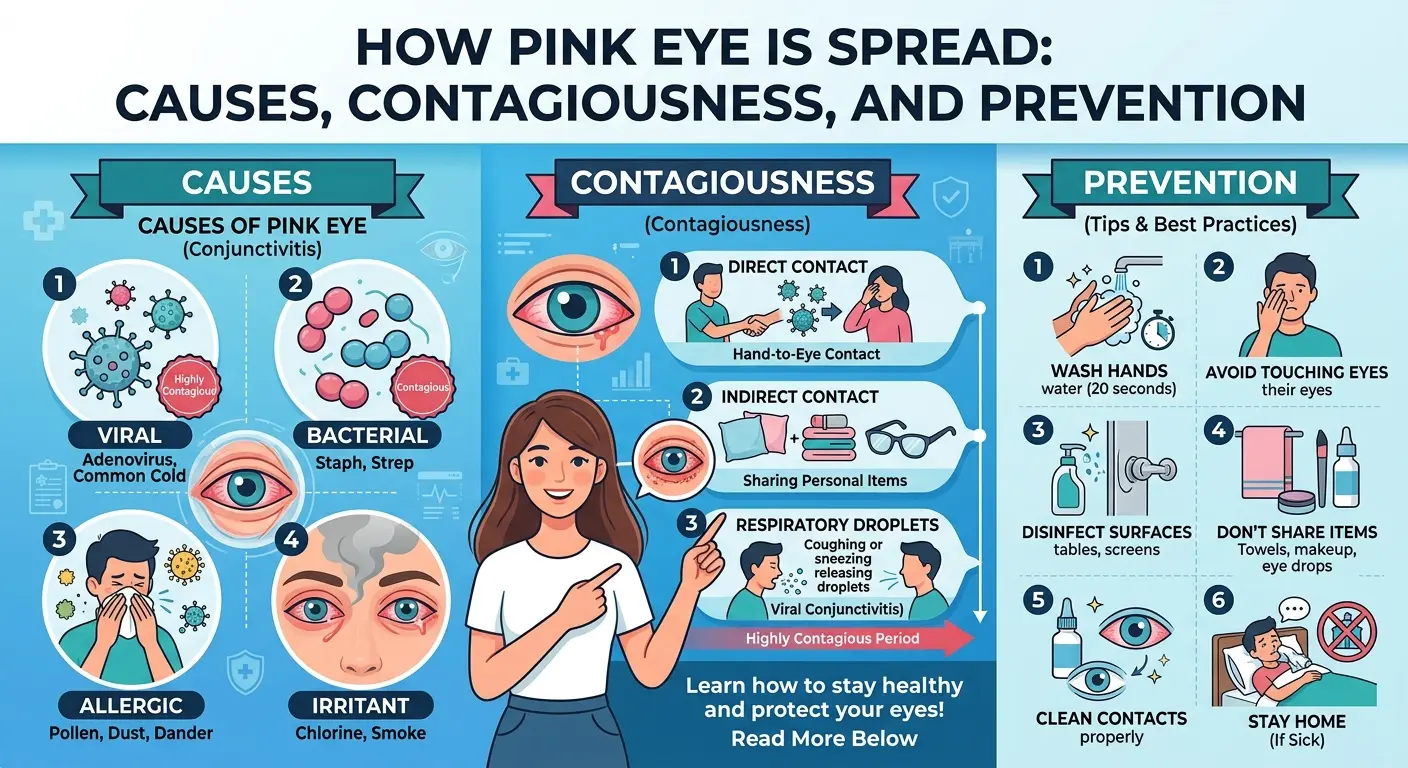
Pink eye spreads mainly through contact with infected eye discharge, contaminated hands, and objects carrying viruses or bacteria. It can also spread through respiratory droplets associated with certain infections. However, not every type of pink eye is contagious: allergic conjunctivitis and irritation caused by dust, smoke, or chemicals do not spread from person to person.
Pink eye, medically known as conjunctivitis, is inflammation of the thin membrane covering the white of the eye and lining the inside of the eyelids. It can affect children and adults and may cause redness, itching, watery eyes, swelling, or discharge.
Understanding how pink eye spreads makes it easier to protect yourself, care for someone with an eye infection, and avoid passing the infection to other people.
How Is Pink Eye Spread?
Infectious pink eye is caused by viruses or bacteria that can move from one person to another through contaminated hands, objects, secretions, and, in some cases, respiratory droplets.
According to the Centers for Disease Control and Prevention (CDC), viral and bacterial conjunctivitis can spread readily, especially when people share close spaces or do not follow good hygiene practices.
1. Touching contaminated hands or surfaces
Hand-to-eye contact is one of the main ways infectious pink eye spreads.
For example, someone with conjunctivitis might wipe their eye and then touch a door handle, phone, keyboard, towel, or other shared object. If another person touches the contaminated object and then rubs their eyes without washing their hands, germs may enter the eye.
This transmission can happen at home, school, daycare, workplaces, gyms, and other shared environments.
To reduce the risk:
- Wash your hands regularly with soap and water.
- Avoid rubbing your eyes, especially with unwashed hands.
- Clean commonly touched surfaces when appropriate.
- Wash your hands after handling used tissues, towels, or eye-care supplies belonging to someone with infectious pink eye.
2. Close contact and respiratory droplets
Some viruses and bacteria associated with conjunctivitis can spread through respiratory secretions or droplets produced when an infected person coughs or sneezes.
The risk depends on the organism responsible and the type of exposure. For viral conjunctivitis, direct hand-to-eye contact and contaminated objects are particularly important routes.
You can reduce exposure by avoiding close contact with someone who is ill when practical, covering coughs and sneezes, disposing of tissues properly, and washing your hands afterward.
Pink eye does not automatically spread simply because you share a room with someone who has it. The risk depends on the cause, the type of contact, and the hygiene measures in place.
3. Sharing personal items
Items that come into contact with the eyes, tears, or eye discharge can transfer infectious material.
Avoid sharing:
- Towels and washcloths
- Pillowcases and bedding that may be contaminated
- Eye makeup, mascara, and makeup brushes
- Contact lenses and lens cases
- Eye drops or applicators
- Other personal items contaminated with eye discharge
For example, sharing a washcloth used to clean an infected eye could transfer germs to another person’s hands or face.
Use separate personal items during an infection and wash reusable fabrics with detergent according to their care instructions.
Is Pink Eye Contagious?
Yes, viral and bacterial pink eye are contagious, but allergic pink eye is not. The distinction matters because redness alone cannot tell you whether someone has an infection.
| Type of pink eye | Contagious? | Common clues |
|---|---|---|
| Viral conjunctivitis | Yes | Watery discharge, redness, sometimes cold symptoms |
| Bacterial conjunctivitis | Yes | Sticky discharge, sometimes yellow or green, with crusted eyelids |
| Allergic conjunctivitis | No | Intense itching, watery eyes, often both eyes affected |
| Irritant-related conjunctivitis | No | Redness or watering after exposure to smoke, dust, chemicals, or another irritant |
These clues are not definitive. Different causes can produce similar symptoms, so a healthcare professional may need to assess the eye to determine the cause. CDC: Clinical overview of pink eye.
Viral pink eye
Viral conjunctivitis is often associated with adenoviruses, although other viruses can also cause it. Some cases occur alongside a cold or another respiratory illness.
It may begin in one eye and affect the other eye within a few days, particularly when infected secretions are transferred by the hands.
Viral pink eye can be highly contagious. Good hand hygiene, avoiding shared towels, and preventing contact with eye discharge help reduce transmission.
Antibiotic eye drops do not treat a viral infection.
Bacterial pink eye
Bacterial conjunctivitis occurs when bacteria cause inflammation of the conjunctiva. It can spread through contaminated hands and objects or through certain respiratory secretions.
Thicker, sticky discharge and eyelids that stick together after sleep may suggest bacterial conjunctivitis, but these symptoms do not prove that bacteria are responsible.
Some bacterial infections improve without antibiotics, while others may require prescription treatment. A clinician can determine whether antibiotics are appropriate.
Allergic and irritant-related pink eye
Allergic conjunctivitis occurs when the eyes react to allergens such as pollen, dust mites, mold, or animal dander.
It often causes intense itching, watering, and swelling, particularly in people who also experience sneezing or other allergy symptoms. It is not contagious.
Irritants such as smoke, dust, fumes, and chemicals can also cause red or watery eyes. This type of inflammation is not transmitted to other people.
However, do not assume that red eyes are caused by allergies. Infectious conjunctivitis and other eye conditions can look similar.
How Long Is Pink Eye Contagious?
The contagious period depends on the cause of the infection, how symptoms develop, and whether treatment is needed.
- Viral pink eye: It can remain contagious while symptoms are present. Some viral infections may continue to be transmissible even as symptoms improve.
- Bacterial pink eye: The duration varies by organism and severity. Appropriate antibiotic treatment may reduce transmission in some cases, but there is no single rule that applies to every infection.
- Allergic pink eye: It is not contagious, even when redness and itching continue.
Symptoms may improve within several days or take one to two weeks or longer to resolve, depending on the cause. Symptom duration and contagiousness are not exactly the same thing.
The Mayo Clinic’s guidance on pink eye contagiousness explains why ongoing tearing, discharge, and the ability to maintain hygiene are important considerations.
If you are unsure when it is safe to return to school, daycare, or work, ask a healthcare professional and follow any applicable school, workplace, or local public-health guidance. People who are feverish, feel unwell, or cannot avoid close contact may need to stay home.
Can Pink Eye Spread From One Eye to the Other?
Yes. Infectious conjunctivitis can spread from one eye to the other, often when someone touches or rubs the affected eye and then touches the other eye without washing their hands.
This is especially common with viral conjunctivitis, which may initially affect only one eye.
To reduce the chance of spreading the infection:
- Wash your hands before and after cleaning your eyes or applying prescribed medication.
- Use a clean cloth or fresh cotton pad for each eye.
- Do not reuse a cloth that has touched an infected eye on the unaffected eye.
- Avoid touching the tip of an eye-drop bottle to your eye, eyelid, fingers, or any other surface.
- Do not share eye drops or eye-care products.
These precautions help prevent transferring germs between eyes and reduce the risk of passing the infection to someone else.
How to Prevent Pink Eye From Spreading
Simple hygiene measures can make a meaningful difference, especially when someone in your household has infectious conjunctivitis.
Wash your hands properly
Wash your hands with soap and water for at least 20 seconds, particularly after touching your eyes, cleaning discharge, handling used tissues, or helping someone apply eye medication.
If soap and water are unavailable, use an alcohol-based hand sanitizer containing at least 60% alcohol. Handwashing remains particularly useful when hands are visibly dirty or contaminated with secretions.
Avoid touching your eyes unless necessary, and always clean your hands first.
Avoid sharing personal items
During an infection, give the affected person their own towel, washcloth, pillowcase, and eye-care supplies.
Wash contaminated fabrics with detergent and handle them without touching your eyes. Clean frequently touched household surfaces when appropriate.
Do not share eye makeup, mascara, contact lenses, or lens cases. Ask an eye-care professional whether eye products used during an infection should be discarded and replaced.
Clean your eyes and contact lenses safely
If discharge collects around the eyelids, gently clean it with a clean, damp cloth or fresh cotton pad. Wash your hands before and after cleaning.
If only one eye is affected, use separate clean materials for each eye.
If you wear contact lenses and develop red eyes or discharge, stop wearing your lenses and seek advice from an eye-care professional. Contact lens-related eye infections can sometimes become serious, so do not assume the problem is ordinary conjunctivitis.
Follow your clinician’s instructions about when to resume wearing lenses and whether to replace your lenses, storage case, or related products.
Reduce transmission at home, school, and work
If a household member has infectious pink eye, encourage everyone to wash their hands and avoid sharing personal items.
Parents and caregivers should help young children follow these precautions because children may rub their eyes frequently and have difficulty maintaining good hygiene independently.
At school or work:
- Avoid close contact when you are unwell and potentially contagious.
- Cover coughs and sneezes and dispose of tissues promptly.
- Follow local school or workplace policies.
- Ask a healthcare professional if the diagnosis or return-to-school timing is unclear.
You do not necessarily need to isolate from everyone simply because you have a red eye. The cause and your ability to avoid spreading infectious secretions are important factors.
The CDC provides further practical advice in its guide to preventing pink eye.
What Are the Signs of Pink Eye?
Recognizing the symptoms can help you decide whether to seek an assessment and take precautions.
Common symptoms include:
- Redness in the white of one or both eyes
- Watery eyes or increased tearing
- Itching, burning, or irritation
- A gritty feeling, as though something is in the eye
- Swollen eyelids
- Mucus or pus-like discharge
- Crusting around the eyelashes, especially after sleeping
Symptoms vary by cause. Viral conjunctivitis may produce watery discharge and occur alongside cold symptoms, while bacterial conjunctivitis may cause thicker discharge. Allergic conjunctivitis often causes prominent itching.
These patterns can overlap, so symptoms alone cannot reliably determine whether pink eye is viral, bacterial, or allergic.
For a more detailed symptom overview, see the CDC’s pink eye symptoms guide.
When Should You See a Doctor?
Many cases of conjunctivitis improve without specific treatment, but some red-eye symptoms need prompt medical attention.
Seek urgent medical assessment if you experience:
- Significant eye pain
- Sensitivity to light
- Blurred or reduced vision
- Intense redness
- Symptoms that worsen or fail to improve
- Redness or discharge while wearing contact lenses, particularly with pain or vision changes
These symptoms can indicate a more serious eye problem, including an infection involving the cornea.
Newborns with red, watery, or sticky eyes should be assessed promptly. Eye infections in newborns can become serious and may require immediate treatment.
A clinician can assess the cause of conjunctivitis and determine whether treatment is needed. Avoid using leftover antibiotic or steroid eye drops without medical advice, because the wrong medication may be ineffective or harmful.
For additional guidance, consult the CDC’s information about pink eye or seek advice from an eye-care professional.
Frequently Asked Questions
Is pink eye contagious before symptoms appear?
It depends on the cause. Some infectious agents may be transmissible before a person recognizes symptoms, but the timing varies. Because it is not always possible to identify the cause immediately, good hygiene is sensible after a potential exposure.
Can you get pink eye from someone by looking at them?
No. Simply looking at someone does not transmit pink eye. Transmission generally requires exposure to infectious material, such as through contaminated hands, objects, eye secretions, or certain respiratory droplets.
Can pink eye spread through the air?
Some viruses and bacteria associated with conjunctivitis can spread through respiratory droplets, particularly during coughing or sneezing. However, contaminated hands and objects that transfer germs to the eyes are also important transmission routes. The risk depends on the organism and type of exposure.
Can you get pink eye from sharing towels?
Yes. Towels and washcloths can carry infectious eye secretions and transfer germs to another person’s hands or face. Use separate towels and wash contaminated fabrics appropriately.
Can pink eye spread through pillows and bedsheets?
It is possible if bedding becomes contaminated with infectious discharge and someone subsequently transfers the germs to their eyes. Avoid sharing pillowcases and wash contaminated bedding with detergent.
Can you catch pink eye from a swimming pool?
Pink eye is not inevitably spread by swimming. However, contaminated water and shared environments can pose infection risks, and some organisms can cause conjunctivitis. Avoid swimming while you have infectious pink eye, and follow appropriate pool hygiene practices.
Can adults catch pink eye from children?
Yes. Adults can catch viral or bacterial conjunctivitis from infected children through contaminated hands, eye discharge, shared objects, or certain respiratory droplets. Handwashing and separate personal items help reduce the risk.
Does pink eye always start in one eye?
No. Infectious conjunctivitis may begin in one eye and later affect the other, but some cases affect both eyes from the beginning. Allergic conjunctivitis commonly affects both eyes.
Can allergic pink eye spread to another person?
No. Allergic conjunctivitis is caused by an individual’s immune response to an allergen, not by a transmissible infection. Other people may react to the same allergen, but they do not catch the allergy from the affected person.
How long does pink eye last?
It depends on the cause. Many cases improve within several days to two weeks, while some viral infections last longer. Persistent, worsening, or severe symptoms should be assessed by a healthcare professional.
Can you go to school or work with pink eye?
It depends on how unwell you feel, the suspected cause, your ability to maintain hygiene, and the policies of your school or workplace. People with fever, systemic symptoms, or difficulty avoiding close contact may need to stay home. Seek medical advice if you are uncertain about when to return.
Conclusion
Pink eye spreads mainly through contaminated hands, infected eye secretions, shared personal items, and, for certain infections, respiratory droplets. Viral and bacterial conjunctivitis can be contagious, whereas allergic and irritant-related conjunctivitis do not spread from person to person.
The most practical ways to reduce transmission are to wash your hands regularly, avoid rubbing your eyes, use separate towels and eye-care products, and clean contaminated items appropriately. If you develop eye pain, light sensitivity, vision changes, or severe redness, seek prompt medical attention.
Knowing how pink eye is spread helps you protect your eyes and those around you without taking unnecessary precautions against noncontagious conditions.