
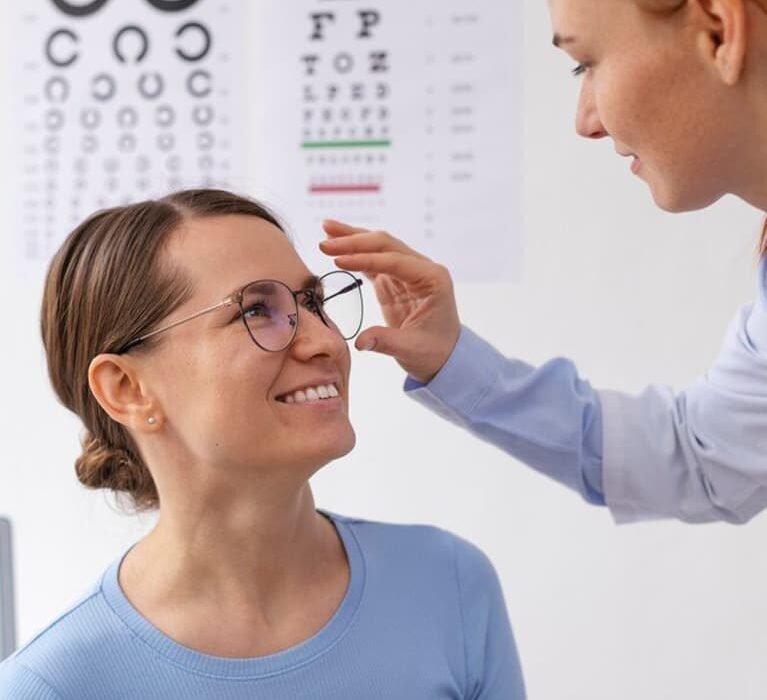
Squinting at your laptop by mid-afternoon. Holding restaurant menus at arm’s length. That gritty, tired feeling by evening. When your eyes act up, the obvious question is: how do I know if I need glasses or just eye drops? Dry, strained eyes and genuine vision problems feel remarkably similar, which is why so many people guess wrong. Here’s how to tell them apart — and what to do about each.
Signs It’s Probably Dry Eyes (Eye Drops Territory)
Dry eye means your tears aren’t lubricating properly — extremely common in the screen era, since we blink about half as often while staring at displays. Classic signs:
- Gritty or sandy feeling, like something’s in your eye
- Burning or stinging, worse later in the day
- Redness that comes and goes
- Watery eyes (your eyes overproduce poor-quality tears to compensate)
- Blurry vision that sharpens when you blink — the key tell
- Discomfort worse in dry, windy, or air-conditioned spaces
If blinking clears your vision, you’re dealing with a tear-film problem, not a focusing problem. Preservative-free artificial tears (use the preservative-free kind if you apply more than four times daily) can be transformative. I’ve seen skeptics converted who were sure they needed glasses when they really needed drops and a humidifier.
Signs You Actually Need Glasses
Refractive errors — nearsightedness, farsightedness, astigmatism — don’t improve with blinking:
- Consistent blurriness at a specific distance that blinking never fixes
- Squinting at signs, menus, or your phone
- Holding reading material farther away (or closer) than you used to
- Forehead or temple headaches after visual work
- Eye fatigue by evening even in comfortable environments
- Night-driving trouble — halos around lights, unreadable signs
- Closing one eye to see better
Over 40 and suddenly struggling with menus? That’s likely presbyopia — the lens stiffening that happens to everyone eventually. Drugstore readers work as a stopgap; a proper exam gets the right prescription.
The Overlap: When It’s Both
Here’s the complication: dry eyes and refractive errors frequently coexist. Dryness makes vision fluctuate, which makes eye exams less accurate — good doctors often treat the dryness first, then recheck the prescription. And if you already wear correction but vision still feels “off,” dryness may be the missing piece. Allergies add a third layer: itchy, watery spring eyes can mimic both conditions.
What a Real Eye Exam Involves
Only a comprehensive exam settles it — not a DMV screening. It checks your prescription, eye pressure, and retinal health in 30–45 minutes, typically $50–$250 without insurance. Adults need these regularly; if you’re unsure of the schedule, see how often adults should get their eyes checked. The exam also screens for silent diseases like glaucoma — worth doing even when your vision feels fine.
What to Try Before Your Appointment
- Preservative-free artificial tears for a week. Dramatic improvement means dryness was the main issue.
- The 20-20-20 rule: every 20 minutes, look 20 feet away for 20 seconds.
- Fix your environment: humidifier for dry office air, no fans blowing on your face.
- Keep a symptom log: when is vision worst? Does blinking help? Near, far, or both?
If screen-related strain is the broader issue, reducing screen time helps your eyes more than any drop. And persistent dryness plus morning dry mouth can signal systemic dryness worth mentioning to your doctor.
Red Flags Needing Prompt Care
Sudden vision loss in one eye, new flashes or floaters, a curtain-like shadow, or real eye pain (not dryness) — don’t wait on these. See someone promptly.
Contact Lenses vs. Glasses: Making the Call
Once the exam confirms you need correction, the next question is how: glasses, contacts, or both. There’s no universally right answer — it depends on your prescription, lifestyle, and tolerance for maintenance. Here’s the honest comparison.
Glasses win on: simplicity (no touching your eyes), cost over time (one pair lasts years), eye health (no infection risk, and they shield from dust and UV with proper lenses), and style (they’re a fashion accessory now). They lose on: peripheral vision (frames block the edges), sports and rain (fogging, slipping), and high prescriptions (thick lenses, though high-index materials help).
Contacts win on: natural vision (no frames, full peripheral view), sports and active lifestyles, and appearance (invisible). They lose on: maintenance (daily cleaning discipline — overwear and poor hygiene cause real infections), dryness (contacts worsen dry eye — ironic if drops were your original issue), and ongoing cost ($200–$500+ yearly for dailies).
The practical answer for most people: both. Glasses as the daily default, contacts for sports, events, and sunglasses season. Daily disposables are the safest and most convenient contact option — pricier per lens, but no cleaning solutions and lower infection risk. Whatever you choose, never sleep in contacts not approved for it, replace them on schedule (not “until they feel bad”), and keep the drops handy — contact wearers need artificial tears more than anyone.
What Your Eye Exam Actually Measures
If you do book the exam, here’s what happens — knowing the process makes it less intimidating.
Visual acuity: the letter chart, giving your 20/20-style score per eye. This is the headline number but only part of the picture.
Refraction: the “which is better, one or two?” lens-flipping test that determines your exact prescription. Subjective, quick, and surprisingly precise.
Eye health checks: pressure test (glaucoma screening — the puff of air or the blue-light probe), retinal exam with dilation drops, and a slit-lamp look at the front of the eye. This is the part drops alone can never replace: it catches glaucoma, macular degeneration, and diabetic changes years before symptoms.
The whole thing takes 30–45 minutes, costs $50–$250 without insurance (many vision plans cover it fully), and the dilation wears off in 4–6 hours. Bring sunglasses. If it’s been over two years, you’re due regardless of symptoms — the health screening alone justifies it. Your eyes are the one body part where “wait until it hurts” is genuinely bad strategy.
Key Takeaways
- Blur that clears when you blink = dry eyes; try preservative-free drops first.
- Blur that never sharpens, plus squinting and headaches = you likely need glasses.
- The two often coexist — treat dryness, then recheck prescription.
- A comprehensive exam (not a screening) is the only definitive answer.
- Protect your eyes daily: UV sunglasses, 20-20-20 rule, and regular exams.
The Bottom Line
Blinking test: if it sharpens, think drops; if nothing helps, think glasses. When in doubt, the exam settles it in under an hour. Your eyes work incredibly hard every day — a proper checkup is one of the simplest health investments you can make. For background, how eyeglass prescriptions work explains what those numbers on your prescription actually mean.

1 Comment