Index funds are the closest thing investing has to a free lunch: instant diversification, minimal fees, and a century-long track record of building wealth for patient investors. But once you’ve opened the account, a surprisingly tricky question appears: how often should you actually invest? Every paycheck? Monthly? Quarterly? Does it even matter? The answer is more interesting — and more liberating — than most beginners expect.
Here’s what the evidence says about investing frequency, and how to build a schedule you’ll actually maintain for decades.
The Short Answer: As Often as You Get Paid
For most Americans, the optimal frequency is simple: invest with every paycheck. If you’re paid biweekly, invest biweekly. The logic isn’t about market timing — it’s about behavior. Money invested immediately never sits in checking getting spent, never waits for “the right moment” that never comes, and never accumulates into a lump sum you’re afraid to deploy. Automation on payday turns investing from a decision into a default.
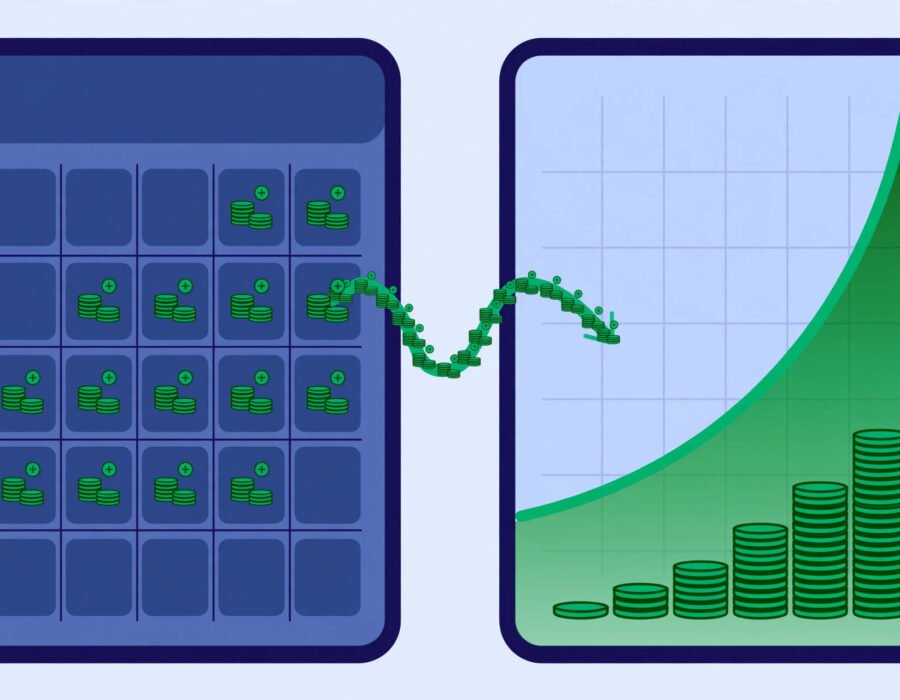
This is dollar-cost averaging in its purest form: fixed amounts at regular intervals, buying more shares when prices dip and fewer when they rise. Decades of data confirm that consistent DCA beats the median investor’s actual behavior — not because it’s mathematically optimal (lump-sum investing wins on average), but because humans aren’t averages. The SEC’s Investor.gov introduction to investing emphasizes exactly this: the best strategy is the one you’ll sustain through every market mood.
Lump Sum vs. Dollar-Cost Averaging: The Honest Math
Let’s settle the academic debate. Studies (notably Vanguard’s research) show lump-sum investing outperforms DCA about two-thirds of the time — because markets rise more often than they fall, so money invested earlier captures more growth. If you receive a windfall — a bonus, inheritance, or sale proceeds — the math favors investing it all promptly.
But the math assumes a robot investor. Humans receiving $50,000 experience loss aversion, regret risk, and paralysis — and the “optimal” lump sum they never deploy earns 0%. DCA’s real product isn’t returns; it’s action. A practical compromise: invest half immediately, DCA the rest over 3–6 months. You capture most of the lump-sum advantage while keeping the psychological safety net. For regular paycheck contributions, though, there’s no debate — invest each payday, every time.
What About Monthly vs. Quarterly vs. Annually?
Here’s the liberating finding: frequency barely matters for long-term results. The difference between investing biweekly and monthly over 30 years is negligible — what dominates outcomes is how much you invest and how long you stay invested, not whether contributions arrive on the 1st or the 15th. Quarterly versus monthly? Rounding error over decades.
So choose frequency for convenience, not optimization. Monthly aligns with bills and budgeting for most households. Biweekly matches paychecks and front-loads slightly (26 contributions yearly instead of 12). Annual lump contributions (like IRA deposits each January) are fine if that’s your system — just don’t let “waiting for January” become procrastination. The enemy isn’t suboptimal frequency; it’s money sitting uninvested while you perfect the schedule.
The 401(k) Factor: Free Money Has Its Own Schedule
If your employer offers a 401(k) match, contribution frequency has one non-negotiable rule: contribute enough every pay period to capture the full match, all year. Some plans have “true-up” provisions; many don’t — meaning if you max out contributions by October, you miss November and December matches. That’s free money evaporated.
Spread 401(k) contributions evenly across all pay periods to guarantee full matching. This is the highest-return “investment decision” most Americans ever make — a 50% or 100% instant match dwarfs any frequency optimization. Fund the match first, then direct additional savings to IRAs or taxable accounts per your plan. The Consumer Financial Protection Bureau’s Ask CFPB resources on retirement accounts explain matching mechanics clearly.
Automate Everything, Then Ignore It
The research on investor behavior is brutal: the more often people check and tinker, the worse they do — trading on news, pausing contributions during dips (exactly backwards), and chasing performance. Automation is the antidote. Set automatic transfers for payday, automatic investment into your chosen funds, and automatic annual increases (many 401(k)s offer 1% yearly escalation — take it).
Then check your accounts quarterly at most — annually is fine. Rebalance yearly if allocations drift significantly. That’s the entire maintenance schedule for a decades-long plan. The discipline that builds wealth isn’t sophisticated; it’s the same muscle behind sticking to a monthly budget and saving money on everyday expenses — small, automatic, relentless. And if you’re raising kids, teaching them good money habits now means they’ll automate their own investing without the decades of trial and error.
When to Break the Schedule (Rarely)
Automatic investing has few legitimate exceptions. Windfalls: deploy promptly (lump sum or hybrid, per above) rather than letting cash pile up. Life emergencies: pause contributions before raiding retirement accounts — pausing is reversible, early withdrawals trigger taxes and penalties. Major allocation drift: if a bull run leaves you 90% in stocks at age 60, rebalance — that’s maintenance, not timing. Near retirement: gradually shift toward your target retirement allocation per your plan’s glide path.
Notice what’s not on the list: market headlines, recessions, elections, crashes. Every historical panic felt like a reason to stop investing; every one was, in hindsight, a reason to continue. The investors who kept buying through 2008 didn’t have special insight — they had automatic contributions they never touched.
Taxes and Account Order: Where Frequency Meets Strategy
Frequency interacts with account selection: prioritize tax-advantaged accounts first (401(k) to the match, then IRA/HSA, then taxable), because the tax wrapper matters more than timing. Within IRAs, consider contributing early in the year — more time in market, same annual limit. The IRS sets yearly contribution limits; the IRS website publishes current figures, and the SEC’s investor materials explain account-type tradeoffs worth reviewing annually.
Conclusion
How often should you invest in index funds for long-term growth? Every payday, automatically, without deliberation — because frequency’s real job is behavioral, not mathematical. The research is clear: lump sums edge out DCA mathematically, but automated regular investing wins behaviorally, and behavior is what actually determines outcomes. Capture your full employer match with even year-round contributions, automate transfers and escalation, check quarterly at most, and never pause for headlines. Over decades, the investors who win aren’t the ones with the cleverest schedule — they’re the ones whose money moved on payday, every payday, for thirty years, while they were busy living their lives.
Frequently Asked Questions
Is it better to invest weekly or monthly?
The long-term difference is negligible — what matters is total amount invested and time in the market. Choose whichever aligns with your pay schedule and budgeting; biweekly (per paycheck) is the natural default.
Should I invest a lump sum or dollar-cost average a windfall?
Mathematically, lump sum wins about two-thirds of the time. Behaviorally, many investors can’t deploy large sums at once — a hybrid (half now, rest over 3–6 months) captures most of the advantage with less regret risk.
How much of my paycheck should go to index funds?
Common guidance: at least enough to capture your full employer 401(k) match, then 15–20% of income toward retirement overall (including the match). Adjust for your age, goals, and debts — the right number is one you can sustain.
Should I stop investing during a market crash?
No — crashes are when automatic investing does its best work, buying more shares at lower prices. Pausing contributions during dips is the most reliably wealth-destroying behavior in investing. Keep the automation running.