
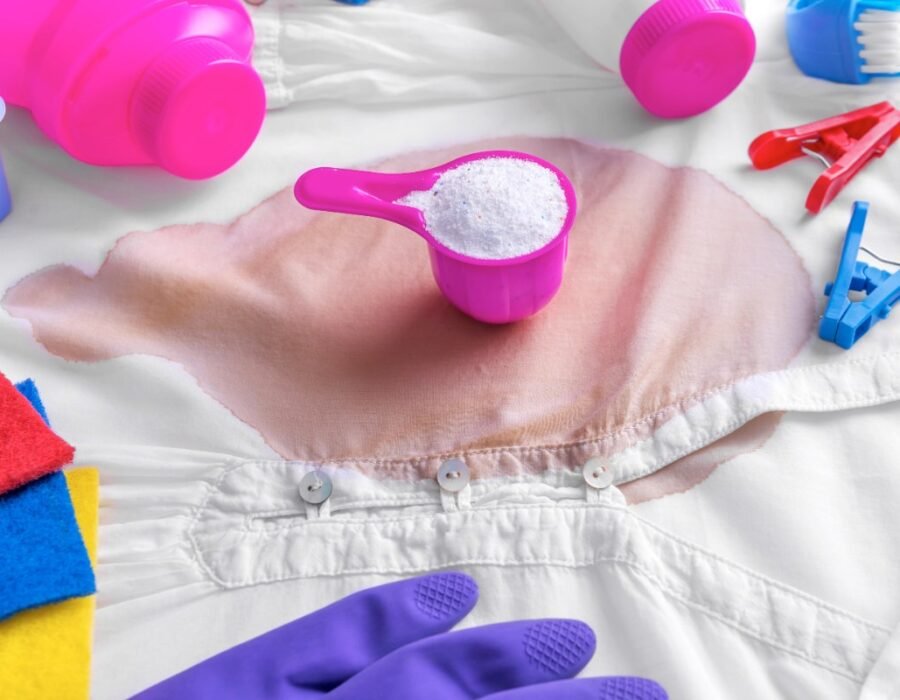
Red wine on silk. Grease on cashmere. Ink on a white blouse. If you’re asking how to remove stains from delicate fabrics, here’s the critical rule: delicate fabrics punish the wrong treatment worse than the stain itself. Hot water, harsh bleach, and aggressive scrubbing destroy silk, wool, and cashmere faster than any stain. Speed, gentleness, and the right method per stain type — that’s the whole game.
The Universal Rules (All Delicates)
- Act fast. Fresh stains lift; set stains bond. Blot (never rub) immediately with a clean cloth.
- Cold water first. Hot water sets protein stains (blood, egg, dairy) permanently. Always start cold.
- Blot, don’t rub. Rubbing spreads the stain and damages delicate fibers. Press and lift.
- Test hidden first. Every treatment gets tested on an inside seam before the visible stain.
- Never use chlorine bleach on delicates — it dissolves protein fibers (silk, wool) and yellows everything.
By Stain Type
Red wine / fruit juice
Blot, cover with salt or baking soda (draws out liquid), then cold water rinse. White wine or club soda as a field treatment — the carbonation helps lift. For silk: dab with diluted white vinegar, rinse cold.
Grease / oil
The delicate-fabric nemesis. Apply cornstarch or talcum powder immediately — it absorbs the oil. Leave 30+ minutes, brush off, then treat with a drop of gentle dish soap (Dawn) worked in with fingers, rinse cold. Repeat before washing.
Blood
Cold water only — always. Hydrogen peroxide (3%) on washable delicates lifts blood remarkably; test first. Never hot water, never the dryer until it’s out.
Ink
Rubbing alcohol or hand sanitizer dabbed (not rubbed) on the stain — it dissolves ballpoint ink. Work from outside in to avoid spreading. Rinse, repeat.
Sweat / yellowing
The underarm chemistry from antiperspirant stains — baking soda paste or oxygen bleach soak. Same rules apply to delicates, just gentler.
Makeup / foundation
Makeup remover or micellar water first (dissolves what water can’t), then gentle soap and cold rinse.
By Fabric
- Silk: the diva — cold water, pH-neutral soap, no wringing (roll in a towel), dry flat away from sun. Water spots are a risk; treat the whole garment area evenly.
- Wool/cashmere: cold water, wool-safe detergent, no agitation (felting risk — see shrinkage science), dry flat.
- Linen: more forgiving — cold/warm water, but still no chlorine bleach.
- “Dry clean only”: respect it for structured or lined pieces. For simple unlined silk, careful hand-washing often works — but the label is the manufacturer’s liability statement; ignore at your own risk.
The Emergency Kit
Keep in your bag: stain remover pen (Tide to Go), white cloth, small bottle of club soda. At home: white vinegar, baking soda, hydrogen peroxide (3%), gentle dish soap, cornstarch, oxygen bleach. This kit handles 95% of stains. For the chemistry, stain removal science explains why each method works.
When to Give Up and Call a Professional
DIY has limits. Here’s how to recognize them before you make things worse.
Call a dry cleaner when: the garment is structured (lined jackets, pleated skirts — home washing destroys the structure), the fabric is exotic (some silks, beaded/sequined pieces, leather/suede), the stain is old and set (pros have solvents you can’t buy), or the item is valuable enough that a mistake costs more than the cleaning ($10–$20 for a shirt is cheap insurance on a $300 blouse).
What to tell them: what the stain is (or your best guess), what you’ve already tried (so they don’t repeat it), and how old it is. More information = better results. Point out the stain at drop-off; don’t assume they’ll find it.
Specialist cleaners: wedding gown preservation, leather/suede specialists, and couture cleaners exist for a reason — general dry cleaners vary wildly in quality. For precious items, find the specialist; ask at bridal shops and high-end consignment stores for referrals.
Set expectations: even pros can’t remove everything — old protein stains, bleach damage, and dye transfer are often permanent. A good cleaner tells you honestly what’s possible. Anyone promising miracles is selling, not cleaning.
The cost-benefit: $15 to save a $200 dress is obvious. But don’t spend $40 cleaning a $25 fast-fashion top — know when the garment isn’t worth the rescue. (That’s also a signal about what to buy next time.)
Stain Removal Kit: What to Keep on Hand
Stains are time-sensitive; the kit must be ready before the spill. Here’s the complete arsenal.
The core four: white distilled vinegar (mild acid — coffee, tea, dye), baking soda (odor, grease absorption, gentle abrasive), hydrogen peroxide 3% (protein and organic stains — blood, wine, food), and dish soap like Dawn (grease-cutting surfactant). These four handle 90% of stains for under $10 total.
Delicate-fabric additions: a soft-bristle brush (agitation without damage), white cotton cloths (colored cloths transfer dye — the insult-to-injury of stain removal), and cornstarch or talcum powder (grease absorption on silk and wool — sprinkle, wait, brush off).
What NOT to include: chlorine bleach (destroys protein fibers — silk, wool — and most dyes), hot water in the kit’s instructions (heat sets protein stains permanently), and colored towels.
Storage: keep it together under the sink, labeled, with a one-page cheat sheet taped inside the cabinet door: protein = cold water + peroxide; tannin (coffee/wine) = vinegar then soap; grease = dish soap or dry solvent; ink = rubbing alcohol. In the panic of a spill, the cheat sheet thinks for you.
Total cost: under $20. The most-used kit in the house after the first aid box — and the difference between a saved silk blouse and a stained one is usually just having the right bottle within reach.
Key Takeaways
- Speed + cold water + blotting (never rubbing) — the universal protocol.
- Match method to stain: salt for wine, cornstarch for grease, peroxide for blood, alcohol for ink.
- Never chlorine bleach; never hot water on protein stains; always test hidden first.
- Silk and wool need pH-neutral soap, no wringing, flat drying.
- Keep an emergency kit in your bag — the first 5 minutes decide everything.
The Bottom Line
Removing stains from delicate fabrics rewards speed and gentleness, not aggression. Blot fast, go cold, match the treatment to the stain, and respect the fabric’s limits. Most “ruined” delicates weren’t ruined by the stain — they were ruined by the rescue attempt. Be the calm first responder your silk deserves.




1 Comment