Florida's rental market looks like a landlord's dream — population growth, tourism, strong rents — but the entry ticket seems to require hundreds of thousands you do not have. The real question has two parts: when is the timing right, and which low-capital strategies actually work in Florida's specific market, with its insurance crisis, HOA landscape, and hurricane exposure?
This guide answers both: the timing signals that matter more than market predictions, five realistic low-money entry strategies, Florida-specific costs that destroy naive projections, and the financial readiness checklist to complete first.
When the Timing Is Right for You
Forget timing the market — time your readiness. The right time is when four conditions hold: you have 6+ months of personal emergency savings separate from investment funds (never invest your safety net); your own housing and debts are stable; you can handle a $10,000 surprise (roof leak, AC failure, vacancy) without panic; and you have 10+ hours a month for management or budget for a property manager (typically 8–12% of rent in Florida).
Market timing matters less than investors think, but two Florida signals deserve attention: insurance availability and pricing in your target area (if you cannot get affordable quotes, the deal is dead regardless of price), and local rent-to-price ratios — target markets where annual rent is at least 8–10% of the purchase price for cash flow at low capital. Interest rate environments matter too: higher rates hurt leveraged buyers but create motivated sellers, which is where low-capital strategies thrive.
Strategy 1–2: House Hacking and FHA
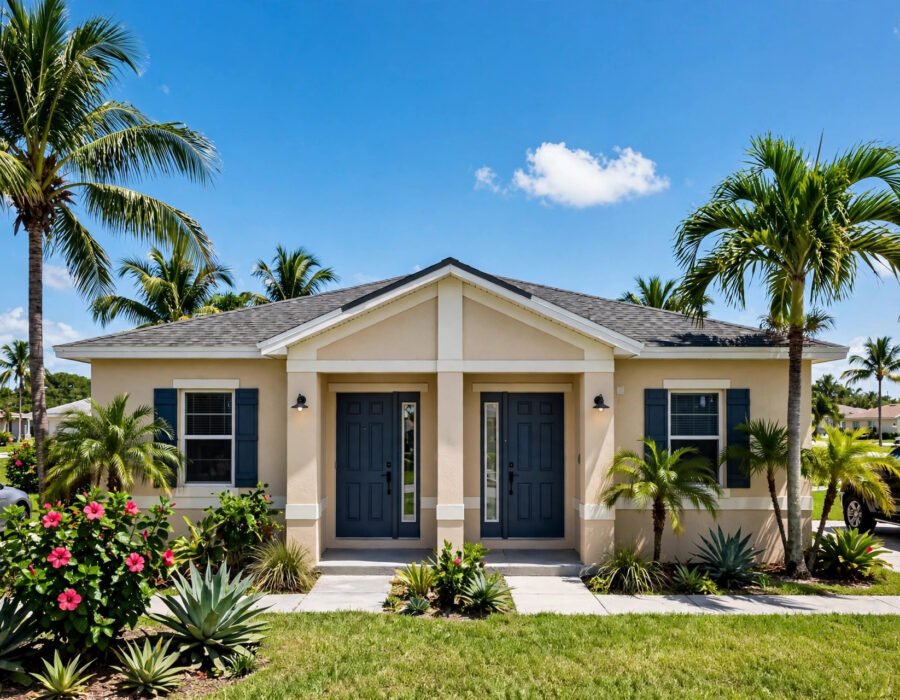
House hacking is the premier low-capital Florida strategy: buy a duplex, triplex, or fourplex with an FHA loan (3.5% down), live in one unit, rent the others. On a $400,000 duplex, that is $14,000 down plus closing costs — achievable savings, not fantasy money. Tenants cover much of the mortgage, and after a year you can repeat. Florida's stock of small multifamily in cities like Tampa, Jacksonville, and Orlando suits this well.
FHA house hacking has rules: you must owner-occupy for at least a year, the property must meet FHA condition standards, and in competitive markets your FHA offer competes against cash — so target properties needing cosmetic work that scare conventional buyers but pass FHA appraisal. Pair with Florida's first-time buyer assistance programs (Florida Housing Finance Corporation offers down payment assistance) to reduce cash needed further. This is the lowest-risk low-capital entry in the state.
For the authoritative take, visit U.S. Dept. of Housing and Urban Development.
Strategy 3–5: Partnerships, Wholesaling Adjacencies, REITs
Partnerships: bring hustle and management while a money partner brings capital — formalize everything in writing (ownership splits, decision rights, exit terms) because handshake real estate partnerships end friendships. Target: experienced investors who have capital but no time. Wholesaling (contracting distressed properties and assigning the contract) requires the least capital but the most skill and hustle — and Florida regulates it, so learn the legal lines before trying.
REITs and real estate crowdfunding: if 'little money' means a few thousand, public REITs or crowdfunding platforms let you own real estate exposure with $500–$5,000, no tenants, no toilets. Returns differ from direct ownership (no leverage, no sweat equity), but the education value and diversification are real. These are not consolation prizes — they are legitimate entries that build capital and knowledge for direct purchases later.
Florida Costs That Destroy Naive Projections
Florida's insurance crisis is the number-one deal-killer: homeowners insurance in Florida runs 2–4x national averages, with some coastal quotes exceeding $5,000–$10,000 annually, and flood insurance often separate. Always get insurance quotes before offering — a property that cash-flows at national insurance assumptions bleeds at Florida ones. Property taxes vary by county and reassess on sale; verify the post-purchase tax bill, not the seller's.
Then: HOA/condo association fees and special assessment risk (Florida's post-Surfside condo laws increased reserve requirements — check association financials obsessively); hurricane hardening costs and wind mitigation credits (a wind mitigation inspection, ~$150, can cut insurance substantially); property management at 8–12%; and vacancy/maintenance reserves of 10–15% of rent. Run every deal with Florida-real numbers or do not run it at all.
The Readiness Checklist Before You Buy
Complete these before making offers. Financial: emergency fund intact, debts manageable, pre-approval or proof of funds in hand, and a written reserve policy (six months of property expenses liquid). Knowledge: you can calculate cash flow, cap rate, and cash-on-cash return by hand; you understand Florida insurance, taxes, and landlord-tenant law basics (Florida's statutes favor neither side automatically — know notice periods and security deposit rules).
Team: an investor-friendly agent, a lender who understands FHA multifamily, an insurance broker who quotes Florida honestly, and a contractor for repair estimates. Start smaller than your ambition: one duplex managed well teaches more than three units managed badly. The 'when' is when the checklist is complete — investors who buy ready outperform investors who buy early, in every Florida market cycle studied.
You can verify the details at Internal Revenue Service.
Screening Tenants: The Make-or-Break Skill
Low-capital landlords cannot afford a bad tenant — one eviction wipes out years of projected profit. The screening system: written criteria applied identically to every applicant (fair housing compliance is non-negotiable), credit and background checks (40 to 75 dollars per applicant, worth every cent), income verification at 3x rent minimum, rental history with actual landlord calls (not just the current one, who may be eager to offload a problem tenant), and employment verification.
Florida specifics: understand the state's notice and eviction timelines before you need them, keep security deposits in compliance with Florida statutes, and document unit condition thoroughly at move-in. The best tenant screen is slow and boring — thorough checks, consistent criteria, no gut-feel exceptions. A vacant unit costs money; a bad tenant costs far more.
The full background is available at NerdWallet.
Keep exploring with starting a side hustle with no money and budgeting your monthly expenses.
Invest in Florida rental property with little money when you — not the market — are ready: emergency savings intact, surprise-cost capacity, and a real team in place. The viable low-capital paths are house hacking with FHA loans, partnerships, wholesaling-adjacent strategies, and REITs/crowdfunding as capital builders. Price every deal with Florida's brutal insurance, tax, HOA, and hurricane realities, not national assumptions. Low capital is a constraint that forces better strategy, not a disqualification — but only for investors who do the readiness work first.
Frequently Asked Questions
Can I buy a rental property with 3.5% down in Florida?
Yes, via FHA house hacking: buy a 1–4 unit property with 3.5% down, live in one unit for at least a year, and rent the others. Florida Housing Finance Corporation programs can further reduce cash needed for qualifying buyers.
Why is Florida rental investing harder than it looks?
Insurance costs 2–4x the national average, property taxes reassess on sale, HOA/condo special assessments are common post-Surfside law changes, and hurricane exposure adds real risk. Deals must be underwritten with Florida-specific numbers.
How much cash do I need to start?
For FHA house hacking a $300,000–$400,000 duplex: roughly $15,000–$30,000 total (down payment, closing costs, reserves). Partnerships and REITs/crowdfunding can start with far less but offer different return profiles.
What is a good rent-to-price ratio in Florida?
Look for markets where annual rent is at least 8–10% of the purchase price for realistic cash flow, after accounting for Florida's high insurance, taxes, management, and reserve costs — not before.