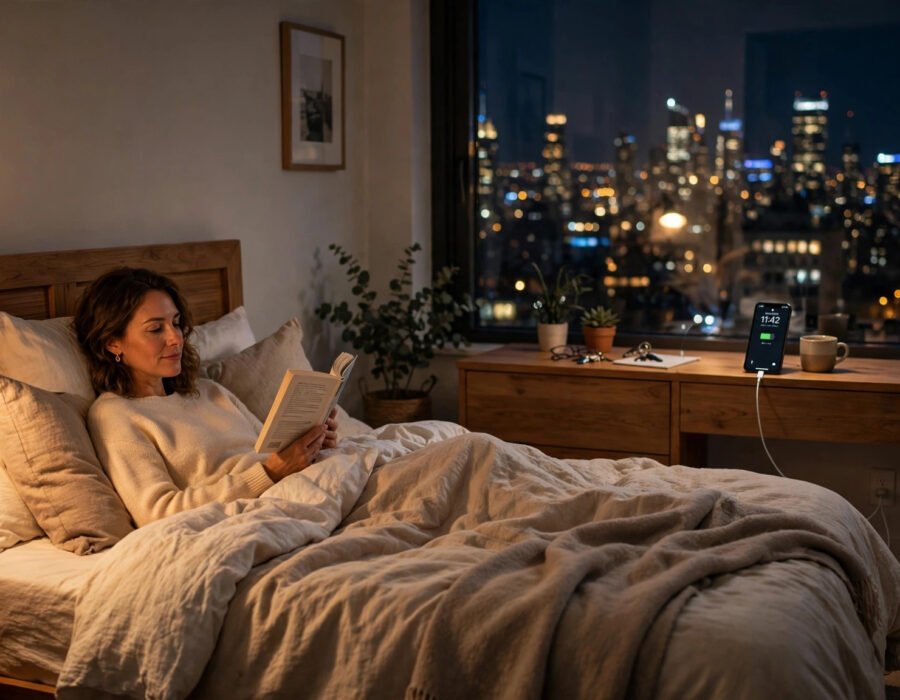
New York never sleeps — and neither, it seems, do you. The sirens, the neighbor’s 2 AM renovation, the light leaking through thin blinds, the brain that replays the workday at midnight: NYC is arguably America’s hardest city for sleep. Yet sleep is the foundation everything else stands on — mood, immunity, weight, focus, even how your skin looks. Building better sleep habits as a complete beginner isn’t about perfection or expensive gadgets. It’s a step-by-step process, and this guide walks it in order, starting from zero.
Step 0: Understand What You’re Building (and Why NYC Makes It Hard)
Sleep isn’t a single thing — it’s architecture: cycles of light sleep, deep sleep, and REM, each serving different restoration functions. You need 7–9 hours (adults), consistent timing, and minimal interruption. New York attacks all three:
- Noise: Traffic, sirens, neighbors, garbage trucks at 5 AM. The average NYC bedroom is far louder than sleep science recommends.
- Light: Streetlights, neighboring windows, 24-hour bodega signs. Even small light exposure suppresses melatonin.
- Stimulation: The city runs on urgency, and your nervous system doesn’t clock out when you do. Racing thoughts are the #1 NYC sleep complaint.
- Space: Small apartments mean the bed is also the office, the dining table, and the Netflix theater — your brain never learns “bed = sleep.”
The CDC’s sleep data shows a third of American adults don’t get enough sleep, with urban dwellers overrepresented. The National Sleep Foundation’s guidelines form the evidence base for everything below.
Step 1: Fix the Environment (Week 1)
Before touching your habits, fix the room — environment is the highest-leverage step:
- Darkness: Blackout curtains or a $15 sleep mask. NYC light pollution is relentless; total darkness is non-negotiable. Cover or remove LED lights (chargers, power strips) — even tiny lights matter.
- Sound: A white noise machine ($25–$50) or a fan masks the unpredictable noises (sirens, shouting) that fragment sleep. Consistent sound beats silence in the city — your brain tunes out steady noise but startles at sudden ones.
- Temperature: 65–68°F is the sleep sweet spot. NYC apartments often run hot — crack a window, use a fan, or negotiate with the radiator. Overheating is a hugely underrated sleep killer.
- The bed is for sleep: If space allows, stop working/scrolling/eating in bed. If your studio makes this hard, at least change the bedding configuration between “day mode” and “sleep mode” — your brain needs the association cue. Optimizing your bedroom for sleep covers the full environmental checklist.
Step 2: Set the Schedule (Week 2)
Your circadian rhythm is a clock that needs setting:
- Pick a wake time and defend it. Wake time matters more than bedtime — it’s the anchor. Choose one (even weekends, within an hour) and stick to it. Yes, weekends too. The “social jetlag” of sleeping in 3 hours on Saturday is real and measurable.
- Get morning light within 30 minutes of waking. Open the blinds, step onto the fire escape, walk to get coffee — daylight resets your clock daily. On dark winter mornings, a $30–$60 light therapy lamp for 20–30 minutes works.
- Set a bedtime that allows 8 hours in bed. If you wake at 6:30 AM, bedtime is 10:30 PM. Count backward and protect it. Most beginners discover their “I go to bed at midnight” habit was the entire problem.
Step 3: Build the Wind-Down (Week 3)
The 60 minutes before bed are a runway, not a cliff:
- Dim the lights throughout the apartment an hour before bed. Bright overhead lighting at 10 PM tells your brain it’s noon.
- Screens off (or managed). The ideal is no screens; the realistic NYC version is night mode + no stimulating content. Definitely no work email, news, or arguments-by-text after 9 PM.
- A relaxing ritual: Warm shower (the post-shower body temperature drop promotes sleepiness), light stretching, reading a physical book, journaling tomorrow’s to-dos (offloading the racing thoughts onto paper). A calming evening routine gives you the template — adapt it to your space.
- Cut the stimulants on schedule: No caffeine after noon (its half-life is 5–6 hours — that 3 PM coffee is still 25% active at midnight). Alcohol is a trap: it helps you fall asleep but fragments the second half of the night — net negative, always.
Step 4: Handle the Racing Mind (Ongoing)
The NYC special — lying awake rehearsing tomorrow:
- The worry window: Spend 10 minutes earlier in the evening writing down every worry and its next action. When thoughts recur at midnight, remind yourself: “It’s on the list; the list is handled.”
- If you’re awake 20+ minutes, get up. Lying in bed awake trains your brain to associate bed with wakefulness. Go to another room, do something boring in dim light, return when sleepy. (In a studio: sit in the chair, not the bed.)
- Don’t clock-watch. Turn the alarm clock around. Calculating “if I fall asleep NOW I get 4.5 hours” is anxiety fuel.
- 4-7-8 breathing or body scans give the mind a boring job instead of an interesting worry. Techniques for falling asleep faster detail these methods.
Step 5: Lock It In (Week 4+)
- Exercise, but timed right. Regular exercise improves sleep dramatically — but not within 2–3 hours of bedtime. Morning or afternoon workouts are ideal.
- Nap strategically or not at all. If you nap: 20 minutes max, before 3 PM. Long or late naps steal nighttime sleep.
- Weekend discipline. Keep the wake time within an hour. One late Saturday doesn’t ruin everything; a pattern does.
- Track simply. Note bedtime, wake time, and a 1–5 sleep quality rating. Two weeks of data reveals patterns (the Thursday wine, the Sunday anxiety) you’d never spot otherwise.
- Be patient. Circadian shifts take 1–2 weeks per hour of adjustment. You’re retraining biology, not flipping a switch.
Early risers take note: consistent bedtimes make consistent wake times possible, not the reverse — fix the night first and the morning follows.
When to Get Professional Help
See a doctor or sleep specialist if: you snore loudly with gasping (possible sleep apnea — common and treatable, and a CPAP transforms lives), insomnia persists 3+ weeks despite good habits, you experience severe daytime sleepiness affecting safety (driving, work), or you rely on sleep aids nightly. NYC has world-class sleep centers — insomnia is a medical issue, not a willpower issue, and CBT-I (cognitive behavioral therapy for insomnia) is the gold-standard treatment with better long-term results than medication.
Conclusion
Building better sleep habits in New York as a beginner means working in order: fix the environment first (dark, quiet, cool), anchor a consistent wake time with morning light, build a real wind-down ritual, manage the racing mind with worry windows and get-up rules, then lock it in with exercise timing and weekend discipline. The city won’t get quieter — but your sleep can get deeper anyway. Start tonight: blackout, white noise, and a wake time you’ll keep.
Frequently Asked Questions
How can I sleep better with NYC noise?
Use a white noise machine or fan to mask unpredictable sounds — consistent background sound prevents the startle response that sirens and shouting trigger. Earplugs help but can feel isolating; many New Yorkers combine both. Double-pane windows are the ultimate fix if you’re renovating.
What time should I go to bed?
Count back 8 hours from your required wake time. If you must wake at 6:30 AM, be in bed by 10:30 PM. Most sleep-deprived beginners discover they’re simply not allocating enough hours — the schedule fix precedes every other technique.
Is it bad to sleep in on weekends?
Sleeping more than an hour past your weekday wake time creates “social jetlag” — effectively giving yourself jet lag every weekend. It feels restorative but disrupts your circadian rhythm, making Monday mornings worse. Keep weekends within an hour of weekday times.
Does melatonin help with sleep?
Melatonin helps with timing (jet lag, shift work) more than with general insomnia, and long-term use can suppress natural production. Low doses (0.5–1mg) taken 1–2 hours before bed are more effective than the massive doses sold OTC. Consult a doctor before regular use.
When should I see a doctor about sleep problems?
If loud snoring with gasping (possible sleep apnea), persistent insomnia beyond 3 weeks despite good sleep habits, severe daytime sleepiness, or nightly reliance on sleep aids. CBT-I (cognitive behavioral therapy for insomnia) is the first-line treatment and outperforms medication long-term.