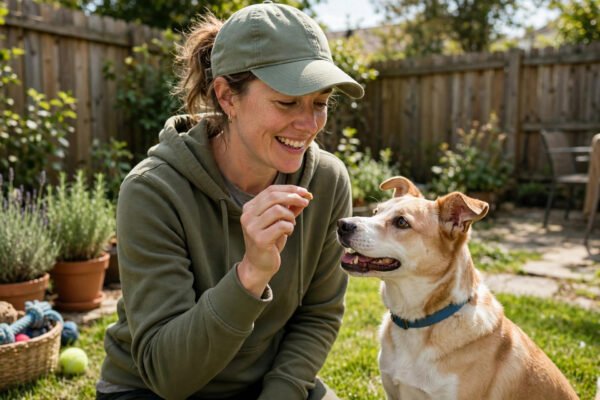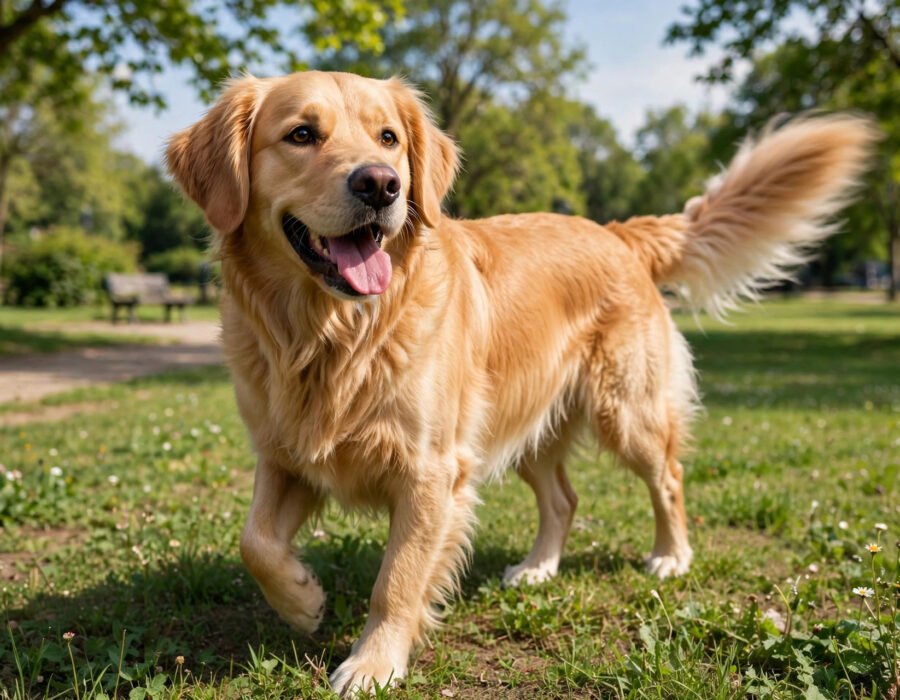
Dogs are talking to you constantly — with their tails, ears, eyes, mouths, and whole bodies. Most bites happen not because dogs are unpredictable, but because humans misread clear warnings the dog had been giving for minutes. The good news: you do not need any background to learn the basics, because dog body language is a visual language with consistent grammar.
This guide decodes the essential signals — tail, ears, eyes, mouth, posture — the stress ladder that precedes bites, and the popular myths (starting with the wagging tail) that get people hurt.
The Tail: Not the Happiness Meter You Think
The biggest myth first: a wagging tail does not mean a happy dog. Tail wagging signals arousal and emotional intensity — which can be joy, but also agitation, fear, or predatory focus. What matters is how the tail wags: loose, wide, whole-body wags (the famous 'helicopter tail') generally signal friendliness; stiff, fast, high wags signal high arousal that can tip into aggression; slow, low wags often signal insecurity.
Tail position is the emotional barometer. Neutral relaxed position varies by breed but is the baseline — learn your dog's neutral first. Tucked tail means fear or submission. High stiff tail means confidence or assertiveness — watchful, not necessarily friendly. And fascinating research shows wag direction matters: wags biased to the dog's right side correlate with positive emotions, left-side with negative. You do not need to measure this precisely — just know that tail language is nuanced, and 'wagging equals happy' is the myth behind countless misread dogs.
Ears, Eyes, and Mouth: The Face Tells All
Ears: forward and perked means alert interest; flattened back against the head means fear or appeasement; asymmetrical or swiveling ears track uncertainty. (Floppy-eared breeds show subtler versions — watch the base of the ear.) Eyes: soft, slightly squinted eyes mean relaxed; hard staring with a fixed gaze is a challenge or predatory focus — never stare back at an unknown dog. The whites of the eyes showing in a crescent ('whale eye') is a classic stress signal, often seen when a dog is uncomfortable with hugging or handling.
Mouth: a relaxed open mouth with lolling tongue is the canine smile. Closed mouth with tension, lip licking when no food is present, and yawning when not tired are all stress or appeasement signals — the dog is self-soothing. Bared teeth with a wrinkled muzzle is the unmistakable warning; but the subtler 'lip lift' on one side is the earlier version most people miss. Bared teeth during play with a loose bouncy body is different — context, always context.
Learn more from American Kennel Club.
Posture: Reading the Whole Dog
The body's overall shape overrides individual signals. A loose, wiggly body with curved posture is the universal sign of a friendly dog — play bows (front down, rear up) are explicit invitations. A stiff, still body is the signal to take most seriously: stillness often precedes a bite, because the dog has stopped communicating and is deciding. Freeze plus hard stare is the final warning before action.
Size signaling: dogs make themselves big (tall posture, raised hackles, weight forward) when assertive or aroused, and small (crouched, weight back, tucked) when fearful. Raised hackles (piloerection along the back) indicate high arousal — not necessarily aggression; fear and excitement raise hackles too. Rolling over deserves special mention: it is often appeasement ('please do not hurt me'), not a request for belly rubs — reaching for the belly of a fearful dog gets hands bitten.
The Stress Ladder: Warnings Before the Bite
Dogs almost never bite 'out of nowhere.' They climb a ladder of escalating signals: yawning, lip licking, and turning away (early stress); whale eye, tucked tail, and ears back (growing discomfort); growling, snarling, and snapping (explicit warnings). A dog that skips rungs — going from stillness to bite — has usually learned that earlier warnings were punished. This is why punishing growling is dangerous: it removes the warning, not the fear.
Your job at each rung: at early signals, increase distance and reduce pressure — stop hugging, give space, end the interaction calmly. At growling, thank the dog for communicating and create distance; never punish the growl. Teach children this ladder explicitly: most child bites involve a dog whose warnings the child could not read. The ladder is the most practical thing in this guide — it turns 'unpredictable' dogs into readable ones.
Putting It Together: Real-World Reading
Practice on your own dog first: spend five minutes daily just observing — during meals, play, walks, and rest — and narrate what you see. You will quickly learn your individual's dialect, because dogs have personal variations on the standard signals. Then generalize: at the dog park, watch interactions before entering and read the room — stiff groups, hard stares, and one dog being cornered are your cues to wait or leave.
With unfamiliar dogs, apply the consent test: pet for three seconds, stop, and see what the dog does — leaning in for more is yes, moving away or freezing is no. Respect the no every time. And remember the golden rule of context: no single signal means anything alone. A wagging tail on a stiff body with hard eyes is not happiness — it is arousal with tension. Read clusters, read context, and when in doubt, give the dog space. Space is never the wrong answer.
For the authoritative take, visit ASPCA.
Teaching Kids to Read Dogs Safely
Children are the most common bite victims, and the reason is readable body language going unread. Teach kids three rules: ask the owner before touching any dog, let the dog sniff your closed hand first, and pet the chest or side — never reach over the head, which reads as threatening. Practice the 'be a tree' drill: if a strange dog approaches, stand still, arms at sides, eyes averted until it loses interest.
Supervise all child-dog interactions actively, not passively — most bites happen with familiar dogs when adults are nearby but distracted. Learn your own dog's stress signals around children specifically: lip licking, turning away, and moving off are requests for space that kids must honor. A dog that can always walk away from a child is a dog that rarely needs to warn one.
You can verify the details at American Veterinary Medical Association.
Related reading you might enjoy: introducing a new pet to the home and finding pet-friendly hotels for road trips.
Dog body language basics are learnable without any background because the signals are visual and consistent: tails signal arousal (not just happiness), ears eyes and mouth show stress or comfort, whole-body posture overrides individual signals, and the stress ladder gives warnings long before bites. Forget the myths — wagging does not equal happy, rolling over does not equal belly-rub request. Read signal clusters in context, respect warnings instead of punishing them, and give space when unsure. The dogs were communicating all along; now you can listen.
Frequently Asked Questions
Does a wagging tail mean a happy dog?
Not necessarily — wagging signals arousal and emotional intensity, which can be joy, fear, or agitation. Loose wide whole-body wags suggest friendliness; stiff fast high wags suggest arousal that could tip into aggression. Read the whole body, not just the tail.
What are whale eyes in dogs?
When the whites of a dog's eyes show in a crescent shape, usually while turning the head away. It is a classic stress signal — the dog is uncomfortable, often with hugging, handling, or a perceived threat nearby.
Should I punish my dog for growling?
No — never. Growling is communication, a warning rung on the stress ladder. Punishing it teaches the dog to skip warnings, which produces dogs that bite 'without warning.' Thank the dog by creating distance instead.
Why does my dog yawn when not tired?
Yawning outside sleep contexts is typically a stress or appeasement signal — the dog is self-soothing in an uncomfortable situation. Note what was happening when the yawning started; that is the stressor.