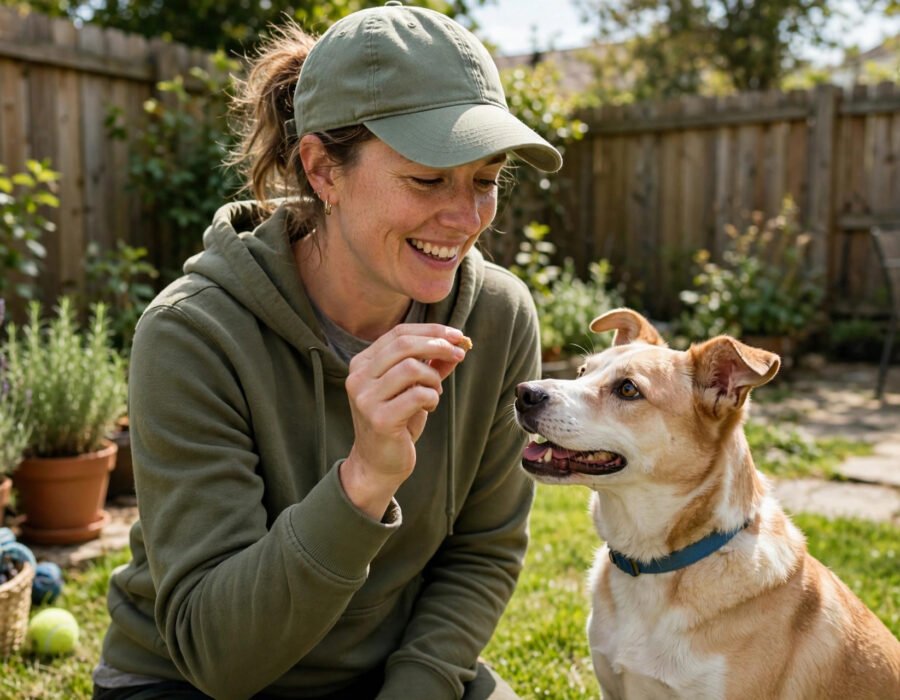
Your rescue dog is home, and the accidents have begun. Rescue dogs are not harder to housebreak because they are 'damaged' — they are harder because their history is unknown: possible shelter kennel habits, inconsistent past training, stress from rehoming, and sometimes years without ever learning indoor rules. The good news: adult rescues often housebreak faster than puppies, because they have bladder control and desperately want to get it right.
This guide gives you the frequency and schedule that works, crate training done right, the accident protocol, California-specific considerations, and realistic timelines from 'constant accidents' to 'reliable.'
The Schedule: Frequency Is Everything
Housebreaking runs on frequency, not duration. The working schedule: outside first thing in the morning, after every meal, after naps, after play sessions, every 2 to 3 hours during the day, and last thing at night — roughly 8 to 12 outings daily for the first two weeks. 'How often' is the whole answer: most housebreaking failures are schedule failures, where the dog simply was not given enough opportunities.
Each outing follows the ritual: same door, same spot, boring leash walk (no play until business is done), then a party — enthusiastic praise and a high-value treat within three seconds of elimination. The treat timing is the training: the dog must connect the outdoor act with the reward instantly. Keep a log for the first week (time out, result) — patterns emerge fast, and the log tells you when to adjust. California's weather is your ally here: year-round outdoor access means no winter excuse to skip outings.
Crate Training: The Accelerator Done Right
A properly-sized crate (stand, turn, lie down — no bigger) leverages the dog's instinct not to soil its sleeping area, making it the fastest housebreaking tool available. The protocol: crate when unsupervised, immediate outdoor trip on release, supervised freedom only after elimination. Most rescues take to crates quickly if introduced with meals and treats inside — never as punishment, ever.
California note: never crate in hot cars or unventilated spaces — obvious, but heatstroke kills fast and California vehicles become ovens. Time limits matter: adult dogs can hold it 4 to 6 hours in a crate during the day; longer requires a midday break (dog walker, neighbor, or coming home). If the dog soils the crate repeatedly, the crate is too big, the schedule too sparse, or there is a medical issue — investigate, do not punish. Done right, crates compress housebreaking from months to weeks.
For the authoritative take, visit ASPCA.
Accidents: The Protocol That Prevents Repeats
When you find an accident after the fact: say nothing, clean it with enzymatic cleaner, and adjust your supervision — the failure was management, not the dog. Punishing after the fact teaches the dog to hide elimination from you (behind furniture, in other rooms), which is strictly worse. If you catch the dog mid-act: interrupt calmly (a neutral 'oops'), rush outside, reward if they finish there.
Supervision is the prevention: for the first two to three weeks, the untrained rescue is either crated, leashed to you indoors (the 'umbilical cord' method), or under direct active watch. Freedom is earned in stages — one room, then two — as reliability proves out. Baby gates are housebreaking equipment. Every accident prevented is worth five corrected, because each indoor success strengthens the wrong habit. Management first, training second, punishment never.
Rescue-Specific Challenges
Former shelter dogs may have learned to eliminate in their kennel — the crate instinct works in reverse and needs patient rebuilding with more frequent outings. Puppy-mill or hoarding rescues may never have lived indoors at all; treat them like puppies regardless of age, with maximum frequency. Anxious rescues may urinate from stress or submissive urination — this is emotional, not training-related, and punishment catastrophically worsens it; build confidence instead.
Medical rule-outs come first for any rescue: urinary tract infections, bladder stones, and kidney issues cause 'accidents' no training fixes — a vet check in the first week is housebreaking equipment, not optional. Marking (usually intact males) differs from housebreaking failure and typically resolves with neutering plus management. And allow decompression: the '3-3-3 rule' (3 days to decompress, 3 weeks to learn routines, 3 months to feel home) means pushing hard in week one backfires — match intensity to the dog's adjustment.
California Considerations and Realistic Timelines
California specifics: many rentals have strict pet policies — document your training efforts in case of landlord concerns, and enzymatic-clean accidents immediately to protect deposits. Outdoor access varies: apartment dwellers need a strict elevator-and-leash routine (keep shoes and leash by the door); house dwellers can add a dog door once trained — not before. California's off-leash culture does not apply to untrained rescues; keep them leashed until recall is bombproof.
Timelines: with consistent scheduling, most adult rescues show major improvement in 1 to 2 weeks and reliability in 4 to 8 weeks. Puppies take longer (4 to 6 months for full reliability — bladders mature slowly). Regression during weeks 3 to 4 is normal as the dog tests boundaries; hold the schedule and it passes. The 'quickly' in your goal is realistic — rescues often surprise owners with how fast they learn — but quickness comes from your consistency, not the dog's magic.
You can verify the details at The Humane Society.
The Nighttime Housebreaking Routine
Nights make or break housebreaking speed. The evening protocol: last water intake 2 hours before bed (not deprivation — just timing), a final outdoor trip right before crating, and crate placement near your bedroom so you hear stirring. Young dogs and new rescues cannot hold it all night initially — set one alarm for a mid-night outing rather than discovering the alternative at dawn.
If the dog soils overnight, move the outing earlier and shrink the pre-bed water window slightly — management, not punishment. Most adult rescues achieve dry nights within 1 to 2 weeks on this routine; puppies take longer as bladder capacity develops (roughly one hour per month of age). Track dry nights on the calendar — the visible streak is motivating, and the pattern tells you exactly when to drop the mid-night alarm.
The full background is available at American Kennel Club.
Keep exploring with introducing a new pet to the home and the best flooring for homes with pets.
Housebreaking a rescue dog quickly in California comes down to frequency: 8 to 12 scheduled outdoor trips daily, crate training as the accelerator, immediate rewards for outdoor success, enzymatic cleanup and better supervision for accidents, and a vet check to rule out medical causes. Most adult rescues turn the corner in one to two weeks and reach reliability in four to eight. The speed is in your schedule, not in shortcuts — consistency at the right frequency is the entire method.
Frequently Asked Questions
How often should I take a rescue dog out during housebreaking?
Eight to 12 times daily for the first two weeks: first thing in the morning, after meals, after naps, after play, every 2 to 3 hours, and last thing at night. Frequency of opportunity is the main driver of speed.
Should I punish my rescue dog for accidents?
No — never. Punishment teaches dogs to hide elimination, not to hold it. Clean with enzymatic cleaner, improve supervision, and increase outing frequency. Accidents are management failures, not disobedience.
How long does it take to housebreak an adult rescue?
Most show major improvement in 1 to 2 weeks and reach reliability in 4 to 8 weeks with consistent scheduling. Former kennel dogs or those with no indoor history may take longer; medical issues must be ruled out first.
Is crate training cruel for rescue dogs?
No, when done correctly — a properly-sized crate used with positive association and reasonable time limits leverages natural den instincts. It becomes cruel only when used as punishment or for excessive confinement.