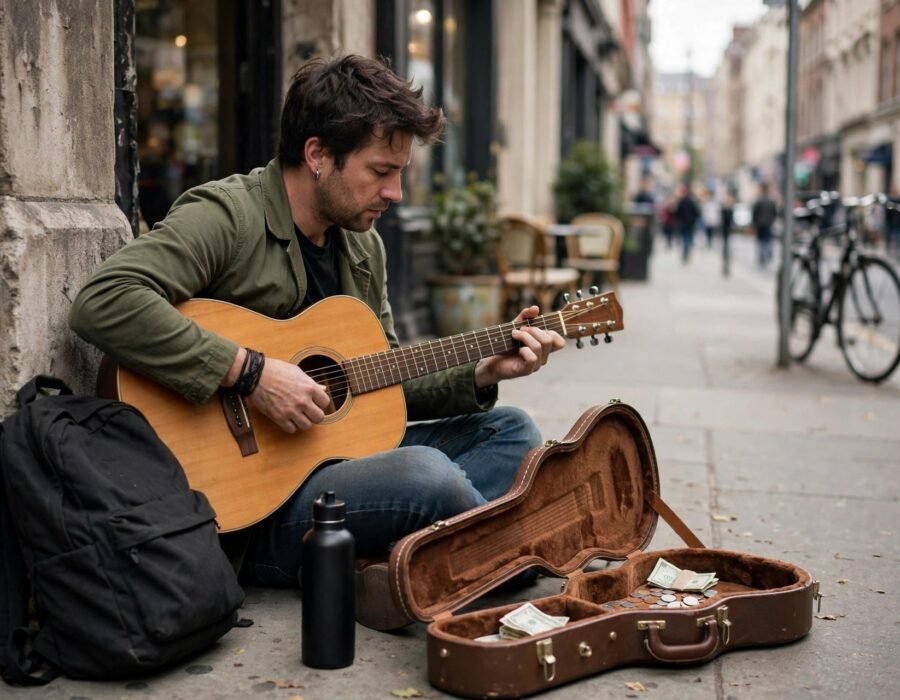
You set up on the corner with your guitar, play for an hour, make $40 in tips — and then a police officer tells you to move along. Or maybe nothing happens and you play all day. Busking — street performance — exists in a legal gray zone that varies wildly by city, and the difference between a great afternoon and a citation is knowing the rules before you play. If you want to understand how to understand busking laws in your city in the US, this guide covers the legal landscape, the practical realities, and how to stay on the right side of both.
The constitutional baseline: in the US, performing music in public is expressive activity protected by the First Amendment. Cities can regulate the time, place, and manner of performances (noise levels, blocking sidewalks, park hours) but cannot ban busking outright or discriminate based on content. This protection is real — courts have repeatedly struck down overbroad busking bans. But “protected” does not mean “unregulated,” and the regulations are where performers live or die.
The Permit Landscape
Busking rules are hyper-local. New York City’s subway system famously requires no permit for performers (a hard-won right), while many parks and plazas do. Some cities require general street-performer permits ($25–100/year); others require audition-based permits for premium spots; some regulate by zone (allowed here, banned there); and a few still operate in legal gray areas where enforcement is sporadic. Always check your specific city’s municipal code — search “[city] street performer permit” — and the parks department rules separately, since parks often have their own regimes.
Common regulatory dimensions: permits and fees, location restrictions (distance from businesses, transit entrances, other performers), time restrictions (many cities ban amplified sound after certain hours or limit performance durations per spot), amplification rules (unamplified acoustic performance faces far fewer restrictions almost everywhere), and merchandising rules (selling CDs is often regulated separately from performing). The ACLU’s free-expression resources document performers’ rights and are worth reading before any confrontation — knowing the law calmly is the best de-escalation tool. For the business side of performing, SBA guidance for small businesses applies to buskers earning real income: track earnings, understand tax obligations, and treat it as the micro-business it is.
Practical Realities Beyond the Law
Law is only half the equation; the other half is streetcraft. Location is everything: foot traffic, acoustics (subway tiles and building canyons amplify beautifully), visibility, and competition from other performers. Prime spots have informal queuing systems — respect them, because the busking community is small and reputation matters. Sound: unamplified keeps you legal in more places, but a small battery amp dramatically increases range and earnings where allowed. Presentation matters — a tidy setup, visible tip jar or QR code, and a setlist sign all increase income measurably.
Safety and sense: busk in well-trafficked areas, keep valuables secured, be aware of your surroundings the way any street worker is. Weather is the eternal enemy — have a rain plan and protect instruments from temperature extremes. And know when to walk away from confrontations: with security guards, business owners, or fellow performers, de-escalation beats righteous stands. You can assert your rights without ruining your afternoon, and the performers who last are diplomats first. The local scene rewards those who learn its unwritten rules — which is why finding local live music events near you doubles as networking for buskers. Enjoying a music festival on a budget and busking share an ethos — live music does not require wealth, just willingness.
Digital Tips and the Cashless Street
The tip jar went digital: QR codes linking to Venmo, Cash App, or PayPal are now standard busking equipment, and they measurably increase earnings as cash disappears. Display the code prominently, mention it between songs (“tips welcome at this QR code — cash or digital”), and keep a physical jar too for the cash loyalists. Some performers report digital tips doubling their take — the friction of “I have no cash” evaporates.
Busking Around the World
American busking law is relatively permissive by global standards. London’s Underground runs a licensed, auditioned busking program — competitive but prestigious. Many European cities require permits with designated pitches; some (like parts of Paris) restrict amplification heavily. In Japan, street performance often requires permits and stays remarkably orderly. The universal truths cross borders: transit hubs and tourist zones are prime, amplification rules are the main friction point, and local performer communities enforce norms everywhere. If you travel with an instrument, research before you play — the First Amendment does not cross borders, but the street musician’s ethos does.
The Gear Question
Traveling light is a busking skill. The classic setup — acoustic guitar, small battery amp, tip jar — fits in one trip from the car. Battery technology transformed the trade: modern portable amps run for hours, and some performers run entire PA setups from power stations. Weatherproofing matters: instrument covers, quick-pack systems for sudden rain, and sunscreen for the performer. Every ounce matters when you are carrying it three blocks from parking. The pros make it look effortless because they have ruthlessly optimized the load.
The Bottom Line
Busking is constitutionally protected expression subject to local time-place-manner regulations — so learn your city’s specific permit, location, and amplification rules before you play. Beyond law, success is streetcraft: great spots, good sound, professional presentation, digital tipping, and diplomacy. The street is the most honest stage in music: no marketing, no gatekeepers, just you and whoever stops to listen. Know the rules, respect the community, and play your heart out — and let the city’s rhythm carry the rest.
Frequently Asked Questions
Do I need a permit to busk?
It depends entirely on your city — and sometimes the specific location within it. Some places require permits, some do not, and parks often have separate rules. Search your city’s municipal code for street performer regulations, and check parks departments separately.
Can police stop me from busking?
They can enforce valid time-place-manner regulations (noise ordinances, blocking sidewalks, permit requirements), but they cannot ban busking outright or target you for your content — street performance is First Amendment-protected expression. Know your local rules so you can distinguish lawful enforcement from overreach.
How much do buskers make?
Wildly variable: $20–50/hour is typical for decent spots, with prime locations and skilled performers earning far more. Digital tipping has increased takes significantly. Like any performance income, it depends on location, skill, presentation, and hours.
Is busking income taxable?
Yes — busking income is self-employment income, legally reportable like any earnings. Track your tips in a simple daily log, and remember that consistent busking may trigger self-employment tax obligations. The informality of cash does not change the tax law; keep records anyway.
What is the best time of day to busk?
Rush hours and lunch breaks in business districts, evenings and weekends in entertainment areas — follow the foot traffic. Tourist seasons multiply earnings in destination cities. Experiment continuously: the best spot at 8 a.m. may be dead at 2 p.m., and veteran buskers rotate locations with the crowds like fishermen following the fish. Keep notes on what works. Patterns emerge quickly for the observant. The street rewards those who study it.