Foundation is the hardest makeup product to buy: the wrong shade is visible from across the room, and 'choosing' it properly — shade matching, undertone identification, formula testing — sounds like it requires a professional color analysis appointment. In Chicago, with its lighting-challenged winters and diverse retail landscape, the process has specific local wrinkles. The cost question has a good answer: a great match is achievable from 12 dollars to 60-plus, and price predicts match quality poorly.
Here is what shade matching actually costs at each tier, the undertone method that prevents the classic mistakes, where to get matched in Chicago, and how to test before you commit.
The Cost Tiers: What You Pay For
Drugstore (12 to 18 dollars): the best value tier, with shade ranges that have expanded dramatically — many lines now offer 30 to 40-plus shades. What you get: solid formulas, no professional matching, return policies that vary by retailer. Mid-range (30 to 45 dollars): department-store and specialty-retail brands with in-store shade matching services, better return policies, and often superior undertone granularity.
Luxury (55 to 90-plus dollars): premium packaging and sometimes exceptional formulas, but shade-matching accuracy is not inherently better — you are paying for formula elegance and brand, not match science. Professional color analysis (100 to 300 dollars in Chicago) exists but is overkill for foundation alone. The honest cost of a great match: 12 to 45 dollars plus an hour of your time. Spending more buys formula luxury, not a better shade.
Undertones: The Concept That Prevents Disaster
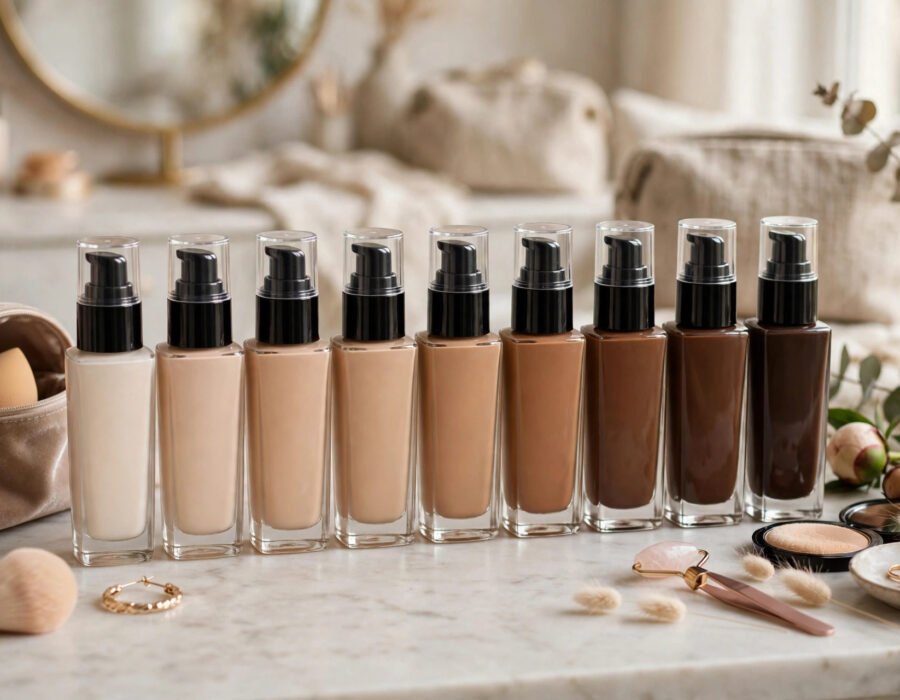
The number-one foundation mistake is matching depth while ignoring undertone — the subtle hue beneath the surface. Three categories: warm (golden, peachy; veins look greenish; gold jewelry flatters), cool (pink, red, bluish; veins look blue/purple; silver flatters), neutral (mix of both). Most bad matches are undertone mismatches: a warm-toned person in a cool foundation looks pink and mask-like; the reverse looks orange.
The vein test and jewelry test are starting points, not verdicts — test in natural daylight, which Chicago winters ration cruelly. The white-paper test (hold white paper by your face: yellowish cast suggests warm, pinkish suggests cool) helps. Better: swatch three candidate shades along the jawline (not the hand — hand skin differs), walk outside or to a window, and check which disappears into the skin. The shade that vanishes is the match; the undertone that vanishes with it is yours.
For the authoritative take, visit American Academy of Dermatology.
Where to Get Matched in Chicago
Chicago's advantage is retail density: Michigan Avenue and State Street department stores, Sephora and Ulta locations across the city and suburbs, all offering free shade matching. The pro move: get matched at two different stores on the same day and compare — artists vary in skill, and consensus between two matchers is reliable. Ask for samples, not just a wrist swatch; reputable counters give sample pots for home testing.
Drugstore strategy without counter help: use brands' online shade finders as a starting point, buy two adjacent shades, and return the loser — many Chicago-area drugstores accept opened makeup returns, and Ulta/Sephora have generous return policies. Winter-specific Chicago note: most people are one shade lighter in February than August — if you are matched in winter, recheck in summer, or buy the summer shade knowingly. Lighting lie: store lighting is designed to flatter, not to reveal — always verify in daylight.
Testing Before Committing: The Protocol
The home test that prevents regret: apply the candidate foundation to a clean jawline-to-neck area in the morning, wear it through a full day, and photograph in natural light at midday and evening. Check three things: shade blend at the jawline (no visible line), undertone harmony (no pink mask or orange cast in daylight photos), and wear behavior (oxidation — some foundations darken 1 to 2 shades as they dry — plus separation or caking by hour eight).
Test formula and shade separately: a perfect shade in a formula that oxidizes or separates is still a no. Give each candidate two full wear days — skin chemistry varies daily. And test over your actual skincare routine, because moisturizer and sunscreen change how foundation sits and wears. This protocol takes a week for three candidates and produces a match that survives real life, not just the store mirror.
Saving Money on the Match
The economical path: drugstore foundation in the right shade beats luxury in the wrong shade every time — allocate effort to matching, not spending. Buy during Ulta/Sephora sales events or use drugstore coupons; foundation is one of the most-discounted categories. Do not stockpile: foundation expires (12 to 24 months typically; sooner for natural formulas), and your shade changes seasonally anyway.
Avoid the expensive traps: buying without testing because the shade 'looks right' in the bottle (bottle color lies), owning five wrong shades instead of returning them (use those return policies), and professional matching services for foundation alone (their value is wardrobe-wide color analysis, not a single product). Total realistic cost of nailing your match: one to two foundations purchased, one returned, and an afternoon — under 50 dollars all-in for most Chicago shoppers.
You can verify the details at U.S. Food and Drug Administration.
Foundation for Mature Skin
Mature skin changes the foundation equation: prioritize hydration and light reflection over coverage. Heavy full-coverage mattes settle into fine lines and age the face; luminous medium-coverage formulas blur and brighten. Prep becomes critical — well-moisturized skin plus a hydrating primer prevents the settling that ruins the look by midday.
Application shifts too: less product (sheer layers built only where needed), damp sponge over brushes (presses product in rather than dragging), and strategic placement — center of face first, blending outward, minimal product near the outer eye where creasing concentrates. Powder sparingly or skip it; dewy beats matte after 50. The goal is not coverage but evenness — skin that looks like skin, only better. Chicago's dry winter air makes this doubly important: hydrate aggressively underneath.
The full background is available at Good Housekeeping.
Keep exploring with why skin breaks out when stressed and making cheap clothes look expensive.
Choosing foundation for your exact skin tone in Chicago costs 12 to 45 dollars plus an hour of testing — not the luxury price tags the industry suggests. The method: identify your undertone (warm, cool, neutral) with daylight jawline swatches, get matched at two Chicago counters and compare, take samples home for full-day wear tests checking blend and oxidation, and buy where returns are easy. Price buys formula elegance, not match accuracy. The shade that disappears into your jawline in daylight is the one — at any price tier.
Frequently Asked Questions
How do I find my foundation undertone?
Check vein color (greenish suggests warm, blue/purple suggests cool), which jewelry flatters you, and most reliably: swatch candidate shades on your jawline in natural daylight — the one that disappears reveals both your depth and undertone.
Why does my foundation look orange or pink?
Undertone mismatch — the most common foundation error. Orange usually means the shade is too warm for you; pink mask-like cast means too cool. Re-swatch focusing on undertone, not just lightness/darkness.
Should I get professionally shade-matched?
Free counter matching at department stores, Sephora, or Ulta is worthwhile — get two opinions and take samples home. Paid professional color analysis (100 to 300 dollars) is overkill for foundation alone.
Does foundation shade change with seasons?
Yes — most people run one shade deeper in summer and lighter in winter, especially in Chicago's dramatic seasonal shifts. Recheck your match when seasons change rather than forcing an off-season shade.