
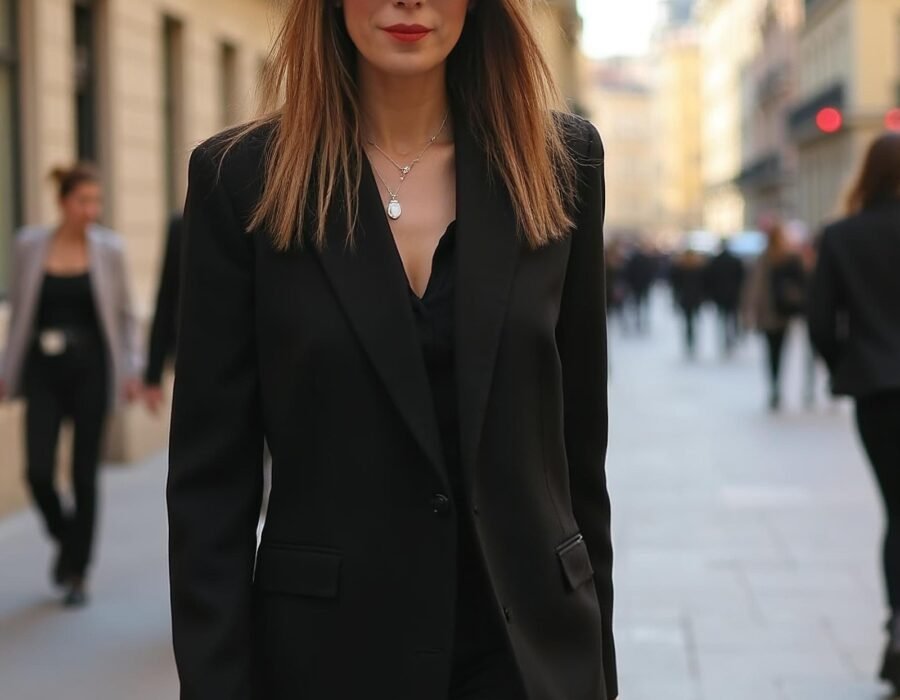
She’s wearing a Target dress and looks like a million bucks. You’re wearing a $200 top and look… fine. If you’re asking how to make cheap clothes look expensive, here’s the truth stylists know: expensiveness is an impression created by fit, fabric behavior, grooming, and styling — not price tags. These are the specific tricks that manufacture the impression.
Fit: The $0 Luxury Signal
Nothing says expensive like clothes that fit as if made for you. Cheap clothes in perfect fit beat expensive clothes in mediocre fit — every time, no exceptions. Priorities:
- Hem everything. Pants pooling at shoes and sleeves covering hands scream cheap. A $12 hem is the highest-ROI alteration in existence.
- Know your size variations across brands — vanity sizing means you’re different sizes everywhere; buy the fit, not the number.
- Tailor the waist on dresses and skirts — the single alteration that most transforms cheap pieces.
Fabric Choices That Fake It
- Choose matte over shiny. Cheap shine (satin-polyester, glossy synthetics) reads cheap instantly; matte fabrics (cotton, linen, matte crepe) read rich.
- Heavier is better. Flimsy fabric wrinkles and clings; substantial fabric drapes. Hold it up — if it’s translucent when it shouldn’t be, put it back.
- Stick to solid neutrals. Cheap prints and loud patterns expose quality; solid navy, black, white, camel, and gray hide it. (See navy pairings.)
- Avoid visible logos — real luxury whispers; cheap clothes shout.
Styling Tricks
- Monochrome outfits — one color head-to-toe looks instantly polished and expensive, even in cheap fabrics.
- Tuck it in. A French tuck (front tucked, back out) adds structure and intention to any cheap top + jeans combo.
- Steam, don’t wrinkle. Wrinkles are the #1 cheap signal. A $25 handheld steamer pays for itself in a week. (See wrinkle prevention.)
- Roll sleeves deliberately. A crisp sleeve roll looks styled; sleeves falling over hands look borrowed.
- Match your metals. All gold or all silver accessories — mixed cheap metals look accidental.
The Supporting Cast
- Shoes: clean, unscuffed shoes lift everything; dirty shoes sink everything. (See keeping sneakers pristine.)
- Grooming: neat hair, clean nails, subtle makeup — polish is free and reads as expensive.
- One good accessory: a quality watch, leather belt, or structured bag lifts the whole outfit. Thrift these — see secondhand designer guide.
- Confidence and posture: the cheapest luxury of all. Stand straight; own the outfit.
For the psychology of perceived value, how status signaling works explains why these cues fool everyone — including you.
The $100 Polish Kit: Tools of the Trade
Looking expensive is a maintenance game. Here’s the complete kit — about $100 total, lasting years.
Handheld steamer ($25–$35): the single highest-ROI tool. Five minutes de-wrinkles anything; faster and gentler than ironing. Hang the garment, steam top to bottom, done. Wrinkles are the #1 cheap signal — this erases them.
Lint roller + fabric brush ($10): lint roller for quick fixes, natural-bristle clothes brush for wool (removes dust, revives nap). Use before leaving, every time.
Sweater comb ($10): de-pills knits in minutes — the difference between a $80 sweater looking $80 and looking $8.
Shoe care basics ($25): horsehair brush, cream polish in your shoe colors, waterproof spray. Clean shoes lift everything; this kit keeps them there.
Sewing kit ($10): needles, thread in basic colors, spare buttons, small scissors. A loose button fixed in 5 minutes vs. a shirt retired — the math is obvious.
Stain remover pen ($5): lives in your bag. The first 5 minutes decide every stain’s fate.
White vinegar + baking soda ($5): the DIY cleaning arsenal — deodorizing, stain-lifting, fabric-softening. Pennies per use.
$100, one afternoon of setup, and every cheap garment you own gets a permanent upgrade. Polish isn’t purchased — it’s maintained.
The $100 Polish Kit: Everything You Need
Looking expensive is mostly maintenance. Here’s the complete kit, all in for about $100.
Fabric care ($30): electric lint shaver ($15 — the highest-ROI beauty tool for clothes), sweater stone or comb ($10), clothes brush ($15). Pilling and lint are the #1 cheap signals; this kit eliminates them.
Pressing ($35): handheld steamer ($30) — faster than ironing, safer on synthetics, and the difference between “wore it” and “wearing it.” A wrinkled $200 shirt looks cheaper than a steamed $20 one. This is not optional.
Shoe care ($25): horsehair brush, cream polish in your shoe colors, waterproof spray. Clean shoes lift every outfit; scuffed shoes sink them regardless of price tags elsewhere.
Fit fixes ($10+): fashion tape ($8) for gaps and hems, a mini sewing kit for loose buttons. The tiny fit details read as “custom” to every observer.
Total: ~$100, one-time. Amortized over a year of outfits, it’s pennies per wear — and it does more for your appearance than $500 of new clothes. Expensive-looking isn’t bought; it’s maintained. The kit is the whole secret.
The 5-Minute Pre-Event Polish Routine
Before any event, run this routine: lint-roll everything (30 seconds), check for loose threads and snip them (1 minute), steam the visible areas — collar, front, sleeves (2 minutes), wipe shoes clean and quick-buff (1 minute), and do the mirror check front-back-side in good light (30 seconds). Five minutes, and a $40 outfit presents like $140. Expensive-looking is a verb, not a price tag — it’s what you do to the clothes, not what you paid for them.
Key Takeaways
- Fit is the #1 luxury signal — hem and tailor cheap clothes.
- Matte, substantial, solid-neutral fabrics read expensive; shiny, flimsy, loud prints don’t.
- Monochrome + tucked + steamed = instant polish.
- Clean shoes, grooming, and one good accessory complete the illusion.
- Ironing and posture are free — and transformative.
The Bottom Line
Making cheap clothes look expensive is a styling skill, not a shopping skill: fit it, steam it, keep it matte and neutral, tuck it, and finish with clean shoes and good posture. Nobody can price-tag an outfit that fits perfectly and carries itself well. The most expensive thing you can wear is confidence — and that’s free.



2 Comments