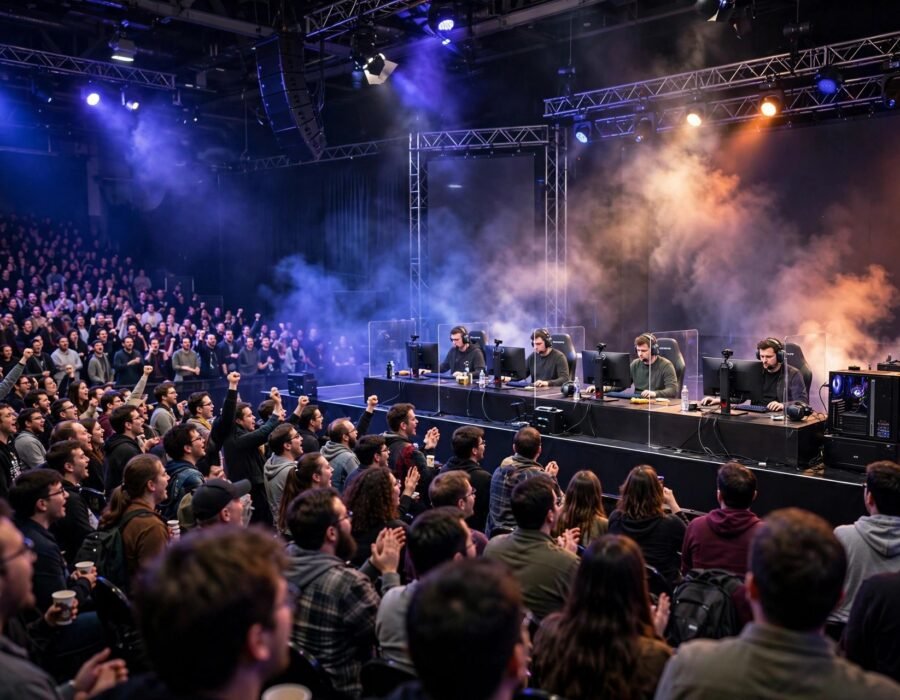
You watched the tournament stream — the roaring crowd, the million-dollar prize, the 19-year-old making plays that look like magic. So you queue up ranked, and reality hits: you are getting destroyed by players who seem to see the future. Welcome to competitive esports, where the gap between watching and doing is a canyon. If you are wondering what do most people get wrong when they get into competitive esports as a beginner in New York — or anywhere — the answer is that they treat it like casual gaming with higher stakes, when it is actually a different discipline entirely.
Esports is real competition: structured leagues, coaching, analytics, and practice regimens borrowed from traditional sports. The beginners who thrive are not necessarily the most talented — they are the ones who understand what they are actually signing up for. Here are the misconceptions that derail most newcomers, and what to do instead.
Mistake 1: Grinding Ranked Instead of Training Deliberately
The biggest error is treating ranked ladder games as practice. Ranked measures your current skill; it does not efficiently build new skill. Playing 200 games on autopilot ingrains your existing habits — including the bad ones. Deliberate practice means isolating weaknesses: 30 minutes of aim training, reviewing your own replays to find positioning errors, drilling one mechanic until it is automatic. Professional players spend huge portions of their time in practice tools, scrims, and VOD review, not just queuing.
Structure your sessions: warm up (aim trainers, drills), play with one specific focus (“today I work on crosshair placement”), then review. One focused hour beats four autopilot hours. New York’s local scene — from collegiate leagues to LAN centers in Manhattan and Brooklyn — offers structured environments where this kind of training is the norm, not the exception. And if you are still building fundamentals, the best video games for casual players are better training grounds than ranked ladders, because low-pressure games let you experiment without the ladder anxiety.
Mistake 2: Copying Pros Without Understanding Why
Beginners watch pro streams and mimic the visible parts — the agent picks, the crosshair, the settings — while missing the invisible parts: the communication, the game sense, the thousands of hours of context. A pro’s aggressive play works because of information you cannot see: comms from teammates, reads on enemy economy, practiced team coordination. Copy the play without the context and you just feed.
Learn principles, not plays. Instead of “the pro peeked here,” ask why the peek worked: what information did they have, what were the alternatives, what would have punished it? This is the difference between mimicry and understanding, and it is what separates players who plateau in gold from those who keep climbing. Watch educational content creators, not just highlight reels — the ones who explain decisions are worth ten times the ones who just show kills.
Mistake 3: Neglecting the Physical Game
Esports is physical. Reaction time, fine motor control, posture, sleep, and even diet affect performance measurably. Beginners treat their bodies as irrelevant and then wonder why they play worse at midnight than at noon. Pros have coaches for fitness and sports psychologists for tilt — the mental game of handling losses without spiraling is a trained skill, not a personality trait. Take breaks, sleep properly, and treat tilt (playing worse because you are frustrated) as the performance emergency it is: step away, reset, come back.
Mistake 4: Ignoring Team Skills
Most esports are team games, but beginners practice like solo artists. They never learn to communicate concisely (“two pushing B, need rotate”), to play around teammates’ strengths, or to shot-call under pressure. Then they blame “bad teammates” for losses that were actually coordination failures. The truth top players learn early: in team games, the skill of making your team better is itself a competitive advantage, and it is trainable.
Find a consistent group — solo queue is a lottery, a regular stack is a team. Use voice comms, develop simple callout protocols, and review losses together without blame. New York’s collegiate esports programs (NYU, St. John’s, and others field competitive teams) and amateur leagues provide exactly this structure. Even planning a fun game night with friends builds the social coordination muscles that transfer directly to competitive team play.
Mistake 5: Expecting Fast Results
The montage culture — highlight reels, “road to pro” videos — compresses years into minutes. Beginners expect noticeable improvement in weeks, get discouraged in month two, and quit in month three — right before the compounding would have kicked in. Skill acquisition in esports follows the same curve as music or sports: long plateaus punctured by breakthroughs, with progress invisible day-to-day but obvious season-to-season. The players who make it are rarely the most talented; they are the most stubborn about showing up.
The montage culture — highlight reels, “road to pro” videos — compresses years into minutes. Beginners expect noticeable improvement in weeks, get discouraged in month two, and quit in month three — right before the compounding would have kicked in. Skill acquisition in esports follows the same curve as music or sports: long plateaus punctured by breakthroughs, with progress invisible day-to-day but obvious season-to-season.
Set process goals, not outcome goals: “review two replays this week” beats “hit Diamond this month.” Track your own VODs monthly — you will be shocked how bad last month’s you looks, which is the best evidence of progress there is. And keep perspective: the ESRB’s resources on healthy gaming and CDC guidance on healthy screen habits are worth reading, because the players who last are the ones who keep competition in a healthy frame. Burnout ends more esports dreams than lack of talent ever did.
The Bottom Line
Getting into competitive esports means training deliberately instead of grinding blindly, learning principles instead of copying plays, treating your body and mind as equipment, developing team skills, and giving progress time. The beginners who wash out are not the untalented — they are the ones who practiced wrong, burned out, or expected a highlight reel in eight weeks. Do the unglamorous work, find your people, and the canyon between watching and doing starts to narrow. New York’s scene is waiting; just show up prepared, stay healthy, and remember that the goal is to compete — not to sacrifice everything else for a rank.
Frequently Asked Questions
How long does it take to get good at competitive esports?
Expect 6–12 months of deliberate practice to reach a respectable competitive level from zero, and years to approach semi-pro standards. Anyone promising faster is selling something. Progress is measured in seasons, not weeks.
Do I need expensive gear to compete?
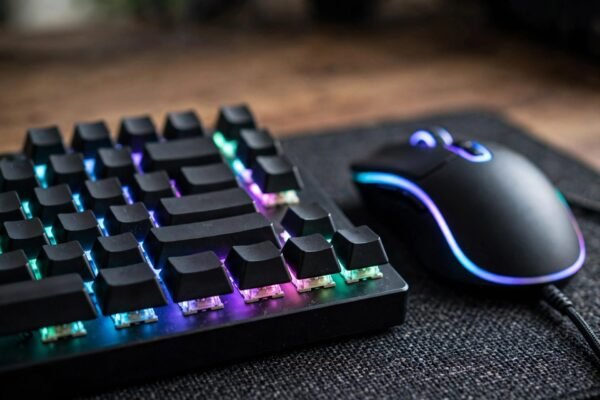
No — gear is the most overrated factor. A decent 144Hz monitor and a reliable mouse matter at higher levels, but beginners lose to decision-making and game sense, not hardware. Upgrade gear when your skill can actually exploit it, not before.
How do I find a team as a beginner?
Start with Discord servers for your game, collegiate programs if you are a student, local LAN centers, and amateur leagues (many run beginner divisions). Be upfront about your level — teams would rather develop an honest silver player than carry a dishonest one.
Can you actually make money in esports?
A tiny fraction do — through tournament winnings, salaries, streaming, and coaching. Treat it like pursuing music or acting: a wonderful aspiration with a realistic plan B. The skills (teamwork, communication, performance under pressure) transfer well regardless, and collegiate programs increasingly offer scholarships that make the pursuit pay off educationally even without going pro.