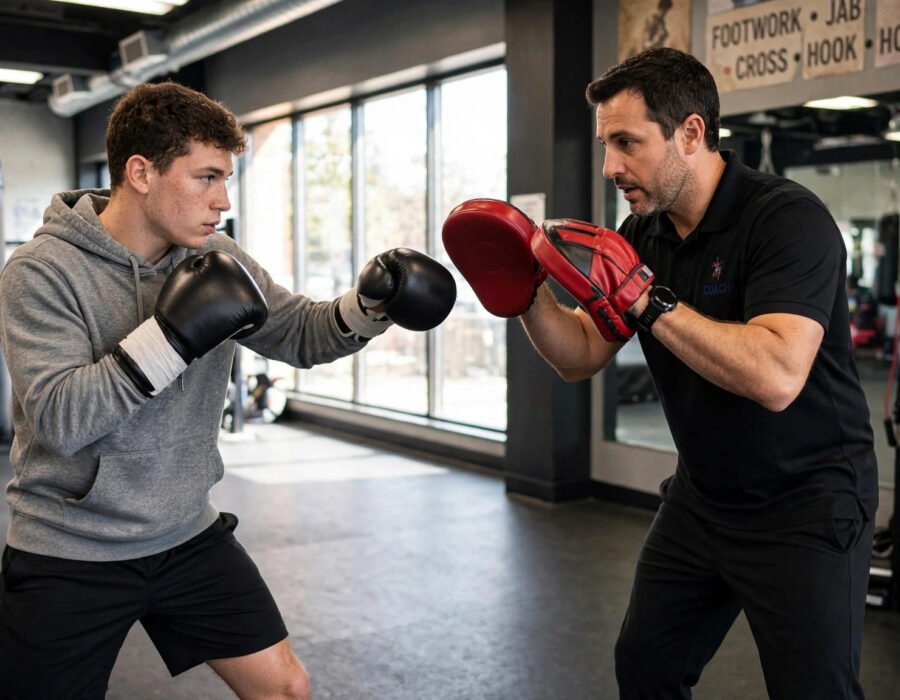
Boxing is having a moment — boutique boxing gyms are packed from Chicago to Kansas City, and “white-collar boxing” has gone from oddity to mainstream fitness trend. It’s also the workout with the most intimidating reputation: getting punched in the face is not most people’s idea of cardio. Here’s the truth beginners need: you can start boxing training without getting hurt, without sparring, and without any background in combat sports. In the Midwest, where boxing gyms range from old-school fight clubs to polished fitness studios, knowing how to start safely is the whole game.
What “Boxing Training” Means for Beginners (No, You Won’t Get Punched)
First, the critical distinction: boxing training and sparring are different things. Beginner boxing training means learning stance, footwork, and punches on heavy bags and focus mitts — with a coach, not an opponent. Sparring (actually boxing another person) is an advanced activity that comes months or years later, if ever. The vast majority of people in boxing fitness classes never spar at all.
A safe beginner program looks like this: warm-up (jump rope, shadowboxing), technique instruction, bag rounds, mitt work with a coach, conditioning, cool-down. Contact with another human: zero. The CDC’s injury prevention data consistently shows that supervised, non-contact boxing training carries injury rates comparable to other gym workouts — the danger reputation comes almost entirely from competitive sparring, which beginners shouldn’t do.
Finding a Safe Gym in the Midwest
Not all boxing gyms are beginner-friendly. Here’s how to tell:
- They offer a dedicated beginners’ program. Look for “fundamentals,” “intro to boxing,” or “boxing fitness” classes separate from fighter training. If the only option is jumping into the fighters’ session, keep looking.
- Coaches teach before they drill. A good coach spends your first sessions on stance and the jab — boring, essential, safe. A bad gym hands you gloves and points at a bag.
- They ask about injuries and experience. Any gym that doesn’t ask is a gym that doesn’t care.
- The vibe is controlled. Visit during a class. People should look focused, not chaotic. The heavy bag area shouldn’t feel like a bar fight.
- They don’t pressure sparring. “When do I get to spar?” should be answered with “when your fundamentals are solid, if you want to” — never with pressure or a timeline.
Midwest options include USA Boxing-sanctioned clubs (great coaching standards, often cheapest), boutique fitness boxing studios (pricier, very beginner-friendly), and YMCA/community programs. Prices run $80–$200/month for studios, often under $75 at traditional clubs.
The Safety Gear That Actually Matters
You don’t need much, but what you need matters:
- Hand wraps (180-inch). Non-negotiable. Wraps stabilize the 27 small bones in each hand and wrist. Learn to wrap properly — your coach will teach you in five minutes, and bad wrapping is how beginners hurt their hands on the bag.
- Gloves (14–16 oz for training). Heavier gloves protect your hands and your training partners’ mitts. Don’t buy competition-weight gloves as a beginner. Many gyms lend gloves initially — use theirs until you’re committed.
- Mouthguard. Even without sparring, a fitted mouthguard is cheap insurance once you start partner drills. Custom-fitted from a dentist beats boil-and-bite, but boil-and-bite beats nothing.
- Supportive shoes. Boxing shoes are ideal, but clean court shoes work for beginners. No running shoes with thick heels — they destabilize your stance.
Skip for now: headgear (only needed for sparring), groin protectors, and expensive “pro” gloves. The National Institutes of Health sports-medicine resources emphasize that in non-contact training, hand and wrist protection is where the real injury prevention happens.
The Beginner Technique Sequence
Safe boxing is learned in order. Don’t skip steps:
- Stance and footwork (weeks 1–2). Feet shoulder-width, dominant hand back, weight balanced, chin tucked. You’ll feel ridiculous. Everyone does. Footwork drills — stepping, pivoting — build the base everything else stands on.
- The jab and cross (weeks 2–4). The two fundamental punches. Learn them slowly on mitts before touching a heavy bag with power. Most beginner hand injuries come from hitting the bag hard with bad form in week one.
- Hooks and uppercuts (weeks 4–8). Added once the straight punches are clean. These generate power from hip rotation, not arm strength — which is exactly why they’re safe when taught right and dangerous when muscled.
- Defense basics (ongoing). Slipping, blocking, and footwork-based defense. Even if you never spar, defensive movement is half the workout and most of the fun.
- Combinations and bag rounds (month 2+). Stringing punches together on the heavy bag, 3-minute rounds with 1-minute rests. This is where boxing becomes the incredible cardio workout it’s famous for.
If you’re building overall fitness alongside boxing, starting exercise after years of inactivity and fueling morning workouts properly both apply — boxing sessions are demanding, and showing up fed and gradually conditioned prevents the week-one burnout that ends most beginners’ boxing careers.
Injury Prevention: The Non-Obvious Rules
- Warm up your wrists and shoulders specifically. General warm-ups aren’t enough — wrist circles, band pull-aparts, and shadowboxing with light hands prepare the exact joints boxing stresses.
- Never hit the bag at full power in your first month. Technique first, power later. The bag isn’t going anywhere.
- Stop when form breaks down. Tired punching is sloppy punching, and sloppy punching injures wrists and shoulders. Rest is training.
- Strengthen your neck and core. Even non-contact boxing loads these areas. Basic neck bridges (taught properly) and core work are standard in boxing programs for good reason.
- Tell your coach about everything. Old shoulder injury? Bad wrist? Dizziness? Coaches modify constantly — but only for problems they know about.
Conclusion
The safest way for beginners to start boxing training in the Midwest is simple: find a gym with a real beginners’ program, learn technique before power, wrap your hands every single time, and don’t spar until your fundamentals are solid — if ever. Boxing’s danger reputation belongs to competitive fighting, not to the bag rounds and mitt work that make up 99% of beginner training. Start smart, and you’ll get one of the best workouts in existence without a single black eye.
Frequently Asked Questions
Will I get hit in beginner boxing classes?
No. Beginner boxing training is non-contact — you hit bags and coach-held mitts, not people. Sparring is a separate, advanced activity that’s always optional. Most boxing fitness participants never spar.
How much does beginner boxing training cost in the Midwest?
Traditional boxing clubs often charge under $75/month; boutique boxing fitness studios run $100–$200/month. Many gyms offer a free or cheap trial class. Hand wraps ($10–$15) are your only required initial purchase.
Do I need to be fit before starting boxing?
No — boxing builds fitness; it doesn’t require it. Good beginner programs scale intensity to your level. That said, basic conditioning (walking, light cardio) in the weeks before you start makes the first sessions more enjoyable.
What injuries are common in beginner boxing?
Hand and wrist strains from poor wrapping or hitting the bag too hard too soon are the most common — both preventable with proper instruction and patience. Shoulder soreness from new movement patterns is normal; sharp pain is not. Supervised non-contact boxing has injury rates comparable to general gym training.
How long before a beginner can spar?
Most coaches want 3–6 months of solid fundamentals before light technical sparring, and many longer. There’s no required timeline — plenty of people train boxing for years without ever sparring, and that’s completely legitimate.