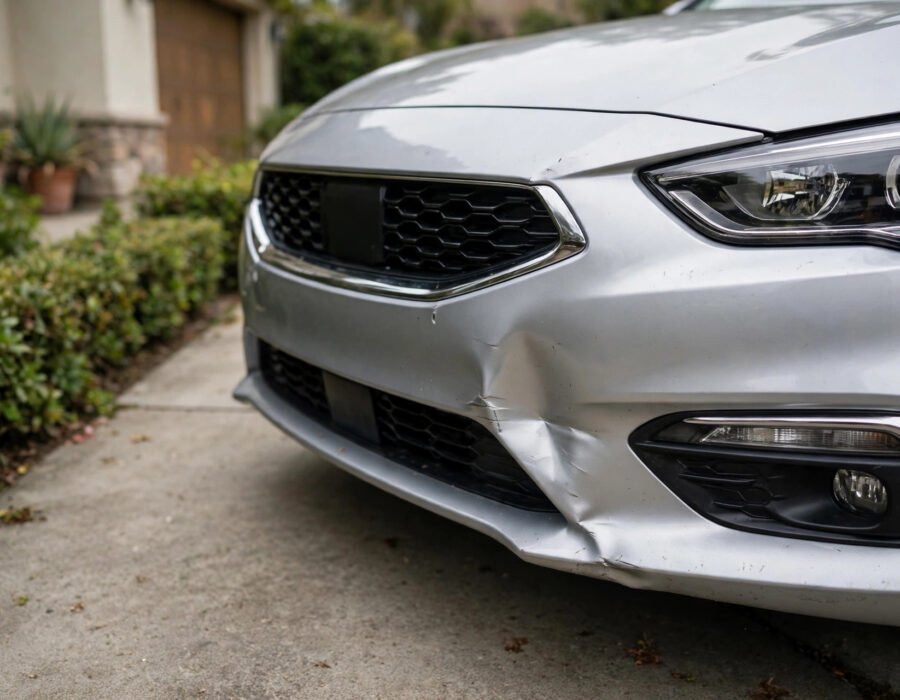
A shopping cart, a parking-lot tap, a stray basketball — bumper dents happen to everyone, and body shops quote 300 to 1,000 dollars or more for repairs that sometimes take an afternoon in your driveway. Modern bumpers are plastic covers over impact structures, which is actually good news for DIY: plastic dents often pop back with heat and pressure, no garage required.
Here is the honest time accounting for each driveway method, what results to realistically expect, the safety lines you must not cross, and when the dent is telling you to call a professional.
Method 1: Hot Water and Pressure (30 to 60 Minutes)
The classic driveway fix works on smooth, shallow dents in plastic bumpers with intact paint. Boil a kettle or large pot of water, pour it slowly over the dent to heat the plastic for two to three minutes, then push firmly from behind the bumper — reach under or through the wheel well — while the plastic is warm and pliable. Many dents pop out with an audible thunk. Total time: 30 to 60 minutes including setup.
Success rates are genuinely decent for the right dents: round, shallow, no creases, paint uncracked. It fails on sharp creases, dents on body lines or edges, and any dent where paint is cracked or flaking — pushing those risks worsening the cosmetic damage. Cost: essentially zero. This is the first thing to try on every eligible dent, because the downside is an hour lost and the upside is a 500 dollar repair avoided.
Method 2: Plunger or Suction Puller (20 to 40 Minutes)
For dents on flat bumper sections, a suction approach avoids reaching behind the panel. A clean sink plunger dedicated to the car, or a 15 to 25 dollar automotive suction dent puller from an auto parts store, can grip smooth dents and pull them outward. Wet the surface first for a seal, press firmly, and pull with steady pressure — jerking tears the seal or the paint.
Time: 20 to 40 minutes. Best for medium shallow dents on flat areas where you cannot easily reach behind. Limitations mirror the hot-water method — creases and cracked paint are disqualifiers — plus suction needs a smooth clean surface to grip. Combining methods works well: heat with hot water first, then pull with suction while the plastic is warm. Many driveway successes are heat-plus-suction combos taking under an hour total.
For the authoritative take, visit National Highway Traffic Safety Administration.
Method 3: Heat Gun and Shaping (1 to 2 Hours)
A heat gun (25 to 40 dollars) gives more controlled heat than boiling water for stubborn dents. Keep the gun moving six to eight inches from the surface to avoid melting or blistering the paint — this is the main risk, and it ruins finishes fast. Warm the dented area evenly for several minutes, then push from behind with a gloved hand or a cloth-wrapped wooden dowel.
Time: one to two hours with cooling and checking cycles. This handles deeper dents that hot water cannot, but demands patience and heat discipline — rushing with more heat is how DIYers create a 1,000 dollar paint problem while fixing a 300 dollar dent. If the paint bubbles or discolors, stop immediately; you have crossed from dent repair into refinish territory, which is professional work.
Paint Damage: The Line Between DIY and Pro
Here is the critical distinction: dent repair is DIY-able, but paint repair mostly is not. If the paint is cracked, flaking, or scraped to primer, popping the dent leaves visible damage that only repainting fixes — and bumper repainting needs a spray booth for a factory match. Touch-up paint (15 to 30 dollars) can hide small chips acceptably on daily drivers, but large scraped areas will look wrong without professional refinishing.
The decision rule: dent with perfect paint — DIY confidently. Dent with minor chips — DIY the dent, touch up the chips, accept 90 percent. Dent with cracked or missing paint over a large area — get a body shop quote, because you need paint work regardless. Honest expectation-setting here saves the most common DIY regret: a perfectly popped dent surrounded by paint damage that looks worse than the original dent did.
When the Dent Means Structural Damage
Bumpers are safety equipment, not decoration. The plastic cover hides an impact bar and energy absorbers designed for one good hit. If the impact was hard enough to crack the cover, misalign it, damage mounting tabs, or trigger any sensor warnings (parking sensors, blind-spot monitors live in bumpers now), the underlying structure may be compromised — and compromised crash structures do not protect you twice.
Warning signs: the bumper cover does not sit flush after popping, clips or tabs are broken, there is damage to the reinforcement bar visible behind the cover, or driver-assistance features malfunction. In these cases, DIY is not just cosmetic gambling — it is a safety decision. A professional inspection (often free at body shops) tells you whether you are fixing looks or safety. Never ignore sensor errors after a bumper hit; recalibration needs professional equipment.
You can verify the details at Consumer Reports.
Touch-Up Paint: Doing It Right
For small chips where the dent popped cleanly, touch-up paint can make the repair nearly invisible. The method: clean the chip thoroughly, apply thin layers with a fine brush or toothpick (never glob — multiple thin coats beat one thick one), let each layer dry fully, and finish with clear coat for chips larger than a few millimeters. Factory-matched paint pens (15 to 30 dollars from dealers or online by paint code) beat generic color-matched bottles.
Know the limits: touch-up hides chips; it does not refinish scrapes. Large scraped areas touched up look like large scraped areas with paint on them — acceptable on a 12-year-old daily driver, embarrassing on a 2-year-old car. For lease returns, professional spot repair (150 to 300 dollars) often pays for itself against lease-end damage charges. The rule: touch-up for chips, pro for scrapes, and honest assessment of which you have.
The full background is available at Edmunds.
Keep exploring with renting a car for a week and finding cheap gas on road trips.
Fixing a dented bumper without a garage takes 20 minutes to two hours depending on method: suction pulling for quick flat dents, hot water and pressure for the classic pop, a heat gun for stubborn ones. The methods work beautifully on smooth dents with intact paint and fail on creases, edges, and cracked paint — know which dent you have before starting. And respect the safety line: hard hits can damage the crash structure and sensors behind the cover, which is professional territory. For the everyday parking-lot dent, though, your driveway and a kettle are genuinely enough.
Frequently Asked Questions
Will the hot water method damage my car's paint?
Boiling water poured briefly over automotive paint is safe — paint cures at far higher temperatures. The risk comes from heat guns held too close for too long, which can blister paint. Keep heat sources moving and at a distance.
How much does a body shop charge for a bumper dent?
Typically 300 to 1,000 dollars or more depending on dent severity and whether repainting is needed. Paint work is what drives costs up — dent-only repairs are the cheaper end.
Can I fix a dent if the paint is cracked?
You can pop the dent, but the cracked paint remains and usually looks worse. Small chips can be touched up at home; large cracked or missing paint areas need professional refinishing for an acceptable result.
Is it safe to drive with a dented bumper?
Cosmetic dents in the plastic cover are safe. But hard impacts can damage the impact bar, absorbers, and bumper-mounted sensors behind the cover — if the bumper is misaligned, cracked through, or sensors malfunction, get a professional inspection.