You’re 35, standing in a store, holding something you would’ve loved at 22 and hating everything else. Your style hasn’t caught up with your life. If you’re asking how to find your personal style as an adult, here’s the liberating truth: personal style isn’t found — it’s built, deliberately, from observation and experimentation. And it’s supposed to evolve. The goal isn’t a fixed “look”; it’s a coherent wardrobe that feels like you on your best day.
Start With Observation (Not Shopping)
- Audit your actual favorites. Which 5 things do you reach for constantly? What do they share — colors, fabrics, silhouettes? Your style is already hiding in your habits.
- Notice envy, not admiration. When you think “I wish I could pull that off” about someone — that’s data. Save the photo. After 20 saves, patterns emerge.
- Build a reference board (Pinterest, phone album). Not to copy outfits — to identify your recurring themes: minimal? classic? edgy? relaxed?
- Identify your anti-style. What do you never want to wear again? Equally informative.
Define Your Three Words
Stylists use this exercise: describe your ideal style in three adjectives. Examples: “polished, minimal, architectural” / “relaxed, earthy, creative” / “sharp, classic, understated.” Every purchase must satisfy at least two of the three words. This single filter eliminates 80% of bad buys — the “cute but not me” trap that fills closets with unworn clothes (see the nothing-to-wear paradox).
Dress for Your Actual Life
Style that ignores lifestyle is costume. Map your week honestly:
- Work %: office, remote, creative, uniform? (Remote? See dressing professionally from home.)
- Social %: dinners, events, dates?
- Casual %: weekends, errands, kids?
Allocate your wardrobe budget proportionally. The classic mistake: a closet full of occasion wear and nothing for Tuesday.
Experiment Cheaply, Commit Carefully
- Thrift your experiments. Trying a new silhouette? Don’t pay full price for the test version.
- One new element at a time. New color, new cut, or new style — not all three at once. You’ll know what worked.
- The 3-wear test: before keeping something new, imagine 3 specific outfits with pieces you own. Can’t? Don’t buy it.
- Live with it 30 days before deciding a new direction is “you.” First impressions lie; comfort tells the truth.
Refine Over Time
Personal style is a direction, not a destination. Review twice yearly: what’s working, what’s ignored, what’s changed in your life. A capsule wardrobe is the natural expression of found style — and refreshing without buying keeps it evolving cheaply. For the psychology, how clothing shapes identity covers why this matters beyond vanity.
Style Icons by Decade: Learning From the Best
You don’t need to invent style from nothing — study the masters. Each decade produced icons whose principles still apply.
20s–30s finding footing: study Alexa Chung and Timothée Chalamet — both built distinctive styles from thrifted, mixed high-low pieces. Lesson: personality over price, and the confidence to wear the unexpected.
30s–40s refining: study Victoria Beckham and David Beckham — minimalist, tailored, consistent. Lesson: editing is the skill; knowing what not to wear defines style more than what you do wear.
40s–50s owning it: study Cate Blanchett and Idris Elba — bold choices worn with total ease. Lesson: the best-dressed people at this stage dress for themselves; the confidence is the style.
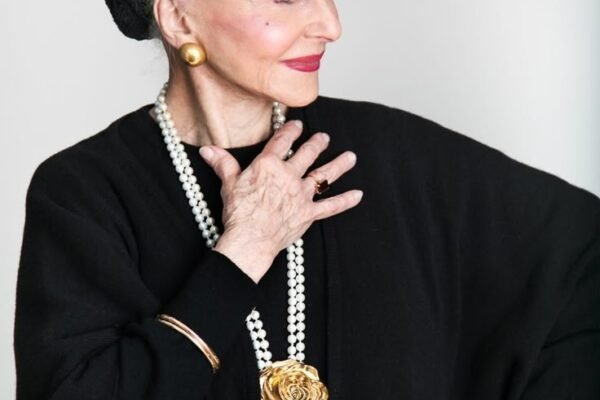
60s+ transcending: study Iris Apfel and Anthony Hopkins — proof that style deepens with age. Lesson: accessories, color, and character only get better; “dressing your age” means dressing your self.
How to study: don’t copy outfits — extract principles. What silhouettes recur? What color stories? What attitude? Your three style words (from earlier) should resonate with your chosen icons. If they don’t, pick different icons — or different words.
Style is a conversation across generations. Join it by learning from those who mastered it, then speaking in your own voice.
Style Icons by Decade: Steal Like an Artist
You don’t need to invent a style from nothing — study the masters and adapt. Here’s who to study per era.
Timeless minimalists: Carolyn Bessette-Kennedy (90s restraint), Phoebe Philo’s Céline era (2010s quiet luxury before it had a name). Study their proportion, palette discipline, and fabric quality.
Classic menswear: Steve McQueen, Paul Newman — the “effortless” look that was actually precise: perfect fit, simple pieces, nothing extra. The blueprint for masculine minimalism.
Bold individualists: Iris Apfel (maximalism with intention), David Bowie (reinvention as identity). Proof that strong personal style beats “flattering” every time — wear the conviction, not just the clothes.
Modern adapters: study people with your body type and lifestyle, not just celebrities with stylists. Instagram and Pinterest are useful here — but curate ruthlessly. Follow 10 accounts that dress like the person you’re becoming, not 100 that dress like fantasies.
How to steal properly: don’t copy outfits — extract principles. “She always defines her waist” or “he sticks to three colors” are transferable; “that exact jacket” isn’t. Three principles from three icons, filtered through your life, becomes something original. All style is theft done well.
When Your Style Needs a Reset
Styles expire — bodies change, careers shift, tastes evolve. Signs you need a reset: getting dressed feels like a chore, nothing excites you, or your clothes belong to a past life (the corporate wardrobe after going freelance). The reset process: audit ruthlessly (keep only what fits the current life), identify the 3 outfits you feel best in (that’s your new compass), and rebuild slowly — one intentional piece per month. Style isn’t found once; it’s re-found every few years. The reset is the skill.
Key Takeaways
- Style is built from observation: audit favorites, save what sparks envy, find patterns.
- Define three style words; every purchase must match at least two.
- Build for your actual lifestyle proportions, not an aspirational one.
- Experiment via thrift; use the 3-outfit test before buying.
- Review twice yearly — style evolves with life.
The Bottom Line
Finding your personal style as an adult means observing what you actually love, naming it in three words, and building deliberately for your real life. It’s not a revelation — it’s a practice. Start with the audit this weekend; in six months, getting dressed will feel like expressing yourself instead of solving a problem.