Standing in the flooring aisle, the choice between real wood and its imitators feels momentous — and expensive either way. The question how do I choose between hardwood and laminate flooring doesn’t have a universal answer, but it has a clear decision framework. I’ve lived with both (oak in one house, quality laminate in another), and the right choice depends on your budget, lifestyle, and how long you’ll stay. Here’s the honest comparison.
The one-sentence version: choose hardwood if budget allows and you value authenticity, longevity, and resale; choose laminate if budget matters most and you need durability on a dime. But the details matter enormously — especially which laminate, because the category spans from garbage to genuinely good.
How Do I Choose Between Hardwood and Laminate Flooring? Head-to-Head
- Cost installed: hardwood $8-15/sq ft (solid), $8-14 (engineered); laminate $2-6/sq ft. For 1,000 sq ft: $3,000-6,000 vs. $8,000-15,000. Laminate wins decisively.
- Durability/scratches: quality laminate (AC4+) resists scratches better than most hardwood — the aluminum-oxide wear layer is harder than wood finish. But deep damage can’t be repaired (replace the plank). Hardwood scratches more easily but can be refinished 5-10 times (solid) — it heals.
- Water resistance: hardwood hates water (cupping, staining). Standard laminate hates water too (swelling at seams). New water-resistant laminate and LVP change this equation — if moisture is a concern, neither traditional option is ideal; consider pet-friendly flooring options instead.
- Lifespan: hardwood 50-100+ years (refinishable). Laminate 15-25 years (replace when worn). Hardwood is a lifetime floor; laminate is a long-term floor.
- Resale value: hardwood adds measurable resale value ($5,000-10,000+ premium on typical homes, per realtor surveys). Laminate adds little — it’s neutral, not a selling point. If selling within 5 years, hardwood’s ROI often justifies the premium.
- Feel/sound: hardwood feels solid and sounds right. Laminate can feel hollow and clicky (underlayment quality matters enormously — don’t skimp).
- Repairs: hardwood spot-repairs and refinishes beautifully. Laminate plank replacement is possible (click-lock) but color-matching aged floors is hard.
The Laminate Quality Spectrum (This Matters Most)
“Laminate” covers a huge range. The AC rating system is your guide:
- AC1/AC2: residential light use. Thin, scratches easily, looks cheap. Avoid — this is the laminate that gives laminate a bad name.
- AC3: residential heavy use. Acceptable for bedrooms, living rooms with normal traffic.
- AC4: commercial light / residential heavy. The sweet spot — durable, good-looking, $3-5/sq ft. This is the minimum I’d install.
- AC5: commercial heavy. Overkill for most homes but bulletproof.
Also check: thickness (10-12mm feels substantially better than 7-8mm), attached pad (saves a step, improves sound), beveled edges (look more like real planks), and water-resistant core (increasingly standard, worth seeking).
Hardwood: Solid vs. Engineered
If you choose wood, another decision:
- Solid hardwood: 3/4″ solid wood. Refinishable many times, lasts a century, the gold standard. Can’t go below grade (basements) or over radiant heat without care. $8-15 installed.
- <
- Engineered hardwood: real wood veneer over plywood. More dimensionally stable (basements OK, radiant heat OK), 1-2 refinishes possible. Looks identical once installed. $8-14 installed. The practical choice for most modern homes.
Species guidance: oak (the default — hard, affordable, takes stain well), hickory (hardest domestic, rustic look, great for active households), maple (smooth, modern, shows dents more), walnut (gorgeous, softer, premium price). Avoid American cherry (soft) and Brazilian cherry (fashion-dated) for most uses.
Decision Framework: Ask These Questions
- Budget under $5/sq ft installed? Laminate (AC4+) or LVP. Hardwood isn’t happening at this price.
- Selling within 5 years? Hardwood usually pays for itself in resale premium. Laminate is fine if the current floor is terrible (anything beats bad carpet).
- Pets/kids/heavy traffic? AC4+ laminate or LVP handles abuse better day-to-day than hardwood (though hardwood can be refinished eventually).
- Staying 15+ years? Hardwood’s lifetime cost per year is actually lower — buy once, refinish occasionally, versus replacing laminate twice.
- Below grade (basement)? Engineered hardwood or laminate/LVP only. Solid hardwood will fail.
- Do you just love real wood? Honest factor. You’ll touch this floor daily for years. If hardwood makes you happy and budget allows, the premium is worth it.
Installation Notes
- Both are DIY-able as click-lock floating floors (engineered and laminate). Solid hardwood nail-down is pro territory.
- Acclimate the flooring in the installation space for 48-72 hours. Skipping this causes gaps/buckling.
- Underlayment matters: for laminate, a quality underlayment ($0.50-1/sq ft) transforms the feel and sound. Don’t use the cheapest foam.
- Keep 10% extra for cuts, mistakes, and future repairs.
The Stair Exception
Whatever you choose for the main floors, think separately about stairs. Stairs take brutal, concentrated wear — every footstep lands on the nosing edge. Solid hardwood stair treads (or engineered with thick wear layer) are worth the premium here even if you use laminate elsewhere; they can be refinished when the nosings wear, while laminate stair nosings are nearly impossible to replace without redoing the whole flight. Many homeowners do laminate or LVP throughout and solid wood on stairs — the transition is invisible with matching stain, and you get durability where it counts most. Stairs are also where slip resistance matters most; a slightly textured finish beats glossy.
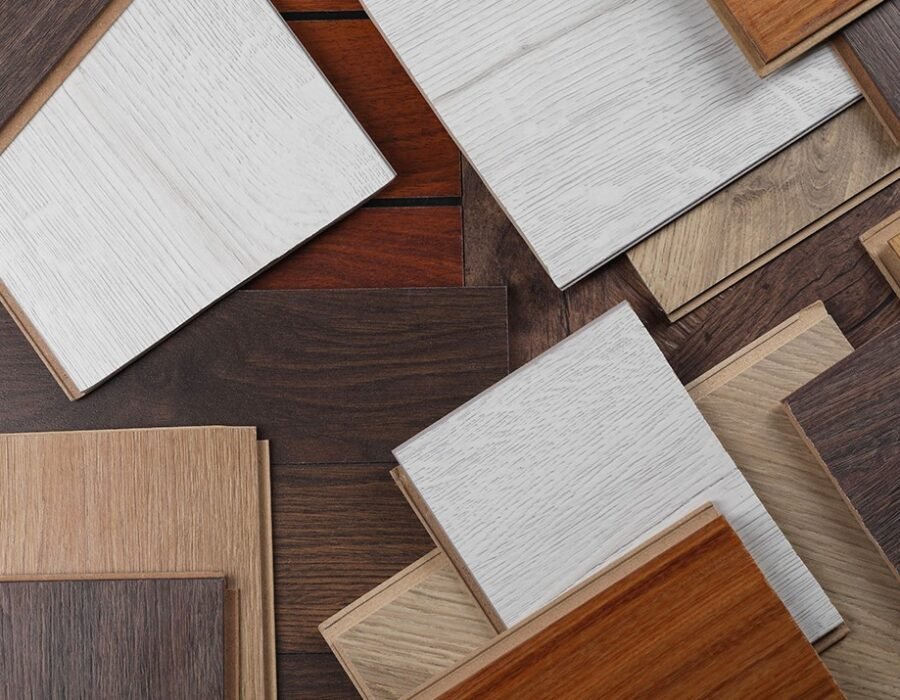
Whatever you decide, order samples and live with them for a week. Place them in the actual room, walk on them in socks, spill a little water, drag a chair. Showroom lighting lies; your living room doesn’t. Most manufacturers and retailers offer free or cheap samples. This simple step prevents more flooring regret than any amount of research, because the right choice is the one that feels right under your feet in your light.
Related reading: for more on this topic, see best flooring for pet owners and silencing squeaky floors, plus National Wood Flooring Association.
The Bottom Line
How do I choose between hardwood and laminate flooring? Get AC4+ laminate if budget is the driver — it’s durable, attractive, and a massive upgrade over worn carpet. Choose hardwood (engineered for practicality, solid for purists) if you’re staying long-term, selling soon, or simply want the real thing — it’s a lifetime floor that adds resale value. Either way, invest in quality within the category: premium laminate beats cheap hardwood, and cheap anything looks cheap within 5 years.