
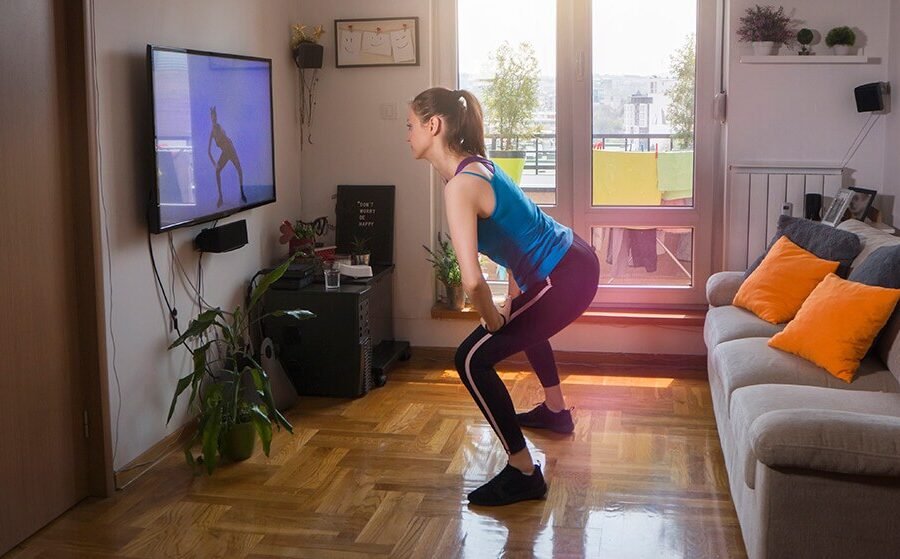
You want to get in shape. Gym memberships are expensive, personal trainers are more expensive, and generic YouTube workouts don’t account for your bad knee, your 30-minute window, or the fact that you own exactly two dumbbells and a resistance band. This is where AI quietly excels: building a personalized home workout plan around YOUR body, YOUR equipment, YOUR schedule, and YOUR goals. Here’s how to use AI to make a workout plan at home that you’ll actually follow — because the best plan is the one that fits your real life.
A quick note on my approach here: I’m not going to give you a one-size-fits-all routine, because those are exactly what doesn’t work. Instead, I’ll show you how to generate YOUR plan — and the principles that make any plan effective. The AI is your personal trainer’s programming brain; you still need your own judgment about your body.
How to Use AI to Make a Home Workout Plan: The Method
The prompt is everything. Give AI the variables that matter:
- Your starting point: “Sedentary office worker, haven’t exercised in 3 years” versus “former college athlete getting back into it” produce radically different plans. Be honest — the AI can’t see you, so your self-assessment is its only data.
- Equipment: List exactly what you have. “Two 15-lb dumbbells, a resistance band, a yoga mat, and a sturdy chair” is perfect. AI is excellent at designing around limited equipment — some of the best home programs use bodyweight alone.
- Time: “30 minutes, 4 days a week” / “20 minutes daily, mornings only.” Realistic time boxes beat aspirational ones. A plan you can do consistently beats a perfect plan you abandon.
- Goals: General fitness, weight loss, strength, mobility, training for a specific event — each demands different programming. “Lose 20 pounds” and “do 10 pull-ups” need different plans.
- Limitations: Bad knee, lower back issues, pregnant, post-surgery — disclose everything. AI will route around limitations, but only if it knows them. (And see the safety section below — this doesn’t replace medical guidance.)
- Preferences: “I hate burpees” / “I prefer morning workouts” / “I get bored easily, need variety.” Adherence is the whole game; preferences drive adherence.
Example prompt: “Create a 4-week progressive home workout plan. I’m a 35-year-old beginner, haven’t exercised in years. I have 30 minutes on Mon/Wed/Fri/Sat, two 15-lb dumbbells and a resistance band. Goal: general fitness and losing some weight. I have occasional knee discomfort with deep squats. Include warm-up, main workout, and cool-down for each day, with rest day guidance.”
What Makes an AI Workout Plan Actually Good
Judge the output against these principles — if the plan violates them, ask AI to fix it:
- Progressive overload: The plan should get gradually harder over weeks — more reps, more sets, harder variations. If week 4 looks identical to week 1, it’s not a plan, it’s a routine. Ask explicitly: “make each week slightly more challenging than the last.”
- Balanced movement patterns: Push (push-ups), pull (rows), squat, hinge (deadlift patterns), carry, and core — a good plan covers all of these across the week. If everything is abs and arms, it’s unbalanced.
- Rest and recovery: Muscles grow during rest, not during workouts. The plan should include rest days and not hammer the same muscles daily. “Is this enough recovery between sessions?” is a great follow-up question.
- Warm-up and cool-down: Non-negotiable, especially for beginners and anyone over 30. Five minutes of each prevents the injuries that derail fitness journeys.
- Form cues: Ask AI to include form descriptions for each exercise: “Describe proper form for each exercise, including common mistakes.” Better yet, ask for video search terms so you can watch demonstrations. Bad form with good programming still causes injuries.
For the official activity guidelines underpinning sound programming, the CDC’s physical activity recommendations for adults lay out the evidence-based weekly targets: 150 minutes of moderate activity or 75 minutes of vigorous activity, plus muscle-strengthening twice weekly. Ask AI to build your plan around these targets.
Staying Consistent (Where Most Plans Die)
The plan is 20% of success; adherence is 80%. AI can help here too:
- Ask for a tracking system: “Create a simple workout log template I can use to track each session.” Tracking creates accountability and shows progress — the most motivating thing in fitness.
- Plan for bad days: “Give me a 10-minute minimum-viable workout for days I can’t do the full session.” The all-or-nothing mindset kills more fitness journeys than any injury. Something always beats nothing.
- Schedule it like an appointment: Ask AI to help you find the optimal workout slots in your weekly schedule. Then protect them like meetings with your most important client — because it’s a meeting with your future self.
- Reassess monthly: “I’ve completed 4 weeks. Here’s what felt easy/hard [describe]. Design the next 4-week block.” Progressive programming over months is how real transformation happens.
If you’re starting from zero after years off, our guide to starting exercise after years of inactivity covers the crucial first steps — including when to get medical clearance. And remember the research consensus: consistency over months beats intensity over days. People who exercise moderately and consistently get dramatically better results than those who go hard sporadically. Track simply, celebrate streaks, forgive the occasional missed day — the pattern matters, not perfection.
Safety: The Non-Negotiable Part
Be straight with yourself about when to get professional input. See a doctor before starting if you have cardiovascular conditions, chest pain, severe joint issues, are pregnant with complications, or haven’t exercised in years and are over 40. Stop and seek care for sharp pain (not muscle burn — sharp, joint, or chest pain), dizziness, or anything that feels wrong. AI doesn’t know your medical history and can’t see your form. Consider even one session with a certified personal trainer to learn proper form for key movements — it’s the highest-ROI fitness investment most beginners can make. AI is a brilliant programming assistant; it’s not a medical professional and not a form coach.
If you’re starting from zero after years off, begin with our guide to starting exercise after years of inactivity before jumping into full programming. Build the base first; the AI-programmed workouts will be waiting when you’re ready for them.
The Bottom Line
To make a home workout plan with AI: brief it thoroughly on your fitness level, equipment, schedule, goals, limitations, and preferences; verify the output against progressive overload, balanced movements, recovery, and form cues; build in tracking and minimum-viable workouts for bad days; and reassess monthly. Ground your targets in the CDC’s activity guidelines, get medical clearance if you need it, and prioritize consistency over intensity. The best home gym in 2026 isn’t equipment — it’s an AI that programs like a trainer, patience like a coach, and availability like… well, like software. Your move: write the prompt tonight, work out tomorrow morning. Future you is waiting.




1 Comment