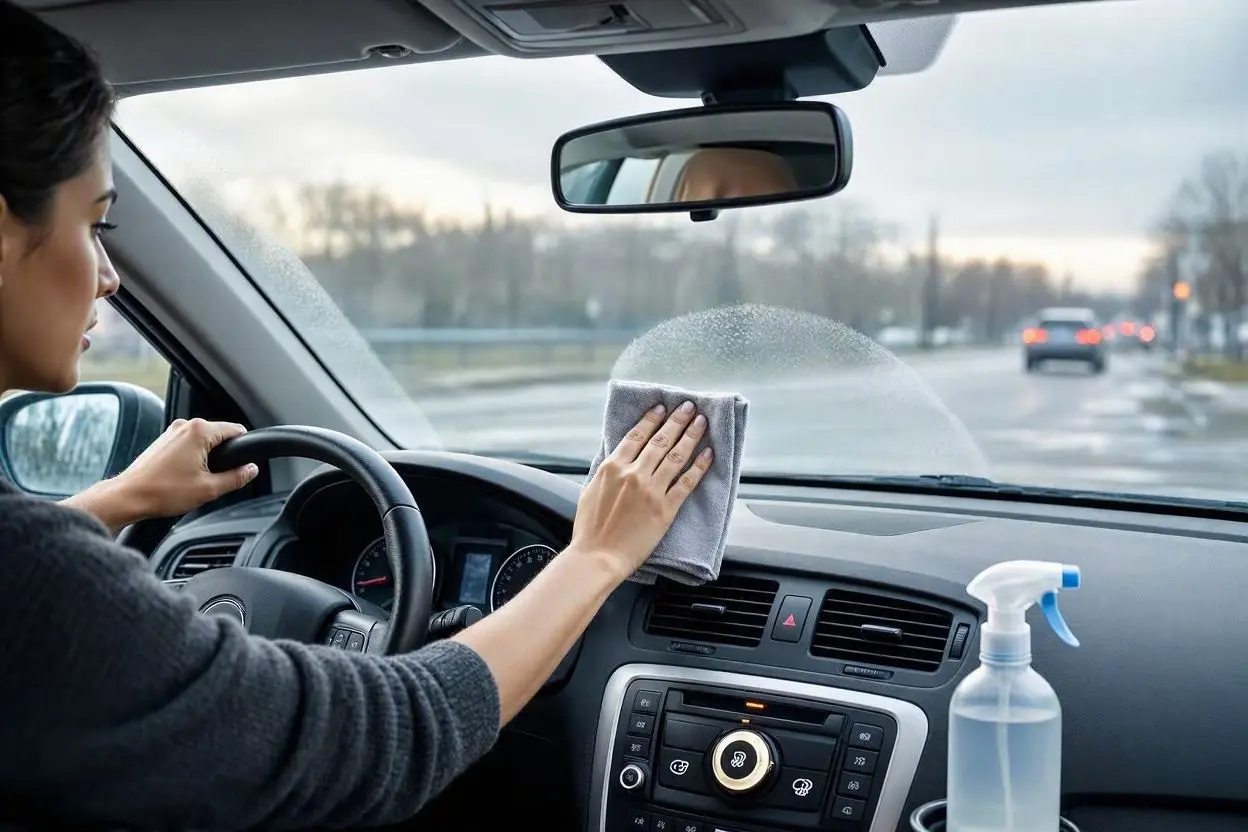
Foggy car windows can be annoying, but they can also become dangerous when you are driving. When the windshield or side windows fog up, your view of the road becomes harder to see.
The good news is that you can usually clear foggy windows quickly. Turn on the windshield defroster, switch on the air conditioning, use fresh outside air, and increase the airflow toward the glass. It also helps to keep the windows clean and reduce moisture inside the car.
Here is what causes car windows to fog up and what you can do to stop it.
Why Do Car Windows Fog Up?
Car windows fog up when moisture in the air touches a cold glass surface. The moisture turns into tiny water droplets, creating the cloudy layer you see on the window.
This often happens when there is a big difference between the temperature inside and outside the car.
Several things can increase the moisture inside your vehicle, including:
- People breathing inside the car
- Wet clothes or shoes
- Rainwater brought into the car
- Wet floor mats
- High humidity outside
- Using the wrong climate-control setting
- Keeping the windows closed when the cabin is humid
Fogging is especially common during cold weather and rain because the windows can become much colder than the air inside the vehicle.
How to Stop Car From Fogging Up Quickly
If your windshield suddenly becomes foggy while you are getting ready to drive, you want to clear it as quickly as possible.
Follow these steps.
1. Turn On the Windshield Defroster
Start by selecting the windshield defrost or defog setting.
This directs air toward the windshield and helps remove the moisture that has collected on the glass.
If your car has a dedicated front windshield button, use it rather than simply pointing the normal vents toward yourself.
2. Turn On the Air Conditioning
Using the air conditioner can help remove moisture from the air inside your car.
You can use the A/C even when the weather is cold. The goal is not simply to make the cabin colder. The system helps dry the air, which can help clear condensation from the windows.
For many vehicles, using the A/C together with the defroster is an effective way to clear a foggy windshield.
3. Use Fresh Outside Air
Check whether your climate control is set to recirculate cabin air.
If it is, switch to fresh outside air when your windows are fogging up.
Recirculation keeps the same air moving around the cabin. If that air already contains a lot of moisture, the moisture can remain inside the car.
Fresh air can help replace humid cabin air.
4. Increase the Fan Speed
Turn up the fan so more air reaches the windshield.
A stronger airflow can help clear the moisture from the glass faster.
Once the windshield is clear, you can lower the fan speed if needed.
5. Adjust the Temperature
Set the temperature to a comfortable level while keeping airflow directed toward the windshield.
The exact temperature setting can vary depending on the weather and your vehicle.
The important part is to get dry airflow onto the glass and remove the moisture causing the fog.
6. Crack the Windows Slightly
If the inside of the car is very humid, opening a window slightly can help let moist cabin air escape.
This can be useful when the weather is not too cold or wet.
You should only do this when it is safe and practical.
7. Clean the Glass
A dirty windshield can make fogging more noticeable.
Dust, fingerprints, smoke residue, and other film on the glass can give moisture more places to collect.
Clean the inside of the windshield regularly with a suitable glass cleaner and a clean microfiber cloth.
How to Stop Car Windows From Fogging Up in Winter

Winter is one of the most common times for car windows to fog up.
The outside air is cold, which makes the glass cold. When warm, moist air inside the car touches that cold glass, condensation forms.
To reduce winter fogging:
- Use the windshield defroster
- Turn on the A/C
- Use fresh outside air
- Keep the windshield clean
- Remove wet items from the vehicle
- Dry wet floor mats
- Avoid leaving unnecessary moisture inside the car
Do not wait until the windshield becomes completely covered before dealing with the problem. If visibility starts getting worse, clear the glass before continuing to drive.
How to Stop Car Windows From Fogging Up in Rain

Rainy weather can make fogging worse because the air is already humid and people often bring water into the vehicle on their clothes and shoes.
If your windows fog up while it is raining, turn on the windshield defroster and A/C. Use fresh outside air instead of keeping the cabin air on recirculation.
Also check your floor mats. Wet mats can add a surprising amount of moisture to the cabin.
If your car keeps fogging up even after you have used the correct climate settings, look for other sources of moisture inside the vehicle.
How to Prevent Your Car From Fogging Up
Clearing fog is only half the solution. If your car fogs up regularly, try to reduce the amount of moisture inside it.
Keep Wet Items Out of the Car
Wet coats, umbrellas, shoes, towels, and other items can increase humidity inside the cabin.
Remove them when possible.
Dry Your Floor Mats
Wet floor mats can hold water for a long time.
If you regularly get into the car with wet shoes, check the mats and let them dry when necessary.
Keep Your Windows Clean
Clean glass is easier to keep clear.
Give the inside of your windshield and side windows a regular clean, especially if you notice a greasy or cloudy film.
Check for Water Inside the Car
If your vehicle is always damp inside, there may be a source of unwanted moisture.
Check for:
- Wet carpets
- Damp floor mats
- Water around doors
- Leaks after rain
- Moisture in the trunk
If you cannot find the source, a mechanic or automotive professional can inspect the vehicle.
Should You Use Recirculate or Fresh Air When Windows Fog Up?
Fresh outside air is generally the better choice when your windows are fogging up.
The recirculation setting keeps cabin air moving through the vehicle. This can be useful in many situations, but it may keep humid air trapped inside when you are trying to remove condensation.
Switching to fresh air allows outside air to enter the cabin and can help reduce the moisture level.
Your vehicle’s climate-control system may also automatically change settings when you select the windshield defrost mode.
Does Air Conditioning Stop Car Windows From Fogging?
Air conditioning can help reduce fogging because it removes moisture from the air.
Many drivers think of A/C only as a way to cool the car, but it can also help dry the air inside the cabin.
That is why using the A/C with the windshield defroster can be helpful even during cold weather.
What Is the Fastest Way to Defog a Windshield?
The quickest approach is usually to turn on the windshield defroster, switch on the A/C, use fresh outside air, and increase the fan speed.
Direct the airflow toward the windshield and give the system time to clear the glass.
If visibility is seriously reduced, do not continue driving until you can see the road clearly.
How to Stop the Windshield From Fogging Up While Driving

Fogging can happen quickly after you start driving, especially when the weather is cold or rainy.
If your windshield starts fogging up:
- Turn on the windshield defroster.
- Turn on the A/C.
- Switch from recirculated air to fresh air.
- Increase the fan speed.
- Keep your attention on the road.
- Pull over somewhere safe if visibility becomes too poor to drive safely.
Do not rely on repeatedly wiping the windshield with your hand or a cloth while driving. It can distract you and may only provide temporary visibility.
Why Does My Car Keep Fogging Up Even With the Defroster On?
If your car continues fogging up despite using the defroster, there may be too much moisture inside the cabin or an issue affecting airflow.
Start by checking the simple things.
Look at your floor mats and carpets. Make sure they are not wet. Check that the climate system is bringing in fresh air and that the airflow is reaching the windshield properly.
A dirty cabin air filter or an HVAC problem can also affect airflow.
If the windows continue to fog heavily or you notice dampness inside the vehicle, it is worth having the car inspected.
Can a Dirty Windshield Cause Fogging?
A dirty windshield can make condensation more noticeable.
Oil, dust, fingerprints, and other residue can leave a thin film on the glass. When moisture collects on that surface, the windshield can look even hazier.
Clean the inside of the windshield regularly with a proper automotive glass cleaner and a clean microfiber cloth.
Do not depend on wiping the glass with your hand. It can leave more oils behind.
Can a Cabin Air Filter Cause Foggy Windows?
A cabin air filter that is heavily blocked or dirty can reduce airflow through the vehicle’s ventilation system.
If airflow is weak, the defroster may take longer to clear the windshield.
This does not mean a dirty cabin filter is always the reason for fogging. Moisture inside the car and weather conditions are also common causes.
If you have weak airflow along with regular fogging, checking the cabin air filter may be worthwhile.
How to Defog Different Car Windows
Not every window in your car works in exactly the same way.
Front Windshield
Use the front windshield defroster. This directs warm or conditioned airflow toward the glass and helps remove condensation.
Side Windows
Side windows may clear more slowly because they usually receive less direct airflow.
Keep the climate system running and use the front defrost setting if it helps direct air toward the sides.
Rear Window
Many vehicles have an electric rear defogger.
Look for the rear-window defogger button on your dashboard. It uses heating elements built into the rear glass to help clear condensation.
Foggy Windows vs. Frosty Windows

Fog and frost are not the same thing.
Fog is liquid condensation that forms when moisture collects on the glass.
Frost forms when moisture freezes on a cold surface.
Fog can usually be cleared with the vehicle’s climate-control system. Frost needs to be removed carefully before driving.
Never drive with your windows covered by frost or heavy condensation because your visibility may be seriously reduced.
When Fogging Could Mean There Is a Problem With Your Car
Occasional fogging is normal, especially during cold or rainy weather.
However, constant or unusual fogging can sometimes point to a moisture or vehicle problem.
Pay attention if you notice:
- Damp carpets
- Wet floor mats that never seem to dry
- Water inside the cabin
- A strong unusual smell
- Very weak airflow from the vents
- Fogging that happens constantly
- Problems with the defroster
- Moisture returning immediately after clearing the glass
If you cannot find the reason, have the vehicle checked by a qualified mechanic.
Common Mistakes That Make Car Windows Fog Up
A few simple habits can make fogging worse.
Leaving Recirculation On
If the cabin air is humid, constantly recirculating it can keep moisture inside.
Ignoring Wet Floor Mats
Wet mats can add moisture to the cabin for hours.
Only Wiping the Glass
Wiping the windshield may clear it temporarily, but it does not remove the moisture causing the problem.
Not Using the A/C
The A/C can help dry the air, even when you are not trying to cool the cabin.
Keeping the Windshield Dirty
A film on the glass can make condensation more noticeable.
Driving With Poor Visibility
If you cannot see clearly through the windshield, stop somewhere safe and clear it before continuing.
Frequently Asked Questions
How do I stop my car from fogging up?
Turn on the windshield defroster, use the A/C, switch to fresh outside air, and increase airflow toward the windshield. Also reduce moisture inside the car by drying wet mats and removing wet items.
How do I stop my car windows from fogging up?
Keep the windows clean, use fresh outside air, turn on the A/C and defroster, and avoid keeping wet items inside the car.
Why does my car keep fogging up?
Your car may have too much moisture inside the cabin. Wet mats, wet clothing, humid weather, recirculated air, dirty glass, or poor airflow can all contribute to repeated fogging.
Why does my windshield fog up from the inside?
The inside of the windshield can fog when warm, moist air inside the car touches the colder glass. This creates condensation on the inside surface.
Does A/C stop windows from fogging?
A/C can help because it removes moisture from the air. Using it together with the windshield defroster can help clear condensation.
Should I use recirculation when my windows fog up?
Fresh outside air is generally more useful when you are trying to remove moisture from the cabin. Recirculation can keep humid air inside the vehicle.
How do I defog my windshield quickly?
Turn on the windshield defroster, use the A/C, select fresh outside air, and increase the fan speed. Wait until you have clear visibility before driving.
Why does my car fog up when it rains?
Rain increases humidity, and wet clothing, shoes, and floor mats can add even more moisture inside the vehicle. Using fresh air, A/C, and the defroster can help.
Why do car windows fog up in winter?
Cold outside temperatures make the glass cold. Warm, moist air inside the vehicle then condenses on the cold surface.
Can a dirty windshield cause fogging?
A dirty windshield can make condensation look worse because dust and oily residue can create a film on the glass. Keeping the inside of the windshield clean can help.
Can a cabin air filter cause foggy windows?
A badly blocked cabin air filter can reduce airflow and make the defroster less effective. However, moisture inside the cabin is also a common reason for fogging.
Final Thoughts
Knowing how to stop your car from fogging up can make driving much easier and safer.
When the windows fog, start with the basics: turn on the windshield defroster, use the A/C, switch to fresh outside air, and increase airflow toward the glass. Then look for moisture inside the car, such as wet floor mats, clothes, or carpets.
If your vehicle keeps fogging up even after you use the correct settings, check for excess moisture or an airflow problem. And if visibility becomes poor while driving, pull over safely until the windows are clear.
A few simple changes to your climate settings and your daily car habits can make a big difference.