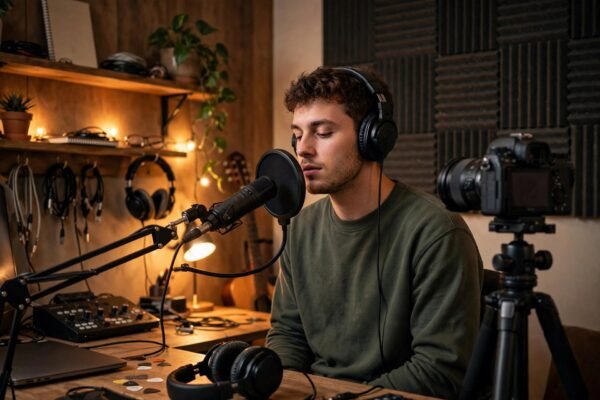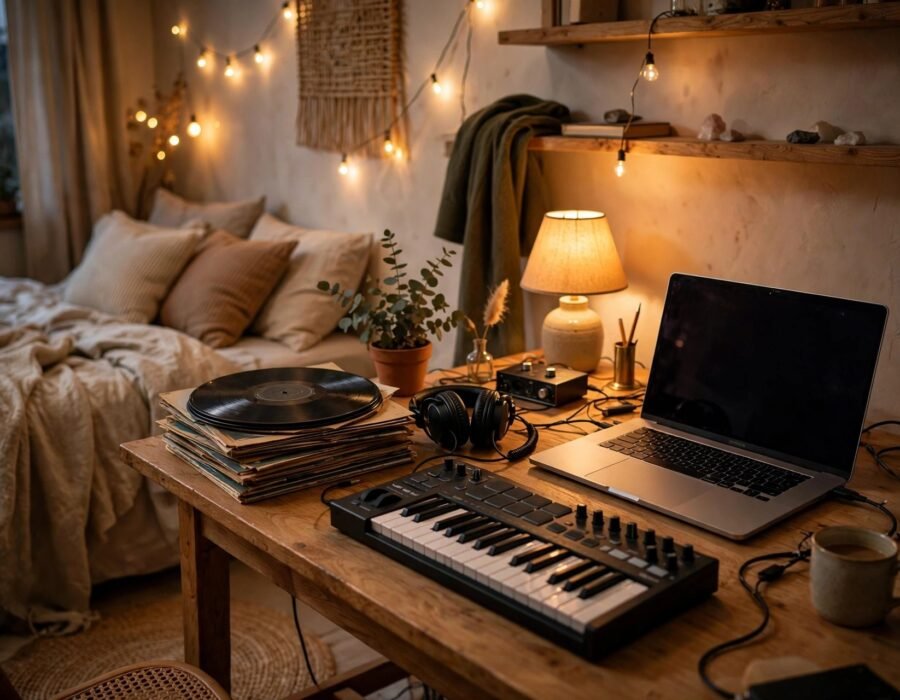
Dusty vinyl crackle. Mellow jazz chords. Rain sounds. A beat that sways instead of marching. Lo-fi hip-hop — “low fidelity” music — became the soundtrack of studying, working, and unwinding for a generation, streamed by millions through endless “beats to relax/study to” broadcasts. If you are asking where can I learn about lo-fi production from scratch in the US — the techniques are universal — this guide covers the sound, the tools, and the techniques: everything needed to make your first lo-fi track this weekend.
Lo-fi’s defining aesthetic is imperfection as warmth: tape hiss, vinyl crackle, slightly detuned samples, lazy swung drums. It emerged from 90s hip-hop producers (J Dilla, Madlib, Nujabes) who embraced the grit of samplers and vinyl, then exploded in the 2010s through YouTube streams and SoundCloud. The genre’s beauty for beginners: it rewards simplicity, forgives mistakes (imperfection is the point), and needs minimal equipment.
The Sound: Deconstructing Lo-Fi
Four elements define the genre. Drums: dusty, swung hip-hop patterns — kicks and snares that lag behind the grid, hi-hats with human timing variation. The “Dilla swing” (drums slightly off-grid in specific ways) is the rhythmic signature; most DAWs have swing/shuffle controls that approximate it. Chords: mellow jazz voicings — 7th and 9th chords, Rhodes piano sounds, detuned and warm. Melodies: simple, repetitive, often sampled from old records. Texture: the “lo” in lo-fi — vinyl crackle, tape hiss, low-pass filtering (rolling off high frequencies for that muffled warmth), and subtle pitch wobble like a warped record.
The emotional formula: nostalgia without sadness, calm without sleepiness. Lo-fi works as background music because it is harmonically interesting enough to enjoy and rhythmically gentle enough to ignore — the rare genre designed to be half-heard. The Recording Academy’s coverage of the genre’s rise documents how bedroom producers built a global movement without labels. And discovering new music you will like in this space is easy — the algorithm serves it endlessly once you start listening.
The Tools: What You Actually Need
The barrier is gloriously low. A DAW (Digital Audio Workstation): free options (GarageBand, Cakewalk, LMMS) are fully capable; paid standards (FL Studio, Ableton Live) offer more. A MIDI keyboard helps but is not required — you can click notes in with a mouse. Sounds: start with free lo-fi sample packs (countless on Reddit’s r/Drumkits and free pack sites), Rhodes/electric piano VSTs (many excellent free ones), and vinyl crackle samples. Headphones you trust matter more than monitors at this stage.
Total startup cost: $0 with free software and samples. The genre was literally built on limitations — cheap samplers, dusty records, bedrooms — so expensive gear contradicts the aesthetic. Upgrade only when you know what is limiting you: better headphones first, then a MIDI keyboard, then paid plugins. The NAMM’s home-recording resources cover the gear landscape without the hype. For structured learning beyond this guide, learning a musical instrument as an adult complements production — basic keyboard skills accelerate everything.
The Sampling Question
Lo-fi loves samples — old jazz records, anime dialogue, rain sounds. Legally, uncleared samples are infringement, though the genre’s underground thrives in the gray zone of “nobody notices small releases.” Practically: use royalty-free sample packs and public-domain sources while learning, clear or replace samples before commercial release, and understand that U.S. copyright law treats sampling as reproduction requiring permission. Many lo-fi producers now compose original melodies in the style of samples — safer, and creatively more rewarding.
Your First Track: Step by Step
Set your DAW to 70–90 BPM — lo-fi’s lazy tempo range. Lay down a simple drum pattern: kick on 1 and the “and” of 2, snare on 2 and 4, hi-hats playing eighths with swing at 55–60%. Humanize: nudge hits slightly off-grid, vary velocities. Add chords: a two- or four-chord loop of 7th chords on a Rhodes sound — try ii–V–I or just vibing on two chords. Low-pass filter everything slightly; add vinyl crackle underneath at low volume.
Then the lo-fi magic: detune slightly (a few cents), add tape-style pitch wobble, sidechain the chords gently to the kick (that breathing pump), and keep the arrangement simple — intro, main loop with small variations, outro. Two hours, first track done. It will not be great. The tenth one will be good. The genre forgives beginners because its aesthetic is literally “imperfect on purpose” — the only real mistake is over-polishing.
Mixing Lo-Fi: Less Is More
Lo-fi mixing breaks the rules of polished production — and that is liberating. Keep the low end simple: kick and bass should coexist without fighting, often by keeping bass minimal. Embrace mono compatibility (much lo-fi is consumed on phone speakers). Use reverb generously but darkly — lo-fi loves washy, lo-fi reverbs, not pristine halls. The master bus gets gentle treatment: light compression, a touch of saturation, maybe a vinyl emulation plugin across everything. The goal is cohesion, not loudness — lo-fi masters are quieter than commercial releases, and that is correct. If your mix sounds “too clean,” dirty it up: bit-crush a touch, add noise, roll off the highs. Perfection is the enemy.
Releasing Your Music
Distribution is free and instant: DistroKid, TuneCore, or Amuse put your tracks on Spotify and Apple Music for little or nothing. But lo-fi’s real discovery happens on YouTube — submit to channels and livestreams that curate the genre, where a single placement can earn millions of plays. Build a visual identity (the anime-study-girl aesthetic is iconic for a reason — it signals the genre instantly). Release consistently: the algorithm rewards catalogs, and every track is a lottery ticket. Most importantly, finish and release — the producers who make it are the ones who shipped a hundred tracks while others perfected three.
The Bottom Line
Lo-fi production needs almost nothing: a free DAW, free samples, swung drums, jazzy chords, and texture — vinyl crackle, tape warmth, gentle imperfection. Start this weekend with the step-by-step above; embrace the genre’s forgiving aesthetic; use royalty-free sources while learning. The beats-to-study-to empire was built by beginners in bedrooms. Your bedroom qualifies.
Frequently Asked Questions
What BPM is lo-fi hip-hop?
Typically 70–90 BPM — the lazy, head-nodding range. Slower than boom-bap hip-hop, faster than ambient. Start at 80 and adjust to feel; the tempo should sway, not march.
Do I need expensive equipment for lo-fi?
No — the genre was built on cheap samplers and bedrooms. Free DAWs, free sample packs, and decent headphones are enough to start. Upgrade only when you can name what is limiting you. Expensive gear contradicts the aesthetic anyway.
Is sampling legal in lo-fi?
Sampling copyrighted recordings without permission is infringement under U.S. law, regardless of genre. The underground tolerates it at small scale, but commercial releases need clearance. Use royalty-free packs while learning, and compose original melodies in the sampled style for releases.
How do lo-fi producers get heard?
YouTube channels and Spotify playlists dedicated to lo-fi accept submissions; SoundCloud and TikTok work for building audiences; compilation labels (Chillhop, College Music) sign tracks. The genre’s community is unusually welcoming to newcomers — consistent output beats any single viral moment.
What is the difference between lo-fi and chillhop?
They overlap heavily — chillhop is often used for the more polished, hip-hop-rooted end of lo-fi, while lo-fi emphasizes the dusty, imperfect aesthetic. In practice the terms are used interchangeably, and playlists mix both freely. Do not overthink the label; make the music.