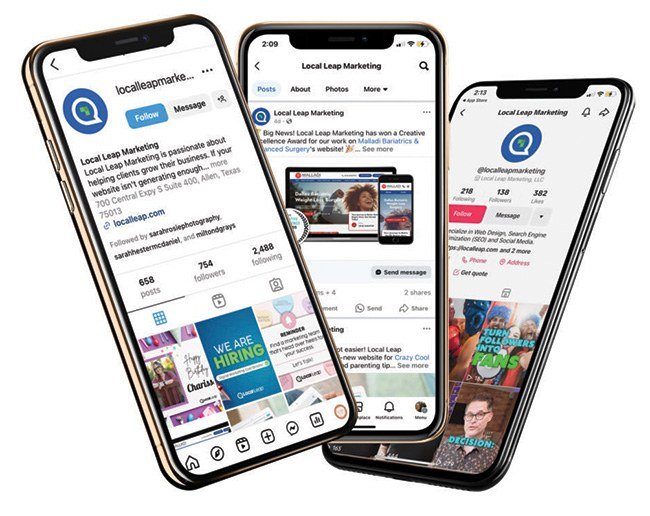
Every platform claims to be essential — you can’t do them all. For most local businesses: Facebook + Instagram (same ad system, biggest local reach) + Google Business Profile (not social, but more important than all of them). Here’s the platform-by-platform truth.
What Is the Best Social Media Platform for a Local Business?
Facebook: still the local king — 70% of US adults use it, Groups drive community, and the ad targeting is unmatched for local reach ($5/day, 10-mile radius — see our cheap advertising guide). Instagram: essential for visual businesses (food, retail, salons, real estate) — Reels get massive organic reach; Stories drive daily engagement. TikTok: explosive reach, young demographic — worth it if your customers are under 35 and your business is visual/entertaining. Nextdoor: the highest-trust local platform — neighbors recommending neighbors; non-negotiable for home services. LinkedIn: only for B2B local (commercial services, business consulting). X/Twitter: skip it for local — the audience moved on.
The Real Priority List
- Google Business Profile — not social media, but drives more local customers than all social combined (see our visibility guide). Do this first.
- Facebook + Instagram — one content effort serves both (cross-posting built in). Pick based on your visuals.
- Nextdoor — for service businesses especially; the recommendation culture is gold.
- TikTok — if your demographic and content fit. High effort, high potential reward.
Do 2 platforms well rather than 5 badly. A dead profile hurts more than no profile — customers check.
The Content Calendar That Actually Gets Followed
The reason business social media dies: no system. The minimum viable calendar (3 posts/week, 2 hours total): Monday: behind-the-scenes (team, process, workspace — 10 minutes with your phone). Wednesday: customer spotlight or review (screenshot a great review — 5 minutes). Friday: offer, tip, or local content (weekend event, seasonal tip — 15 minutes). Batch it: shoot all three Monday morning in 30 minutes, schedule via Meta Business Suite (free). Stories daily (60 seconds): poll, question sticker, or quick update — Stories drive more DMs (which drive sales) than feed posts. What to skip: stock photos (customers smell fake), posting just to post (silence beats noise), and arguing in comments (never, ever). The metric: DMs and calls, not likes — track “how did you hear about us?” and you’ll see social’s real ROI. This system is sustainable because it’s small — the businesses that quit social media are the ones who tried to be influencers instead of being themselves.
Ads vs. Organic (The Honest Split)
Organic reach is ~5% of followers — your 1,000 followers see ~50 per post. Organic builds trust; ads build reach. The formula: organic for credibility (reviews, behind-scenes, community) + $150/month targeted ads for acquisition (see the $100 test budget). Boost what works: when an organic post overperforms, put $20 behind it — proven content + paid reach is the highest-ROI ad there is.
Facebook Groups: The Organic Reach Loophole
Pages reach 5%; Groups reach 50%+ — the algorithm favors community. The strategy: 1) Join local groups (not to spam — to help; answer questions in your expertise weekly). 2) Create your own group (“[Town] Homeowners Tips” for a contractor, “[Town] Foodies” for a restaurant) — you own the audience, the algorithm delivers. 3) Group content: questions (engagement bait that works), polls, member spotlights, exclusive offers. Rules: 80% value, 20% promotion — groups that are all ads die. The math: a 2,000-member local group with 30% weekly active = 600 engaged locals seeing your business regularly — equivalent to $500/month in ads, free. Time: 30 minutes weekly to moderate. Groups are the last organic reach on Facebook — use them before the algorithm changes.
Video: The Format That Wins Everywhere
Video outperforms every other format on every platform: What to film: behind-the-scenes (process, team, workspace), before/afters (the most compelling local content there is), quick tips (30-second expertise), customer stories (with permission). Equipment: your phone (modern phones shoot better video than $1,000 cameras from 5 years ago) + $20 tripod + window light. Editing: CapCut (free) — templates, captions, 10 minutes per video. Captions: 80% watch muted — burn them in. Length: 15–60 seconds (Reels/TikTok/Shorts — one video, three platforms). Frequency: 2–3 weekly beats daily burnout. The barrier: not equipment or skill — it’s the discomfort of being on camera. Film 10 bad videos; #11 is good. Authentic beats polished for local businesses — customers want real, not produced.
Measuring Social ROI (Beyond Vanity Metrics)
Likes don’t pay rent — track what does: The metrics: 1) DMs and calls (direct inquiries — the money metric). 2) “How did you hear about us?” (ask every customer — the ground truth). 3) Profile actions: website clicks, direction requests, call button taps (platform analytics). 4) Cost per acquisition (ad spend ÷ customers from ads). Ignore: follower count, likes, reach (vanity — correlated with nothing). The monthly review: 15 minutes — which posts drove inquiries? Do more of that. Which drove nothing? Stop. Attribution: dedicated phone number or promo code for social (“mention this post for 10% off”) — makes ROI undeniable. Break-even: if 3 hours/week of social generates 2+ customers/month, it pays for itself at almost any business. Measure money, not applause.
Social Media Time Budget (The Realistic Plan)
How much time does this actually take? Minimum viable (2 hrs/week): 3 posts batched Monday (1 hr), daily Stories (5 min × 7 = 35 min), comment replies (25 min). Growth mode (5 hrs/week): add 2–3 short videos, one Facebook Group engagement session, weekly metrics review. What to outsource first: video editing ($200–$500/month freelancers) — the highest time cost. What never to outsource: replies and DMs — customers smell automation. The ROI check: 2 hrs/week should generate 2+ customers/month (see the ROI section) — if not, fix the strategy before adding hours. Consistency beats intensity: 2 hours weekly for a year beats 10 hours for a month then quitting. Schedule it like a client meeting — non-negotiable.
The SBA’s digital marketing resources include platform-selection guidance for small businesses — including the customer-demographic data that should drive your choice. Match the platform to your customers, not to trends.
Content Ideas for Local Businesses (90-Day Calendar)
Blank-page syndrome kills consistency. Here’s a 90-day content calendar any local business can execute: Weeks 1–4 (Trust): business story, team introductions, behind-the-scenes, customer testimonial. Weeks 5–8 (Expertise): how-to tips, common mistakes, FAQ answers, myth-busting. Weeks 9–12 (Community): local events, customer spotlights, partnerships, seasonal content.
The formats that work hardest: before/after photos (universal engagement winner), 30-second tip videos (Reels/TikTok/Shorts — film 10 in one afternoon), and customer stories (with permission — social proof that sells while you sleep). One monthly ‘content day’ (2 hours filming/photographing) fuels weeks of posts.
Repurpose ruthlessly: one before/after becomes an Instagram post, Facebook post, Google Business photo, website testimonial, and email content. Create once, publish five times. Consistency (3–5x weekly) beats brilliance — the algorithm rewards showing up.
Frequently Asked Questions
How often should a local business post?
3–5 times weekly minimum for traction; daily on short-form video platforms. Quality floor matters more than volume ceiling — 3 good posts beat 7 filler posts. Consistency over months beats bursts.
What should I never post as a business?
Politics (alienates half your market), customer complaints about customers, unprofessional personal content, and anything you’d regret on the front page. The rule: if it doesn’t serve customers or community, it doesn’t get posted.
Do I need professional photos for social media?
No — authentic smartphone photos outperform stock imagery for local businesses. Good lighting (near windows, outdoors) and clean backgrounds matter more than camera gear. Invest in a $20 ring light before a $2,000 camera.
How do I get customers to create content for me?
Ask directly (a sign at checkout: ‘Tag us @yourbusiness!’), run hashtag campaigns, feature customer photos (people love being featured), and offer small incentives (monthly drawing for taggers). User-generated content is the most trusted marketing that exists.
Should I pay for social media followers?
Never — fake followers destroy engagement rates (the algorithm shows your posts to ghosts), provide zero customers, and risk account penalties. 500 real local followers outperform 50,000 fake ones in every metric that matters.
How do I handle negative comments on social media?
Respond promptly, professionally, and publicly (then resolve privately). Never delete legitimate criticism — it inflames. Never argue — you lose even when you’re right. A graceful public response converts onlookers; the complainer may never be satisfied, and that’s fine.
The bottom line
Google Business Profile first, Facebook + Instagram second, Nextdoor for services, TikTok if the fit is right. Run the 3-post weekly calendar (2 hours batched), track DMs not likes, and put $150/month behind targeted ads. Social media makes you the local choice rather than a choice — but only if you show up consistently. Two platforms done well beat five done badly.